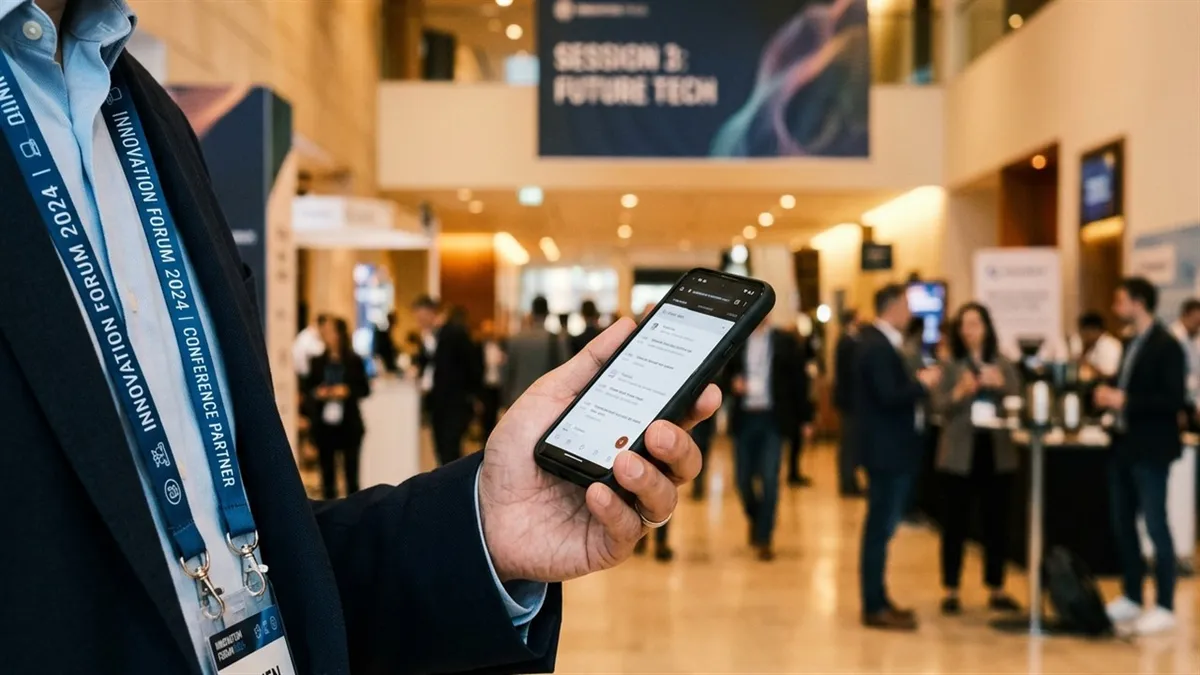
Startup conferences have a matchmaking problem that generic event-software listicles never quite address. A platform that runs a flawless association conference may collapse the moment you ask it to match 200 founders with 80 thesis-aligned venture capitalists in two days, run a pitch-stage workflow alongside the meeting calendar, and stop the top funds from drowning under irrelevant intros. Yet most “best of” guides treat startup conferences as just another B2B event.
This guide is the startup-conference counterpart to our recently published tourism-trade-show comparison. We compare eight matchmaking platforms against an eight-criteria framework built specifically for demo days, accelerator conferences, and investor-founder events, with reference to how the industry’s flagship gatherings, including Slush, Web Summit, and Bits & Pretzels, actually run their meeting programmes.
TL;DR
For most startup conferences in 2026, the right matchmaking platform depends on event size and how structured your founder-investor meetings need to be. Converve fits the 500 to 3,000-attendee mid-tier with native EU hosting and a B2B-matchmaking-first workflow that suits accelerator-style events. Brella, Grip, Swapcard, and Bizzabo dominate the Tier-1 enterprise segment used by global conferences. EventMobi and Whova balance breadth with networking depth in the mid-market. Eventee covers demo days and accelerator cohorts under 500 attendees on a transparent, per-event pricing model. The full ranking, criteria, and a side-by-side matrix sit below.
What Is Startup-Conference Matchmaking Software?
Startup-conference matchmaking software pre-schedules qualified founder-investor and founder-corporate meetings at demo days, accelerator events, and venture conferences. It scores participants on signals such as investor thesis, funding stage, sector and geography, manages pitch-stage workflows alongside the meeting calendar, and enforces caps that keep the top investors from being flooded with irrelevant introductions. These are features that generic B2B matchmaking tools rarely cover at the depth startup conferences demand.
The category sits at the intersection of three older software categories. From event management it inherits registration, ticketing, and badge printing. From customer relationship management (CRM) systems it borrows participant profiles, interest tags, and segmentation. From pitch-competition platforms it borrows submission workflows, scoring rubrics, and stage timing. The matchmaking layer on top, an algorithmic engine that scores founder-investor compatibility and a constraints solver that turns “200 founders want 80 thesis-fit VCs” into a feasible meeting plan, is what separates this category from a generic event app.
Why Generic Event-Matchmaking Listicles Fall Short for Startup Conferences
Run any web search for “best event matchmaking software” and you will land on lists that mix tech conferences, healthcare expos, recruitment fairs, and corporate summits into one ranking. That breadth is the problem. Startup conferences make different demands from every other vertical, and the platforms that look strongest in a generic comparison can be quietly mediocre in startup-conference reality. Three structural reasons explain the gap.
- Founder-investor matching is asymmetric: A startup conference has hundreds of founders chasing dozens of thesis-fit investors. A pure popularity algorithm will route every founder to the same five funds. Startup-grade matchmaking needs caps, request-and-accept gating, and tier-aware quotas so that the top investors keep meeting time for the right founders rather than the loudest.
- Pitch workflow runs in parallel: Demo days and accelerator conferences are not pure networking events. There is a stage, a pitch rotation, judges, and prize logic. Generic matchmaking software treats the pitch stage as someone else’s problem. Startup-conference software either runs the pitch workflow natively or has tight integrations into one that does.
- Conversion happens after the event: Founders measure ROI in second meetings and term sheets, not booth scans. The platform must hand off cleanly to a CRM, push contact data within 48 hours, and prove which scheduled meetings actually converted to follow-ups. Generic event apps end at the conference badge.
The result: a tool that ranks well on G2 for “best event matchmaking software” may still be the wrong choice for a startup conference. The right question is “best for startup conferences”, and that requires its own criteria.
How Slush, Web Summit, and Bits & Pretzels Approach Matchmaking
Before evaluating commercial platforms, it helps to understand how the three most celebrated startup conferences in the world have engineered their own matchmaking layers. Each of them tells you something about what the category needs.
Slush (Helsinki, November): The Finnish flagship has built a proprietary “My Slush” tool that delivers over 20,000 pre-booked one-to-one meetings across two days at 12,000 to 20,000 attendees from more than 130 countries. The key design choice is a request-and-accept model, which keeps quality higher than a free-for-all calendar. Founders apply for the investor stream; investors confirm the meetings they want to take. Forbes’ 2026 review credits Slush with the most productive matchmaking among large startup events.
Web Summit (Lisbon, November): The largest of the three by headcount, with up to 70,000 attendees. The team operates a proprietary platform praised by Forbes 2026 as “genuinely good, probably the best among large conferences” for matchmaking. The platform scales differently from Slush: with so many participants, Web Summit leans on algorithmic suggestions and curated side events to keep matchmaking from drowning under volume. Around 21,000 meetings get organised between 13,000 of the active networkers.
Bits & Pretzels (Munich, September): The German founders festival caps attendance at roughly 7,500 and pairs its in-house app with something rare: a 70-person Matchmaking Team that hand-guides founders to relevant general partners (GPs) and limited partners (LPs). The result is 21,000 real founder-investor meetings annually, 1,700+ GPs, and 300+ LPs in one venue. The lesson is that “human-in-the-loop” matchmaking still matters at conference scale.
Three lessons fall out of these three examples. First, request-and-accept beats free-for-all once you cross a few hundred investors. Second, algorithmic curation has to be paired with a human-curated layer for the top tier. Third, the matchmaking workflow has to integrate with the pitch and stage logic, not sit alongside it. The eight criteria below test each commercial platform against those lessons.
Brand benchmark
Matchmaking at the three flagship startup conferences (2025)
Eight Criteria for Evaluating Startup-Conference Matchmaking Software
Each criterion below maps to a real operational requirement of a startup conference. Together they form the framework we use to score the eight platforms in the next section.
- Founder-investor thesis-match depth: The engine must score on funding stage, sector, geography, and check-size band. Generic interest tags are not enough; an investor’s thesis is multi-dimensional and changes by year.
- Pitch-stage workflow integration: Native support for pitch submissions, scoring rubrics, judge dashboards, and stage rotations, or tight integrations into a platform that does. A separate “pitch tool” plus a separate “matchmaking tool” duplicates the participant profile and erodes data quality.
- Investor-side workflow: Office-hours scheduling, vetted-investor lists, LP and GP lounges, and a back-office for investor support. Investors will not return next year if their conference experience is no better than scrolling a public attendee directory.
- Anti-investor-overload mechanics: Request-and-accept gating, per-investor meeting caps, tier-aware quotas (Tier 1 versus Tier 2 versus first-time attendees), and a way to surface introductions that are mutually wanted rather than mass-broadcast.
- Cohort and accelerator tooling: Group views by accelerator batch, mentor-mentee scheduling, cohort-wide announcements, and pre-event mentor matching. Y Combinator Demo Day, Techstars, 500 Global, and EU accelerator programmes all need this layer.
- Pre-event and post-event automation: Auto-generated 48-hour follow-up emails, CRM hand-off to HubSpot, Salesforce, or Affinity, and visibility into which scheduled meetings actually converted. The Capwave 2026 benchmark is that prepared founders convert 20 to 30 per cent of event contacts into second conversations.
- DACH and EU data-privacy compliance: EU-resident data storage, transparent processing, and a vendor that can speak to the General Data Protection Regulation (GDPR) and the EU AI Act’s limited-risk classification of matchmaking systems. Required by procurement for Bits & Pretzels, OMR, START Summit, 0100 DACH, and any conference funded with EU money.
- Pricing transparency and implementation timeline: A clear quote for your size band, a realistic time-to-go-live, and a published reference deployment. Enterprise tools that take four months to implement may not fit a fast-moving accelerator running quarterly demo days.
The eight criteria do not have equal weight. From conversations with startup-conference producers, thesis-match depth, anti-overload mechanics, and pricing transparency carry roughly double the weight of the others, because failure on any of these kills a startup conference outright, while weakness on, say, post-event CRM hand-off can be patched manually. We have applied that weighting in the scores below.
The 8 Best Matchmaking Apps for Startup Conferences in 2026
The ranking is built from the eight criteria above, weighted as described, and validated against published reference cases and the platforms’ own documentation. Where a platform’s startup-conference fit is strong on most criteria but weak on one (typical of younger vendors with a single integration gap), that is called out in the entry.
1. Converve
Converve is a B2B-matchmaking-first platform with two decades of experience running structured one-to-one meeting programmes for international conferences, including a long line of startup and innovation gatherings in the DACH region. The product treats hosted-style buyer-seller and founder-investor meetings as the default rather than an extension, and the customer base is heavy on B2B trade fairs, association events, and accelerator-style conferences. EU data hosting and GDPR compliance are native, multi-language support spans six languages out of the box, and the meeting-scheduling engine handles multi-time-zone diaries cleanly. The platform suits accelerator programmes that need a transparent matchmaking layer without enterprise-grade contract overhead.
Best for: Accelerator conferences, founders festivals, and mid-tier startup conferences (500 to 3,000 attendees) where structured founder-investor meetings are the show, and GDPR data residency is non-negotiable.
Where it is strongest: Hosted-style founder-investor workflow, GDPR data residency, multi-language meetings, transparent mid-market positioning, deep B2B-matchmaking heritage.
Watch outs: The interface prioritises operational depth over consumer-app polish. Founders who expect a Tinder-style swipe experience will need a short orientation. Pitch-stage native tooling is lighter than dedicated pitch platforms; teams that need a deep pitch-competition workflow should plan an integration.
2. Brella
Brella positions itself around AI-powered matchmaking refined over a decade of conference data and is widely deployed at large enterprise B2B events. The matching engine handles multiple meeting formats (one-to-one, sponsor, mentor-mentee, investor) and integrates with Brella’s own ticketing and registration stack. Reference cases include Founders Festival 2024 and a number of European startup conferences. Pricing is enterprise and quoted per event.
Best for: Tier-1 startup conferences (3,000+ attendees) with substantial sponsorship inventory and a polished mobile attendee experience as a procurement requirement.
Where it is strongest: Mobile app polish, intent-based matchmaking, multi-format meeting support, ecosystem of large-event references.
Watch outs: Heavy lift below a few thousand attendees. Demo days and accelerator-style events under 500 attendees will find the implementation effort disproportionate.
3. Grip
Grip is an AI-deep networking and matchmaking platform with a strong reference list in large B2B events. The match algorithm uses 16 strategies, the MustMeet meeting-scheduler workflow is well documented, and Grip’s relationship with major exhibition organisers is widely known. Public references include the Clarion Events portfolio, which reported a 44 per cent year-on-year increase in in-person meetings after deploying Grip’s matchmaking. Yotta, a fast-growing AI infrastructure event, used Grip’s integrated stack to reach 200 per cent year-on-year attendance growth and an NPS of 55.
Best for: Tier-1 startup conferences where the matchmaking layer sits inside a full event-platform suite and the procurement team wants quantified ROI references.
Where it is strongest: Mobile attendee experience, AI match quality at scale, large-exhibition references, quantified case studies.
Watch outs: Implementation typically takes around four months, with full ROI realised at around 17 months. Procurement and onboarding are enterprise-priced, which suits flagship shows but is heavy for regional formats and quarterly demo days.
Comparison
Startup-conference fit score (8 criteria, weighted)
4. Swapcard
Swapcard combines AI-driven networking with a Smart Meetings hosted-style module and is widely used across association and trade-organisation events. The 2026 trend report Swapcard published documents that AI matchmaking can double match-acceptance rates at Trade Show Organisation+ events and lift Association+ Tier-1 acceptance to as much as 100 per cent. A single Swapcard-powered digital marketing event recorded 8,500 connections, 20,000 messages, and 11,000+ meetings across three days with 33,000+ in-person and 30,000+ online attendees.
Best for: Hybrid startup conferences with multiple content tracks alongside the founder-investor meeting programme, and global multi-region audiences that need a single platform across in-person and remote.
Where it is strongest: Hybrid event support, AI matchmaking quality claims with published numbers, integration ecosystem, and community features (forums, discussion threads).
Watch outs: Enterprise pricing climbs quickly for large founder-investor cohorts. Smaller regional demo days may find a leaner tool more economical.
5. Bizzabo
Bizzabo has staked its 2026 positioning on AI-powered networking, with an integrated networking suite that includes matchmaking, meeting scheduling, and real-time analytics. The platform’s AI Companion, branded Bizzy, feeds into a deeper AI Sponsor ROI Engine. Their reporting reveals 34 per cent year-on-year growth in small in-person gatherings under 150 attendees and 27 per cent overall growth in in-person events hosted by customers in the first half of 2025. Bizzabo’s strength is the depth of CRM and marketing-automation integrations.
Best for: Startup-conference portfolios where matchmaking is one of several event-tech requirements consolidated under one vendor, and pipeline attribution to specific sessions, sponsors, and meetings is a board-level KPI.
Where it is strongest: End-to-end coverage, CRM and marketing-automation integrations, pipeline attribution dashboards, AI Sponsor ROI tooling.
Watch outs: Premium pricing tier. Matchmaking is a feature inside a wider product, not the product itself, so startup conferences where the meeting programme is the show may find a specialist tool more focused.
6. EventMobi
EventMobi is an end-to-end event-management platform used by more than 10,000 event planners in 72 countries since 2009. Brand customisation is a particular strength: virtual venues, branded home pages, and event websites can be made distinctive without external design work. AI-driven matchmaking sits inside the broader platform, making it a credible all-in-one for accelerator conferences that prefer one vendor across registration, content, and meetings.
Best for: Mid-size accelerator conferences and innovation festivals where brand customisation, breadth, and a single vendor across the stack matter more than specialist meeting-algorithm depth.
Where it is strongest: Brand customisation, end-to-end coverage, breadth of feature set, large customer base across regions.
Watch outs: Networking and matchmaking sit alongside a wider product set, so depth at the algorithm layer is less than the matchmaking specialists. Pricing is quoted, not transparent.
7. Whova
Whova is an award-winning event-management platform purpose-built for conferences, trade shows, and academic gatherings. AI-powered attendee matchmaking, exhibitor management, and mobile engagement are deeply integrated. Whova suits multi-track Tier-1 conferences and academic-flavoured startup events, including some TechCrunch Disrupt-style large-format gatherings, with strong customer-support continuity year over year.
Best for: Large multi-track startup conferences and academic-flavoured innovation events where mobile engagement and community features carry as much weight as matchmaking.
Where it is strongest: Mobile app, multi-track conference logistics, AI matchmaking inside a broad community-feature set, repeat customer retention.
Watch outs: Navigation can feel complex for first-time attendees at large multi-track events. Profile customisation is lighter than some specialists, so personalisation depth has a ceiling.
8. Eventee
Eventee is the most accessible platform in the comparison on pricing, starting at around 250 US dollars per event. The matchmaking layer is swipe-based and lightweight, the mobile app is polished, and meeting scheduling is straightforward. The platform suits demo days, accelerator-cohort events, and smaller pitch nights where matchmaking is a feature rather than the show.
Best for: Demo days and accelerator-cohort events under 500 attendees, especially where transparent per-event pricing simplifies procurement.
Where it is strongest: Transparent, low-commitment pricing, polished mobile app, fast onboarding, suitable for first-time organisers.
Watch outs: Algorithm depth and investor-side workflow are lighter than the enterprise tier. Tier-1 conferences with 5,000+ attendees will out-grow the platform; mid-tier conferences should evaluate whether the swipe pattern suits their investor audience.
Which Platform for Which Conference Size?
The eight platforms above cover the full conference-size spectrum, but very few fit every tier. The mapping below shows which platforms make the shortlist at each size band, based on real implementation references and the criteria framework.
- Demo day under 200 attendees: Eventee, Converve, EventMobi. Lightweight, fast to deploy, transparent pricing.
- Accelerator cohort, 200 to 500 attendees: Converve, EventMobi, Eventee, Whova. Cohort tooling and mentor matching become more important than raw scale.
- Mid-tier conference, 500 to 2,000 attendees: Converve, Brella, Swapcard, Grip, Bizzabo, EventMobi, Whova. The widest shortlist by tier, because mid-market is the sweet spot of the category. Trade-offs are about specialisation versus breadth.
- Tier-1 conference, 5,000 attendees and above: Brella, Grip, Swapcard, Bizzabo, Whova. Enterprise pricing, four-month-plus implementation windows, and ecosystem integrations dominate the choice. Public references at this scale matter more than any feature claim.
In the two lower bands the decision is usually settled by budget rather than by scale, and there the comparison worth running is cost per kept founder-investor meeting rather than licence price. We run that arithmetic, including which tier of each platform actually unlocks 1:1 meetings, in our buyer’s guide for pitch events under 500 attendees.
Size matrix
Which platforms shortlist at which conference size?
A quick sanity check before any procurement decision: ask the vendor for two reference customers in your conference-size band and your geographical region. If those reference calls produce concrete meeting and conversion numbers, the platform is a credible fit. If they produce only marketing talk, you have your answer.
GDPR and the EU AI Act: What Matters for DACH Startup Conferences
Startup conferences operating from Germany, Austria, Switzerland, and any EU-funded innovation programme cannot postpone the data-privacy conversation. Bits & Pretzels, OMR, START Summit, and 0100 DACH all run on procurement processes that demand defensible answers. Two regulations matter most.
The General Data Protection Regulation (GDPR): Founder and investor profile data is personal data under the GDPR, and so are the embeddings and behavioural signals a matchmaking algorithm derives from it. Best practice is EU-resident hosting, pseudonymised embeddings in storage, and a documented right-to-erasure pipeline. Vendors based outside the EU can satisfy these requirements, but the contract paperwork is heavier, and the procurement timeline lengthens.
The EU AI Act (in force from 2025): The Act classifies event matchmaking as a “limited risk” system, provided participants are informed transparently that an algorithm is generating the recommendations. The implementation requirement is a short disclosure during registration, and an in-app explanation of why a given match was suggested. Both are simple to add, and both will be expected at procurement by any EU-funded conference from 2026 onwards.
Procurement teams should request a Data Processing Agreement (DPA), the vendor’s hosting region, a description of the matching algorithm in plain language, and the vendor’s response to a Right-to-Erasure request, before signing. These four documents take a credible vendor a working day to produce. A vendor that struggles will struggle later.
The same transparency question comes up when an accelerator uses its platform beyond investor meetings, for example to pair founders with each other at a co-founder evening. Participants there want to know which explicit rules, such as role, commitment and idea status, decide who meets whom, and we describe those rules in our guide to co-founder matching events.
Frequently Asked Questions
Which matchmaking platform does Slush use?
Slush operates its own proprietary “My Slush” app, a request-and-accept curated meeting tool that delivered more than 20,000 pre-booked meetings over two days in 2025 across 12,000 to 20,000 attendees from 130+ countries. The app is not commercially licensed to other conferences.
Which app does Web Summit use for founder-investor meetings?
Web Summit uses its own proprietary platform, praised by Forbes 2026 as “genuinely good, probably the best among large conferences” for matchmaking. The platform generated around 21,000 meetings between 13,000 of its active networking participants at the Lisbon edition.
How does Bits & Pretzels handle matchmaking?
Bits & Pretzels combines its in-house app with a 70-person Matchmaking Team that hand-guides founders to relevant general partners and limited partners, delivering 21,000 founder-investor meetings annually at roughly 7,500 attendees. The human-in-the-loop layer is a deliberate design choice.
What is the cheapest reliable matchmaking platform for a startup pitch event?
Eventee starts at around 250 US dollars per event with swipe-based matchmaking. Converve offers transparent mid-market pricing for the 500 to 3,000-attendee band with GDPR compliance native.
Is Brella better than Swapcard for startup conferences?
Brella is intent-based and better suited to structured investor-founder meetings at Tier-1 events. Swapcard is hybrid-ready and stronger for events with mixed in-person and remote attendees, especially with multiple content tracks. Both are Tier-1 enterprise; pricing is quoted per event.
What KPIs prove that a startup-conference matchmaking platform is working?
Look at four numbers across all platforms: meeting-acceptance rate (target 40 to 60 per cent), meetings per attendee (target 2 or more), kept-meeting rate (target 80 per cent or better), and second-meeting conversion (target 20 to 30 per cent, per the Capwave 2026 benchmark). If the platform cannot report on at least three of the four out of the box, that is the answer.
KPI benchmarks
KPI benchmarks that prove a matchmaking platform works
Conclusion
Startup-conference matchmaking is a discipline of its own. The right platform makes the difference between 200 founders meeting their thesis-fit investors and 200 founders meeting whoever opened their request first. The 2026 SERP is full of generic event-matchmaking lists, but very few of them ask the questions a startup-conference producer actually has: how do I cap the top investors, how do I run the pitch stage alongside the meetings, how do I survive a DACH procurement review.
Use the eight criteria above as a procurement scorecard, validate every shortlisted vendor against two reference customers in your size band, and ask for the four privacy documents before you sign. Whichever platform you choose, the win is the same: a conference your founders rate as the best two days of their fundraising year, and an investor list that comes back next year because the meetings were worth it.
Converve has been the matchmaking layer behind structured B2B conferences for two decades, and we work with accelerator programmes, founders festivals, and mid-tier startup conferences across the DACH region. If you want to see how the workflow looks for your event size, book a short call with our team, or read the related comparison on tourism-trade-show matchmaking if you are also running buyer-seller events. For a wider survey across verticals, see our top 23 event networking apps guide.