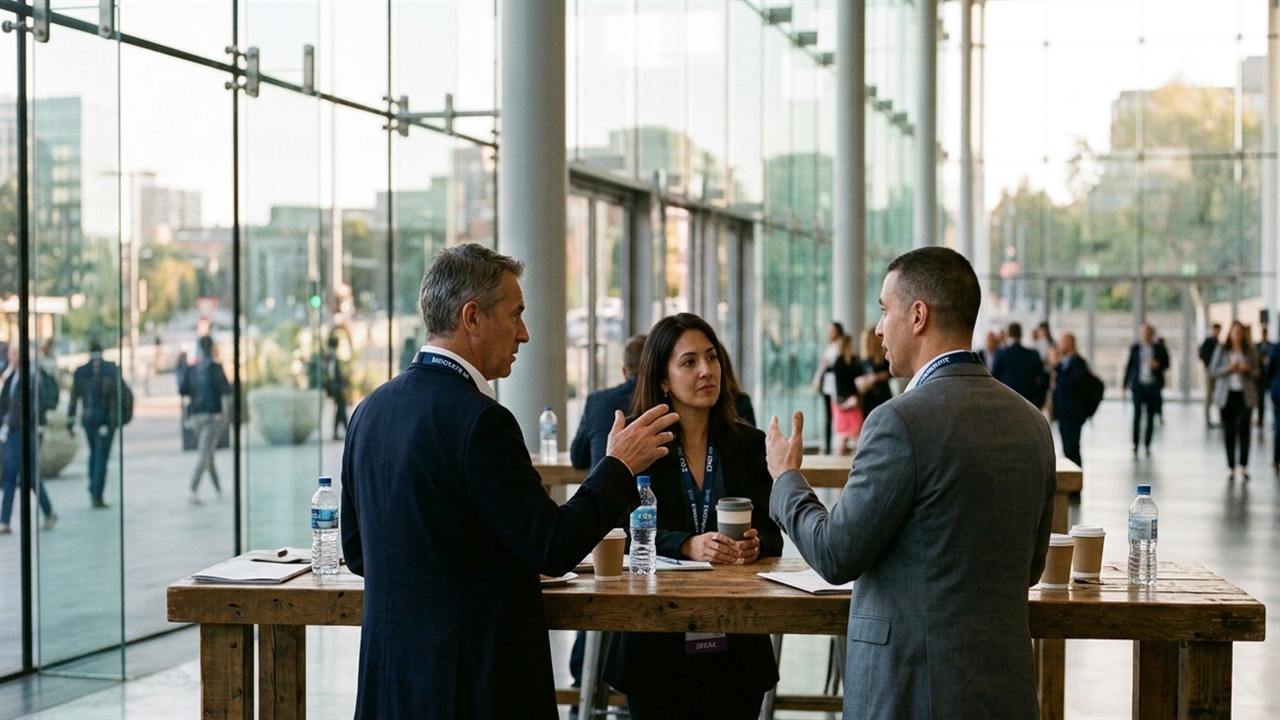
MICE Tourism in 2026: A Strategic Guide for Event Managers
MICE tourism — the part of business tourism dedicated to meetings, incentives, conferences, and exhibitions — is on track to nearly double between 2026 and 2035, from $56 billion to over $103 billion in annual value. But raw growth tells only half the story. The way MICE events are planned, evaluated, and delivered is changing faster than at any point since the pandemic. This guide gives event managers a clear view of the numbers behind the market, the six trends reshaping 2026, and the practical implications for how you select destinations, design programmes, and prove value to stakeholders.
What MICE Tourism Means Today
MICE is a useful umbrella term, but the four components have always served different purposes. Meetings bring small groups together for working sessions, board reviews, or product launches. Incentives reward employees, partners, or top customers with structured trips that combine recognition, networking, and experience. Conferences convene larger audiences around a topic or industry. Exhibitions are public-facing trade shows where companies present products and services, often with parallel meeting and matchmaking programmes built on top.
What unites the four is intent: every MICE event exists to create a measurable business outcome — whether that is a closed deal, a product launch with reach, a renewed partnership, or a revived team. That focus on outcome is exactly what is changing in 2026.
The Numbers: Why MICE Tourism Matters in 2026
The MICE industry sits at the intersection of business travel, hospitality, and event technology — three sectors that have rebuilt themselves since the pandemic and are now growing in lockstep.
According to Business Research Insights, the global MICE tourism market is valued at $56.1 billion in 2026 and projected to reach $103.14 billion by 2035, a compound annual growth rate of 7 %. The wider MICE market — including the broader meetings industry beyond pure tourism — is significantly larger: Fortune Business Insights puts the 2026 figure at $1.34 trillion, on track for $3.06 trillion by 2034 at a 10.86 % CAGR.
Regional patterns matter:
- Asia-Pacific is the fastest-growing region. Mordor Intelligence forecasts the region’s MICE market will rise from $231 billion in 2026 to $352 billion by 2031, an 8.75 % CAGR. Southeast Asia is accelerating even faster at 12.41 % CAGR.
- Europe still holds the largest share of the global MICE market — around 51.7 % in 2025 according to Fortune Business Insights — but growth is slower than in emerging regions.
- The Middle East and Africa are growing at roughly 11.4 % annually, driven by venue investments in Saudi Arabia and the UAE.
- North America retains a strong position thanks to mature convention infrastructure and high corporate travel spend, projected to reach $800 billion globally by 2027 according to GBTA’s BTI Outlook 2025.
For event organisers and the destinations courting them, this is a decade of structural growth. But the headline numbers conceal a deeper shift: how MICE events are evaluated has changed, and the planners who recognise it will win the briefs.
Six Trends Reshaping MICE Tourism in 2026
Six themes dominate every recent industry survey, planner roundtable, and corporate RFP we have seen in 2026. They are not separate trends — they reinforce one another.
1. Carbon Budgets and the New ESG Mandate
ESG compliance has moved from differentiator to baseline expectation. According to GBTA, 88 % of corporate travellers now prefer to work with eco-conscious partners, and 78 % rate sustainability as extremely important when selecting venues. 38 % of all event briefings now contain an explicit ESG component — and that share rises every quarter.
What this means in practice:
- Carbon reporting is non-negotiable in major RFPs. Buyers expect measurable carbon estimates before booking and audited reports after the event.
- Single-use plastic bans are spreading from venues to entire event experiences, including catering, lanyards, and giveaways.
- Sustainability questions appear in employee-wellness sections of RFPs, signalling that ESG and people-first event design are merging.
Programmes that cannot evidence their environmental footprint are increasingly excluded from procurement long-lists, regardless of price.
2. The Rise of the Second-City Destination
Tier-1 hubs — London, Singapore, Dubai, Barcelona — remain attractive but are losing ground to a new generation of secondary destinations. Almost half of planners surveyed in late 2025 reported actively exploring second-tier cities to control budgets and offer delegates something fresh.
The shortlist is shifting: Almaty, Bologna, Sapporo, Fukuoka, Hiroshima, Adelaide, Tasmania, and parts of Rajasthan are appearing in RFPs that would once have gone straight to Singapore or Tokyo. Three reasons drive the move:
- Cost discipline. More than 70 % of planners now face higher accommodation rates in primary hubs.
- Authenticity. Delegates have seen the same conference centres in the same skyline cities multiple times. Secondary destinations offer cultural distinctiveness.
- Capacity. Government-backed venue investments in second-tier cities have closed the infrastructure gap. The hardware is now there.
The tactical takeaway: build a destination shortlist of 8–10 cities, including at least three second-tier candidates with measurable infrastructure, before approaching procurement.
3. Hybrid Formats as the New Standard
The pandemic accelerated hybrid formats, and 2024–2026 turned them into a permanent fixture. Hybrid event adoption grew by 20 % in 2024, with more than three-quarters of event planners reporting higher client interest. Buyers no longer ask whether an event will be hybrid; they ask which audience layer is on-site, which is virtual, and how the two are stitched together.
The challenges this creates are well known — split logistics, elevated AV costs, the need to keep both audiences engaged simultaneously — but they are now operational rather than strategic. For more on the trade-offs, see our deeper analysis of the pros and cons of hybrid events.
4. AI-Driven Personalisation and the “Segment of One”
The single most disruptive shift in MICE technology is the move from segmented audience targeting to individual itinerary design. Predictive engines now sit between registration data, behavioural signals, and content libraries to deliver a programme tailored per attendee.
Two effects are visible already:
- Recommendation engines on event apps route attendees to sessions, exhibitors, and 1:1 meetings that match their stated objectives. Bizzabo and other platforms reported measurable drop-off reductions and higher session relevance through these engines in 2025.
- Loyalty becomes data-driven. Attendees who receive a high-value, personalised interaction are 82 % more likely to return for the next edition, according to recent industry surveys. That changes the calculation for sponsors and exhibitors who want repeat exposure to qualified buyers.
For event managers, this is no longer optional infrastructure — it is the difference between an event delegates remember and one they tolerate.
5. Purpose-Driven Incentives and the Shift to Return on Engagement
For decades, event ROI was measured in attendance, room nights, and media impressions. In 2026, that vocabulary feels incomplete. Return on Engagement (ROE) has joined ROI in corporate evaluation frameworks: did this event change behaviour, strengthen culture, and align with the company’s stated values?
This trend explains why incentive trips increasingly include CSR components: a regional sales conference now often pairs with a half-day community project. It also explains why exhibitions are adding measurable matchmaking outcomes — buyer-seller meetings booked, qualified leads delivered — to their post-event reports. B2B matchmaking has become one of the most efficient ways to demonstrate ROE, because the meetings it generates are countable, qualifiable, and directly tied to revenue.
If you are unfamiliar with how structured matchmaking transforms event outcomes, our guide on business matchmaking and growth covers the mechanics.
6. Wellness-First Programmes and the Rise of “Slow-Mo” Agendas
A counterweight to digital saturation, wellness-first programme design is reshaping incentive trips and senior-level retreats. Over-packed agendas are giving way to fewer sessions, more reflection, and intentional digital-detox windows. The phrase doing the rounds at MICE roundtables is “FOMO meets slow-mo”: delegates still want to be in the room, but they also want time to think.
Practically, this means programme designers are reducing session count, leaving more space for one-to-one networking, and choosing venues with green space, daylight, and walking paths. Wellness-first is not anti-technology — it is anti-burnout, and it is moving up the brief priority list.
How Software Platforms Make Modern MICE Operations Possible
Each of the six trends above adds operational complexity. ESG reporting requires audit-grade data. Second-city events demand more local supplier coordination. Hybrid formats double the moving parts. AI personalisation works only if the underlying registration, content, and meeting data is clean and connected.
This is where MICE software has shifted from convenience to backbone. Modern event platforms now serve as the connective tissue between registration, agenda, on-site logistics, networking, matchmaking, and post-event analytics — replacing the patchwork of spreadsheets and standalone tools that once defined MICE operations.
Solution: Converve’s all-in-one event platform handles the operational heavy lifting behind today’s MICE events — registration, attendee management, agenda, B2B matchmaking, hybrid streaming, and reporting in one connected system. That single platform is what makes ESG audits, AI-driven personalisation, and multi-stakeholder reporting practical rather than theoretical.
The MICE events that struggle in 2026 are not the ones with the wrong destination or the wrong creative concept. They are the ones running on disconnected tools that cannot deliver the data the new evaluation frameworks demand.
Practical Tips for Event Managers
Six concrete steps to bring this strategic picture into your next planning cycle:
- Build a sustainability one-pager for every event with measurable carbon estimates, supplier sustainability scores, and an after-the-fact reporting template. Buyers will ask.
- Add 2–3 second-tier destinations to your shortlist before going to procurement, with infrastructure data, accommodation rates, and accessibility metrics.
- Define the hybrid split early. Do not let “hybrid by default” become an afterthought. Decide which sessions need both audiences, which are on-site only, and which are virtual-only.
- Choose a platform that consolidates data, not one that adds another tool. Every additional system increases the chance that ESG, attendance, and matchmaking data does not stitch together.
- Pilot AI personalisation on one programme element first, such as exhibitor matchmaking or session recommendations. Avoid full-stack rollouts on flagship events.
- Report on Return on Engagement, not just ROI. Add three or four behaviour-change metrics to your post-event report — repeat-meeting rate, qualified leads, follow-up bookings, attendee NPS — and watch how procurement conversations shift.
For inspiration on activating sponsors within this evaluation framework, our 37 creative sponsorship ideas is a practical companion piece.
Conclusion: MICE Tourism Beyond 2026
MICE tourism is not just growing in size; it is growing in seriousness. The events winning briefs in 2026 are the ones that combine operational excellence with measurable sustainability, personalisation that feels human, and outcomes that can be defended in front of a CFO. The trends covered here — ESG, second cities, hybrid formats, AI personalisation, purpose-driven incentives, and wellness-first design — are not a passing cycle. They are the new operating model for the next decade.
The good news: every one of these shifts is operationally tractable when the underlying technology is in place. The platforms that make modern MICE operations possible are not radically new — they are mature and ready. The question for event managers is whether your toolset and process design are aligned with the evaluation framework your buyers are now using.
If you want to see how an integrated event platform handles MICE operations end-to-end — from registration through B2B matchmaking to post-event reporting — get in touch with Converve for a personalised walkthrough tailored to your next event.