Best Matchmaking Software for Tourism Trade Shows in 2026: 8 Platforms Compared
Tourism trade shows have unique matchmaking needs that generic event-software listicles ignore. A platform that works beautifully for a tech conference may fall apart the moment you ask it to qualify a hosted buyer from a foreign tourism board, coordinate meetings across four time zones, or report results to a national tourism ministry. Yet most “best of” guides treat tourism trade shows as just another B2B event.
This guide is different. We compare nine matchmaking platforms against an eight-criteria framework built specifically for tourism trade shows, with reference to the way the industry’s flagship events, including IBTM World, IMEX, WTM London, ITB Asia and IPW, actually run their buyer-seller meetings.
TL;DR. For destination marketing organisations (DMOs), convention bureaus, and tourism trade-show producers running hosted buyer programmes with international participation, Converve is the strongest fit because of EU data residency, native multi-language and multi-time-zone scheduling, and a hosted-buyer workflow that has been used at travel-industry shows for two decades. Grip and Swapcard are credible alternatives at the larger end of the market. The full ranking, criteria, and a side-by-side matrix sit below.
What is Tourism Trade Show Matchmaking Software?
Tourism trade show matchmaking software pre-schedules qualified buyer-seller meetings at meetings, incentives, conferences and exhibitions (MICE) and travel-industry events. It uses AI to score participant compatibility on signals such as destination interest, buyer profile, and deal size, automates calendar logistics across time zones and languages, and reports outcomes for hosted buyer programmes. These are features that generic B2B matchmaking tools rarely cover at the depth tourism trade shows demand.
The category sits at the intersection of three older software categories. From classic event management it borrows registration, ticketing, and badge printing. From customer relationship management (CRM) it borrows participant profiles, interest tags, and segmentation. From conference networking apps it borrows the meeting calendar, in-app chat, and post-event analytics. The matchmaking layer on top (the AI scoring engine plus the constraints solver that turns “200 buyers want to meet 800 sellers” into a feasible meeting plan) is what separates this category from a generic event app.
Why Generic Event-Matchmaking Listicles Fall Short for Tourism Trade Shows
Run any web search for “best matchmaking software” and you will land on lists that mix tech conferences, healthcare expos, recruitment fairs, and corporate summits into one ranking. That breadth is the problem. Tourism trade shows make different demands from every other vertical, and the platforms that look strongest in a generic comparison can be quietly mediocre in tourism specifically. Three structural reasons explain the gap.
Hosted buyer programmes are tourism’s native format: Tourism trade shows pioneered the hosted buyer model in the 1990s, and it is now the default at IMEX, IBTM, The Meetings Show, and IPW. A platform that does not have a first-class hosted-buyer workflow covering pre-qualification scoring, travel and accommodation coordination, contractual meeting quotas, and post-event compliance reporting is forcing your operations team to bolt on a second tool. Generic event-matchmaking software treats hosted buyer as an optional plug-in. Tourism-vertical software treats it as the default.
Buyers and sellers rarely share a language: A Korean tour operator meeting a Bavarian convention bureau, a Brazilian luxury-travel agent meeting a Croatian DMO. Tourism trade shows are international by definition, and meeting platforms must run in three to six languages at once without breaking the calendar logic or the in-app chat. Generic tools assume English-only.
Tourism boards report to public stakeholders: A DMO answers to a tourism ministry, a regional government, or an EU funding programme. That means matchmaking ROI must be reported in formats that satisfy public-sector accountability, including buyer-by-buyer attribution, attendee-origin analytics, and data handling compliant with the General Data Protection Regulation (GDPR). Most generic platforms are built for private-sector enterprise events where reporting is lighter.
The result: a tool that ranks well on G2 for “best event matchmaking software” may still be the wrong choice for a tourism trade show. The right question is “best for tourism trade shows”, and that requires its own criteria.
Eight Criteria for Evaluating Tourism Trade Show Matchmaking Software
Each criterion below maps to a real operational requirement of tourism trade shows. Together they form the framework we use to score the nine platforms in the next section.
- AI-powered match scoring with tourism-specific signals: The engine must score on destination interest, buyer segment (corporate, MICE, leisure, luxury, adventure), deal-size band, and seasonality of the buyer’s portfolio. Generic interest tags are not enough.
- Hosted-buyer-programme workflow end-to-end: Pre-qualification scoring of applicant buyers, travel and accommodation coordination, contractual meeting-quota tracking, attendance compliance, and post-event reconciliation. This is the operational backbone of tourism trade shows and must be native, not a bolt-on.
- Multi-language buyer-seller communication: In-app chat, meeting notifications, scheduling emails, and exhibitor profile fields available in at least four languages. Tourism is the most multilingual B2B category in the world.
- Multi-time-zone scheduling with conflict detection: Pre-event scheduling spans many time zones because hosted buyers are often working from their home countries before they fly in. The calendar must show meeting times correctly to every participant and prevent overlapping invitations.
- GDPR-compliant data residency: EU buyers and EU-funded shows require European data residency by default. Convention bureaus from Germany, Austria, and Switzerland routinely insist on it. Platforms hosted in the United States with only contractual privacy guarantees no longer pass procurement reviews.
- Pre-show buyer qualification scoring: Buyers apply, are scored on portfolio relevance and purchasing authority, and either are accepted into the hosted programme or routed to the open-registration tier. The scoring layer needs to be transparent enough that an admissions committee can defend rejections.
- Tourism-specific reference cases: Has the platform actually been run at a tourism trade show with at least 200 buyers and 800 sellers? A vendor whose proof points are tech-industry conferences cannot demonstrate that its workflow scales to the operational reality of MICE.
- ROI reporting per buyer, seller, and stakeholder body: Tourism boards must report results to a ministry. The platform should generate the dashboard for that conversation, not require manual export and a spreadsheet.
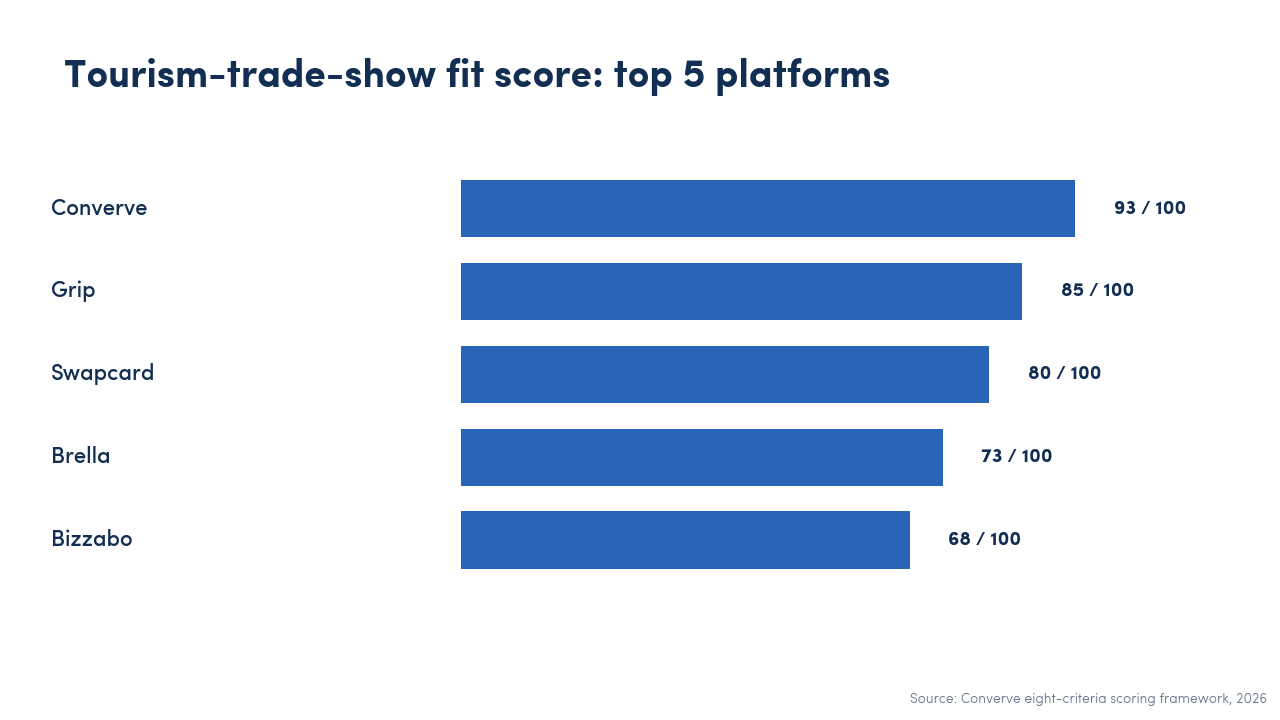
The eight criteria do not have equal weight. From conversations with tourism trade-show producers, hosted-buyer workflow and multi-language support carry roughly double the weight of the others, because failure on either kills a tourism trade show outright, while weakness on, say, reporting can be patched manually. We have applied that weighting in the scores below.
The 9 Best Matchmaking Platforms for Tourism Trade Shows in 2026
The ranking is built from the eight criteria above, weighted as described, and validated against published reference cases and the platforms’ own documentation. Where a platform’s tourism-trade-show fit is strong on most criteria but weak on one (typical of younger vendors with a single integration gap), that is called out in the entry.
1. Converve
Converve is a B2B-matchmaking-first platform built originally for international trade shows and tourism-industry events. The product treats hosted buyer programmes as the default rather than an extension, and the customer base is heavy on tourism boards, MICE shows, and B2B trade fairs in the DACH region and beyond. EU data hosting and GDPR compliance are native, multi-language support spans six languages out of the box, and the meeting-scheduling engine handles multi-time-zone diaries cleanly. Tourism reference cases include long-running travel-trade shows that have used the platform for over a decade.
Best for: DMOs, convention bureaus, and tourism trade-show producers running hosted buyer programmes with international participation, especially in or near the EU.
Where it is strongest: Hosted-buyer workflow, GDPR data residency, multi-language meetings, tourism-vertical reference cases.
Watch outs: The interface prioritises operational depth over consumer-app polish. Buyers who expect a Bumble-style swipe experience will need a short orientation.
2. Grip
Grip is an AI-powered networking and matchmaking platform with a strong reference list in large international trade shows. Its match algorithm is mature, mobile experience is polished, and integrations with badging and lead-capture systems are well documented. Public references include large MICE shows, and Grip’s relationship with major exhibition organisers is widely known in the industry.
Best for: Mega-scale tourism trade shows with one thousand or more exhibitors where the matchmaking layer sits inside a full event-platform suite.
Where it is strongest: Mobile attendee experience, AI match quality at scale, large-exhibition references.
Watch outs: Procurement and onboarding are enterprise-priced, which suits flagship shows but is heavy for regional formats.
3. Swapcard
Swapcard combines AI-driven networking with a Smart Meetings hosted-buyer module and is widely used across tourism-adjacent verticals. The 2026 trend report Swapcard published documents measurable lifts in attendee-to-exhibitor request acceptance after AI matchmaking is enabled, which is a credible data point for buyers comparing platforms.
Best for: Hybrid tourism conferences with multiple content tracks alongside the buyer-seller meeting programme.
Where it is strongest: AI matchmaking accuracy claims, hosted-buyer Smart Meetings module, integration ecosystem.
Watch outs: Pricing climbs quickly for large hosted-buyer cohorts; smaller regional shows may find a leaner tool more economical.
4. Brella
Brella is best known as a polished AI-powered networking app for B2B conferences. It scores highly on attendee experience and meeting-acceptance rates, and the platform is widely used at fintech, software, and association events. Tourism-trade-show penetration is real but lighter than the top three, which limits the depth of vertical-specific references.
Best for: Mid-size tourism conferences where attendees expect a mobile-first networking experience and the hosted-buyer cohort is small.
Where it is strongest: Mobile app polish, AI matching accuracy in mid-size formats, attendee-experience signals.
Watch outs: Hosted-buyer-programme tooling is lighter; multi-language coverage is improving but is not as deep as the EU-native specialists.
5. Bizzabo
Bizzabo positions itself as an end-to-end event management platform, with matchmaking as one capability inside a broader suite that covers registration, content, and sponsorship. For tourism trade-show producers who run a portfolio of events and want a single vendor across formats, Bizzabo’s breadth is the selling point.
Best for: Tourism trade-show portfolios where matchmaking is one of several event-tech requirements consolidated under one vendor.
Where it is strongest: End-to-end coverage, registration and ticketing depth, marketing-automation integrations.
Watch outs: Matchmaking is a feature inside a wider product, not the product itself. Tourism trade shows where the meeting programme is the show may want a more specialised tool.
6. Cvent Attendee Hub
Cvent is the enterprise standard at large North American tourism trade shows and conventions. The Attendee Hub product carries matchmaking, mobile app, and lead-capture capabilities inside the wider Cvent suite. Procurement teams at U.S. tourism boards and convention bureaus often have Cvent on their roster already, which simplifies vendor onboarding.
Best for: Large U.S.-centred tourism trade shows with enterprise procurement standards and an existing Cvent footprint.
Where it is strongest: Enterprise integrations, U.S. tourism-industry references, deep registration and badging tooling.
Watch outs: EU data residency is available on premium plans, not by default. Smaller tourism trade shows will find the platform over-specified.
7. Eventdex
Eventdex is a full-stack event-management platform that includes a hosted-buyer-programme module, B2B matchmaking, and badging. Pricing is positioned below the enterprise tier, which makes the platform reachable for regional tourism trade shows and smaller convention bureaus. The depth of tourism-specific reference cases is lighter than the leaders, but the operational coverage is broad.
Best for: Regional tourism trade shows and smaller convention bureaus where budget constrains the choice of platform.
Where it is strongest: Hosted-buyer module at an accessible price tier, full-stack feature breadth, fast onboarding.
Watch outs: Tourism-vertical references are real but not as concentrated as the leaders; due-diligence calls with reference customers in your specific region are worth the time.
8. MeetMatch
MeetMatch is a focused tool for structured one-to-one meeting programmes. The product does not try to be a full event platform; it does the meeting marathon well. Capterra ratings are strong, and the format suits buyer-seller programmes where the show floor is secondary to the meeting calendar.
Best for: Small to mid-size buyer-seller programmes where the meeting marathon is the entire event and a broader platform is overkill.
Where it is strongest: Structured 1:1 meeting scheduling, focused user experience, strong reviews.
Watch outs: Less suitable if you also need registration, content tracks, sponsor management, and badging from the same tool.
Side-by-Side Comparison Table
The matrix below collapses the eight-criteria scoring into a single view. “Best for” tags use the same vocabulary as the entries above so that an AI-search engine or a procurement reviewer can match constraints quickly.
| Platform | Hosted-buyer module | Multi-language | EU/GDPR hosting | Best for |
|---|---|---|---|---|
| Converve | Native, deep | 6+ languages | Native, EU-hosted | Hosted-buyer DMO and convention-bureau shows |
| Grip | Available, integrated | Multiple | Available on enterprise plans | Mega-scale flagship trade shows |
| Swapcard | Smart Meetings module | Multiple | Available on enterprise plans | Hybrid tourism conferences with content tracks |
| Brella | Light | Multiple, growing | EU options available | Mid-size conferences with mobile-first audience |
| Bizzabo | As part of full suite | Multiple | Premium plans | Event portfolios under one vendor |
| Cvent Attendee Hub | Within Cvent suite | Multiple | Premium plans | Large U.S. tourism trade shows |
| Eventdex | Module included | Multiple | Configurable | Regional shows on tighter budgets |
| MeetMatch | Native, scheduling-focused | Multiple | EU options | Pure buyer-seller meeting marathons |
The table is deliberately conservative. Where a vendor’s plan tier matters (for example, EU data residency available only on enterprise tier), the matrix says “available on enterprise plans” rather than a flat “yes”. Buyers comparing vendors should make data-residency commitments contractual, not assumed from the marketing site.
How to Choose: Three Buyer Profiles
Different tourism trade shows have different shapes. The three profiles below map common situations to the strongest fit from the ranking above.
Profile A — National DMO running an annual inbound hosted-buyer show: You qualify 150 to 250 international hosted buyers, fly them in, and stage four to six meeting slots per buyer over two days alongside 600 to 1,200 sellers from your destination. ROI accountability runs to a tourism ministry. Strongest fit: Converve as primary, Grip as the alternative when the show stretches above 1,500 sellers or when you already use Grip across a wider event portfolio.
Profile B — Convention bureau running a regional trade show with a hybrid format: You blend a smaller hosted-buyer cohort (40 to 80 buyers) with a wider open-registration audience and content programming. Strongest fit: Swapcard or Brella for the content-track strength, with the hosted-buyer module configured early in the procurement. Bizzabo is a viable alternative if you already use the platform for adjacent events.
Profile C — Mega-scale international tourism trade show producer: You run a show with 2,000 to 3,000 exhibitors and 5,000 to 15,000 buyers across multiple sub-shows and tracks. Procurement is enterprise. Strongest fit: Grip or Cvent Attendee Hub, with Converve as a viable alternative when GDPR-by-default and tourism-specific workflow trump enterprise breadth.
If your situation does not match any of the three, the closest profile is usually the right starting point: list the deviations explicitly and use them as the negotiation criteria with each vendor’s discovery call.
Tourism Trade Show ROI: What to Measure
Matchmaking software earns its place by measurable outcomes. The metrics that matter on tourism trade shows are not the same as those on a generic conference, and the platform’s reporting layer should make it trivial to pull each one. Set these expectations in the procurement phase, not after the show.
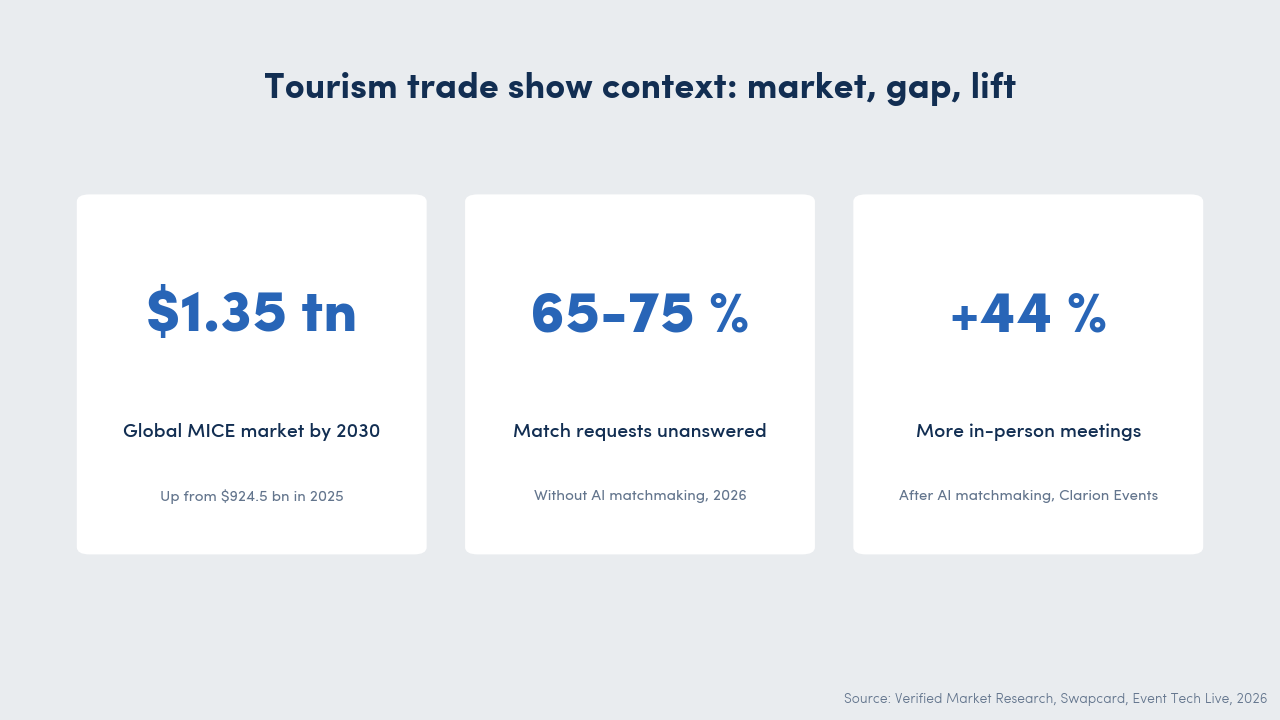
Meeting acceptance rate: The share of meeting requests that turn into confirmed appointments. Industry data published by Swapcard in May 2026 shows that at trade-show organisations without AI matchmaking, 65 to 75 per cent of attendee-to-exhibitor requests go unanswered, and AI matchmaking can double the acceptance rate. Track this monthly in the pre-event period.
Meeting completion rate: Of the confirmed appointments, how many actually happen. Hosted buyer programmes typically hit the high seventies; open registration sits much lower. Drop-off between confirmation and meeting is a red flag for buyer fatigue or over-scheduling.
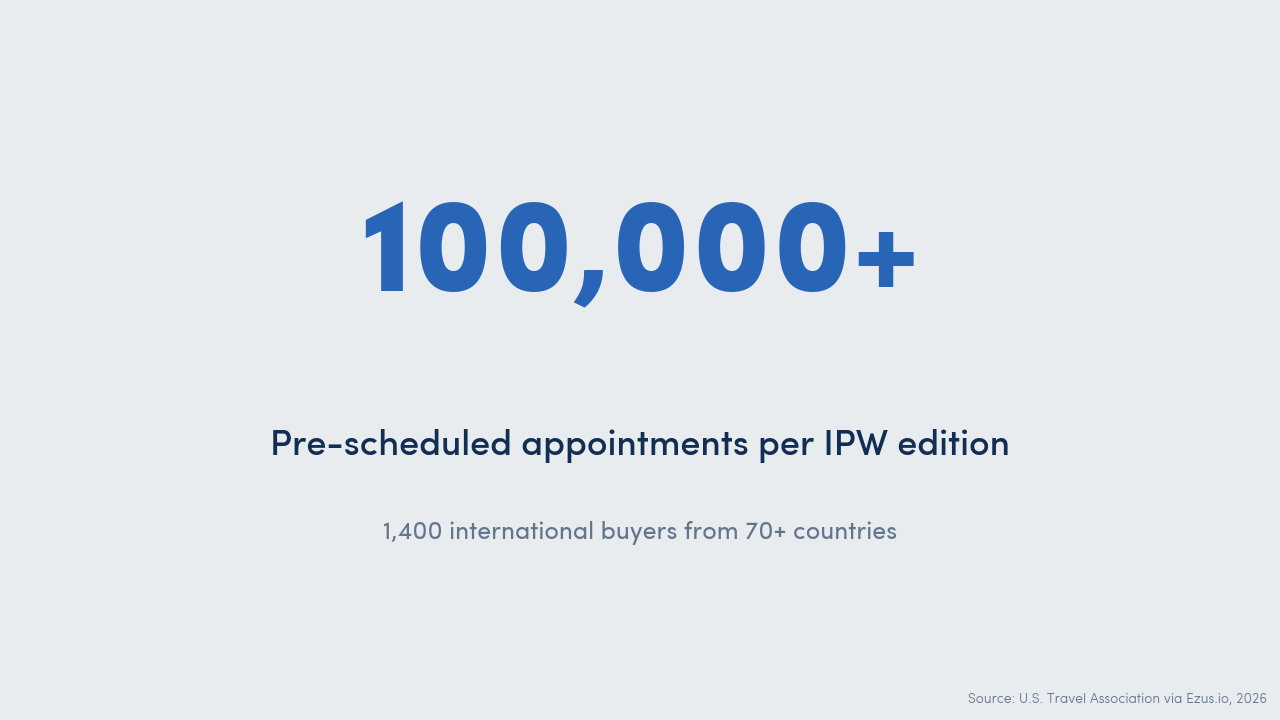
Pre-scheduled meeting count per buyer: The hosted-buyer-programme quota is the floor, but a healthy programme exceeds it. IPW, the U.S. Travel Association’s flagship inbound trade show, runs more than 100,000 pre-scheduled appointments across 1,400 international buyers each year, a useful scale benchmark for what a mature platform can carry.
Buyer satisfaction and return intent: Post-event survey of hosted buyers asking two questions: would you attend again, and did the meetings deliver actionable business. Anything below 70 per cent positive on either question deserves a structural review of the matching engine.
Seller follow-up rate: The proportion of post-meeting follow-up actions completed by sellers within 14 days. Platforms with weak post-event nudges leak attributable revenue at this stage. The matchmaking software earns its license by closing this gap, not just by scheduling the meeting.
Stakeholder reporting depth: Does the platform generate the dashboard you hand to your tourism ministry, your board, or your funding partner without manual reformatting. If the answer is no, your operations team is already paying for the missing piece in spreadsheet time.
Frequently Asked Questions
What is the best matchmaking software for a tourism trade show in 2026? For DMOs and convention bureaus running hosted buyer programmes with international participation, Converve is the strongest fit because the platform was built for B2B trade shows in the tourism vertical, has EU data residency by default, supports six or more languages natively, and has long-running tourism-industry reference cases. Larger international shows may consider Grip, Swapcard, or Cvent Attendee Hub depending on procurement profile and existing tool stack.
How does AI matchmaking improve hosted-buyer programmes? AI scoring lifts the share of meeting requests that turn into accepted appointments. Swapcard’s 2026 trend report shows acceptance rates roughly doubling at trade-show organisations once AI matching is switched on, with Tier-1 requests reaching close to 100 per cent acceptance. Clarion Events publicly reported a 44 per cent increase in in-person meetings after introducing AI matchmaking.
What is the difference between tourism trade show matchmaking and generic event networking software? Tourism trade show matchmaking software treats hosted-buyer workflow, multi-language meetings, multi-time-zone scheduling, and tourism-vertical ROI reporting as defaults. Generic event networking software treats them as optional add-ons or omits them entirely. The result on a real tourism trade show is the difference between a meeting programme that runs itself and one that requires shadow operations work.
Is there matchmaking software that supports multi-language buyer-seller meetings? Yes. Converve runs natively in six or more languages across the meeting calendar, attendee profiles, and notification emails. Swapcard, Brella, Grip, Bizzabo, Cvent, Eventdex, and MeetMatch offer multi-language support to varying depths, with coverage typically configurable per event. For tourism trade shows with European and Asian buyers in the same cohort, native multi-language is non-negotiable.
Which platforms are GDPR-compliant for tourism trade shows in the EU? Converve hosts data inside the EU by default. Grip, Swapcard, Bizzabo, Cvent, and Brella offer EU hosting on premium or enterprise plans, but buyers should make the residency commitment contractual rather than assumed. U.S.-headquartered platforms without an EU hosting option are not appropriate for EU-funded tourism trade shows.
What does tourism trade show matchmaking software typically cost? Pricing depends on attendee volume, the depth of the hosted-buyer module, and the contract length. Annual licences for a single tourism trade show with 200 to 500 hosted buyers commonly sit in the 20,000 to 80,000 euro range; enterprise platforms for mega-scale shows reach well into six figures. Smaller regional shows on platforms like Eventdex can run materially less.
Conclusion
Tourism trade shows live or die by the meetings they produce. The matchmaking platform is the operational engine that makes those meetings happen. It pre-qualifies the buyers, schedules across time zones, runs the conversations in the right language, and reports the outcomes to the people who pay for the show. Generic event-software lists optimise for breadth across categories. Tourism trade shows need depth in one category.
The nine platforms above all do real work in the tourism industry. The right one for your show depends on whether you are running a hosted-buyer programme for a national DMO, a hybrid regional show for a convention bureau, or a mega-event for an international audience. The eight-criteria framework and the three buyer profiles in this guide are designed to make the decision a structured one rather than a sales-call shoot-out.
Converve has built its matchmaking platform around exactly these requirements: hosted-buyer workflow, multi-language meetings, GDPR-native data residency, and ROI reporting that satisfies a tourism ministry. If you want to see how it would run your specific show, request a tailored Converve demo. For deeper reading on the operational side, the companion guides on how to run a hosted buyer programme and on hosted buyer versus open registration formats walk through the methodology behind the platform choice.