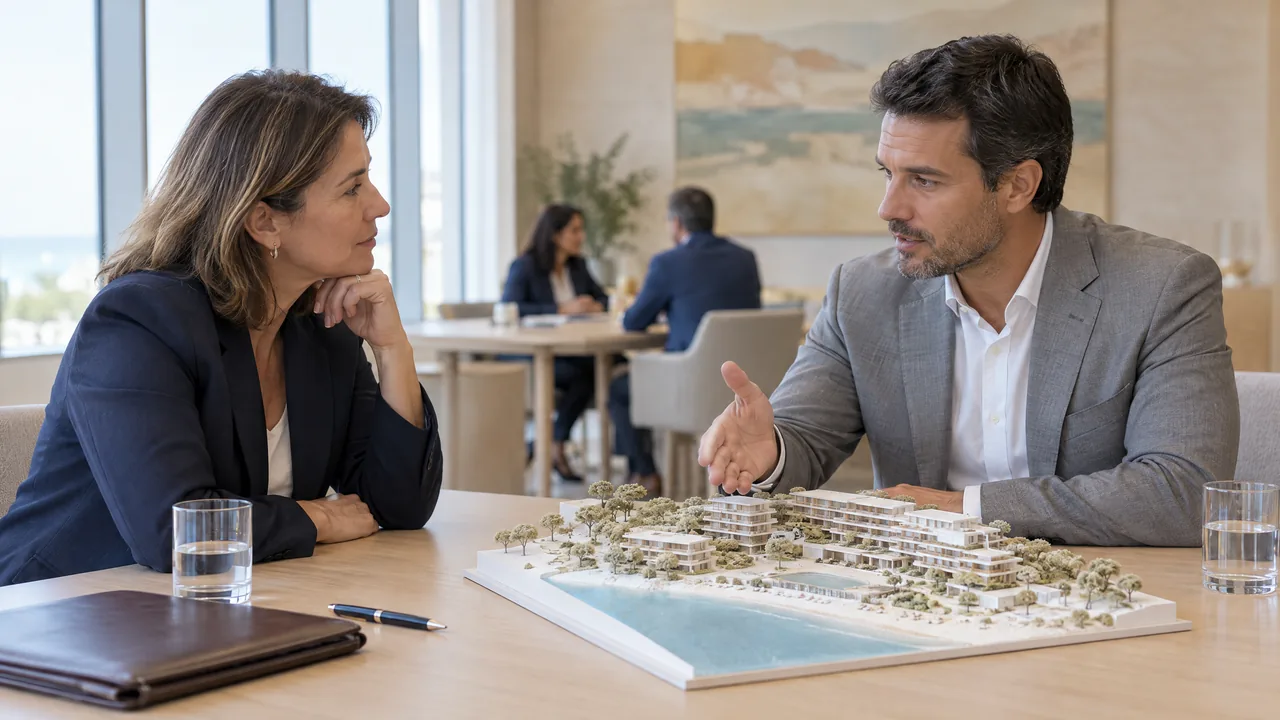
Twenty-five conversations of eight minutes each. That was the average appointment schedule of a destination at the 2025 Sports ETA Symposium, the annual meeting of the US sports events and tourism industry. Destinations walk from table to table and meet the owners of tournaments, championships and races. For many events, this is where hosting starts.
Sports tourism is travel in which sport is the main reason for the trip, whether the visitor competes or watches. For a destination, it is a market that can be won event by event. That is why many cities and regions run sports commissions, teams whose job is to attract sports events and help them succeed locally.
This guide explains what sports tourism covers, which events carry the business, how a bid works and where it really starts. Our view: destinations rarely win sports events with the bid book alone. They win them earlier, by showing a rights holder in a short, well-prepared appointment that the fit is real, and then following that conversation through to the award.
What is sports tourism?
Sports tourism is defined by the motive for the trip. UN Tourism, the United Nations tourism agency, describes it as the travel experience of a tourist who either watches a sporting event as a spectator or actively takes part in one. A 2018 European Commission policy paper puts it more simply: involvement in sport is the essential reason for travelling (both quoted in a European Parliamentary Research Service briefing, January 2026).
A widely used classification sorts sports tourism into three types. It goes back to the sports tourism researcher Heather Gibson (Sport Management Review, 1998) and answers a question people often search for.
- Active sports tourism: the visitor takes part. Destination marathons, ski holidays, cycling tours and team training camps belong here.
- Spectator or event sports tourism: the visitor watches. Think of world championships, cup finals and away games.
- Sports heritage tourism: the visitor comes for the history. Stadium tours and sports museums are typical examples.
The EPRS briefing groups the same trips into two main forms, active and passive, and counts stadium tours and museums as passive. For a sports commission, the first two types overlap in one event. A youth football tournament can bring 120 teams who play and the parents who watch. Both groups need beds.
Sports tourism is mostly leisure tourism, not business tourism. Where the line runs, and why destinations count business visitors separately, is explained in our guide on what business tourism is and how it differs from MICE. What the two share is the selling logic: a destination cannot bid for individual trips, but it can bid for the event that causes hundreds of them.
Why small events carry much of the business
When people hear “sports tourism”, they think of the Olympic Games. The data points somewhere else.
Tourism Economics measured the US sports tourism market for Sports ETA in two separate studies. The 2023 report covered youth and adult amateur sport plus college championships. It counted more than 200 million sports travellers, 52.2 billion US dollars in direct spending, more than 73 million hotel room nights and 757,600 jobs. The 2024 report covered spectators at professional and college regular season games. It found 109.7 million travelling fans, 63.5 million of them staying overnight, and 47.1 billion US dollars in direct spending.
US sports tourism, direct spending
Two US sports tourism markets of similar scale
Two separate studies with different scopes and years. The figures cannot be added together or compared as a trend.
The scopes differ, so the two figures are not a ranking. They still show something important for destination planning. Amateur and youth events generate spending on the same scale as professional spectator sport, and a destination does not need a major league team to compete for them. A regional swimming championship needs a pool, hotels and a team that answers the rights holder’s questions quickly.
These events also repeat. A national youth volleyball championship looks for a host every year or every few years, often with fixed requirements. A destination that wins it once and delivers well has a strong case for the next edition.
Europe looks at the same market through a policy lens. The parliamentary briefing cites an estimate of about 683 billion US dollars for global sports tourism, around 10 per cent of the tourism market (UN Tourism and Grand View Research 2024, cited by EPRS 2026). It also stresses why regions care: sports events can bring visitors outside the peak summer months and into rural areas.
How much a single tournament actually adds to the local economy is a separate calculation. We cover additional spending, multipliers and common errors in our guide on the economic impact of events.
Who sits at the table: sports commissions, DMOs and rights holders
Whether an event comes to your city depends on three parties. Each wants something different from the bid.
| Party | Who it is | What it wants | What it brings |
|---|---|---|---|
| Rights holder (event owner) | National or international federation, league, private event organiser | Reliable venues, affordable rooms, local support, low risk | The event, its participants and, often, recurring editions |
| Sports commission | Team in or alongside a destination marketing organisation, or an independent non-profit | Events that fill hotels outside peak times and fit the venues | Venue and hotel coordination, local contacts, sometimes bid fees or grants |
| Destination marketing organisation (DMO) | The city or regional tourism organisation | Visitor nights, spending, visibility | Funding, marketing, accommodation data, links to the convention bureau |
In many cities the sports commission sits inside the destination marketing organisation, next to the convention bureau. The logic is the same as with congresses: the team sells the destination to the people who decide where an event goes.
The international market works the same way, only with larger events. The 2024 SportAccord World Sport and Business Summit in Birmingham brought more than 120 international federations together with host cities and nations. Sport Event Denmark, the national agency that has helped bring more than 250 international events to Denmark in a decade, calls it a “must attend” event (SportAccord, February 2024). Relationships count on both sides of the table. Sports commissions describe the same preference in the trade press: given the choice, they bid for events whose rights holders they already know (Sports Destination Management, December 2018).
How a sports event bid works
The bid process explains why that trust matters. On paper, it looks like a formal tender. In practice, most of the decision is made before the proposal is written.
Sports event bid cycle
Six steps from first contact to the event
- First contact and fit check Dates, venue specifications, hotel capacity. Is there a match at all?
- Request for proposal The rights holder sends its requirements to a shortlist of destinations.
- Bid proposal Venues, hotel rates, support package, letters from local leaders.
- Site visit The rights holder inspects venues, hotels and transport.
- Award and contract Host agreement, room blocks, financial support.
- Delivery and reporting Event days, room pick-up, impact figures for funders and the next bid.
The request for proposal (RFP) defines what the destination has to answer. A typical sports RFP names the event, the number of athletes, a date window, venue specifications, room nights and the bid fee, if there is one. It often adds where the event was held in the last three to five years, so destinations can call their peers (Sports Destination Management, December 2018).
Destinations check fit first. Are the dates open, are the venues free, does the hotel space work? The same article advises destinations to ask for room nights broken down by night, not a single total of 2,000. Tournaments that eliminate teams day by day need fewer rooms at the end than at the start. That detail decides your contract risk later, which we explain in our guide on hotel attrition clauses and room blocks.
Rights holders, in turn, arrive with practical questions: what the destination can help with, and where there is room to negotiate. USA Judo described its first conversations with destinations in exactly those terms (Sports Destination Management, February 2021). Those are questions you answer best in person.
Once the RFP is out, the work shifts to the destination. The bid proposal answers the RFP in its own order: venues with their specifications, a hotel package with rates and room nights per night, the support on offer, from bid fees and grants to volunteers and local transport, and letters from local leaders. Answering in a different order makes the rights holder search, and a shortlist committee comparing five bids will not search for long.
Shortlisted destinations then host a site visit. The rights holder wants to walk the venue, see the hotels, check transfer times and meet the people who will run the event. Bring the venue manager and a hotel contact rather than a presentation, because the visit tests whether the proposal holds up on the ground.
The award leads to a host agreement that fixes the room block, the financial support and who carries which risk. Delivery closes the cycle: room pick-up and attendance figures from this edition go into the report for your funders and into the next bid, often to the same rights holder.
Appointment marketplaces: where the bid really starts
Step one of the bid cycle is rarely a cold email. It is usually a short meeting at an industry event, and the sports sector has turned these meetings into a system.
At the Sports ETA Symposium, the Marketplace runs on pre-scheduled one-to-one appointments. Members request the organisations they want to meet, rank their requests and accept or decline the requests they receive. Each slot lasts ten minutes: eight minutes of conversation, two minutes to move to the next table. Destinations have no booths. They walk to the tables of the event owners. Schedules go out about a week before the event (Sports ETA Marketplace FAQ).
Three rules in that system are worth a closer look:
- Sports ETA recommends requesting at least 50 appointments, because not every request turns into a meeting. In 2025, destinations averaged 25.
- Requests that are neither accepted nor declined are still scheduled where possible, only with lower priority. Silence counts as a weak yes.
- Event owners must take part in the appointments to receive travel assistance. The organiser funds their trip, and in return they commit to meetings.
The last rule will look familiar to anyone in tourism trade shows. It is the core of a hosted buyer programme: the decision-makers travel at reduced cost, and the sellers get guaranteed meetings with them. In sports tourism, the rights holders are the buyers. The destinations are the sellers.
Eight minutes is too short to win an event. It is long enough to earn an RFP.
Preparing eight minutes that lead to an RFP
So who decides whom you meet? Usually the sales manager of the sports commission. Back home, the board or the city council funds the trip and will ask what it produced. Good preparation serves both.
- Pick events, not organisations: start from your venues and your quiet hotel weeks. A 50-metre pool and empty rooms in November point to specific championships, and to the rights holders behind them.
- Request widely, rank honestly: request at least twice the number of meetings you hope to get. Put the rights holders whose events fit your venues and dates at the top.
- Bring answers in RFP order: a one-page sheet with venue specifications, hotel rooms within reach of the venue, typical rates, airport access and available support. It mirrors what the rights holder will ask later.
- Spend the first two minutes asking: dates, rotation cycle, room nights per night, what went wrong last time. Then show only the facts that match.
- Agree the next step before the bell: an RFP, a site visit date or a call with your venue manager. A meeting without a next step rarely leads anywhere.
- Follow up within a week: send the sheet, the answers you owed and the name of the person who will handle the bid.
Log every meeting with its outcome. This record becomes the answer to the board, for example: 25 meetings, nine RFPs, four bids, one award. Written next steps make the trip measurable.
Hosting your own marketplace, and reporting what it produced
Some destinations go a step further and host the meetings themselves. A state sports agency invites national federations to a sports summit. A regional tourism organisation adds a sports track to its trade show. The rules that make the Sports ETA Marketplace work can be adopted on a smaller scale.
Decide who may request whom, and whether both sides must accept. Set a slot length that fits the conversation, with time to change tables. Tie travel support for rights holders to a minimum number of appointments. Send schedules early enough for preparation, but late enough to include late registrations. And keep the meeting data, because it is the earliest point in the chain your funders care about.
That chain runs from meetings to RFPs, bids, awards and finally room nights. The last link is what the economic impact calculation measures. The first link is something you can only show if every appointment was recorded.
Converve provides the meeting scheduling layer for this. Registration captures rights holder and destination profiles, such as sport, event size, season and venue needs. A configurable, rule-based meeting matrix schedules the one-to-one appointments according to the rules you set, and reports show which meetings took place. See how destination teams use it on our tourism solutions page.
Frequently Asked Questions
What is sports tourism?
Sports tourism is travel in which sport is the main reason for the trip. UN Tourism describes it as the travel experience of tourists who either watch a sporting event as spectators or actively take part in one (cited in the EPRS briefing on sports tourism, January 2026). It includes marathons, training camps, tournaments, championships and visits to sports museums.
What are the three main types of sports tourism?
The three main types are active sports tourism, where the visitor takes part, for example in a marathon or a ski holiday; spectator or event sports tourism, where the visitor watches a competition; and sports heritage tourism, such as stadium tours and sports museums. This split goes back to Heather Gibson (Sport Management Review, 1998). The European Parliamentary Research Service groups the same trips into two main forms, active and passive, in its January 2026 briefing.
What does a sports commission do?
A sports commission attracts sports events to a city or region and supports them locally. It identifies events that fit the local venues and hotels, builds relationships with rights holders, answers requests for proposals, coordinates site visits and helps with venues, hotels, volunteers and local partners during the event. Many sports commissions sit inside or alongside a destination marketing organisation.
How do destinations bid for sports events?
The rights holder sends a request for proposal with dates, venue needs, room nights and any bid fee. Destinations that fit submit a proposal with venues, hotel rates, support and letters from local leaders. A site visit follows, then the award and the host contract. Most bids start earlier, in a first meeting that establishes the fit (Sports Destination Management, 2018 and 2021).
What are marketplace appointments in sports tourism?
They are pre-scheduled one-to-one meetings between destinations and rights holders at an industry event. At the Sports ETA Symposium, members request and rank meetings; each slot lasts ten minutes including two minutes to change tables. In 2025, destinations averaged 25 pre-scheduled appointments, and Sports ETA recommends requesting at least 50 (Sports ETA Marketplace FAQ).
How big is sports tourism?
In the US, amateur, youth and college championship events generated 52.2 billion US dollars in direct spending and more than 73 million hotel room nights in 2023 (Tourism Economics for Sports ETA, 2024). Spectators at professional and college regular season games added 47.1 billion US dollars in 2024 in a separate study. Globally, an estimate cited by the European Parliament puts sports tourism at about 683 billion US dollars.
Win the fit before you write the bid
Sports tourism is a large market, and a surprisingly accessible one. Much of the spending comes from amateur and youth events that recur and need venues, hotels and a reliable local partner rather than a famous stadium.
Destinations rarely win these events with the bid book alone. They win them by meeting the right rights holders early, proving the fit in a few well-prepared minutes and following up until the RFP arrives. Recorded steps answer the board’s question.
If your destination runs appointment programmes between rights holders and destinations, or wants to start one, get in touch with Converve.