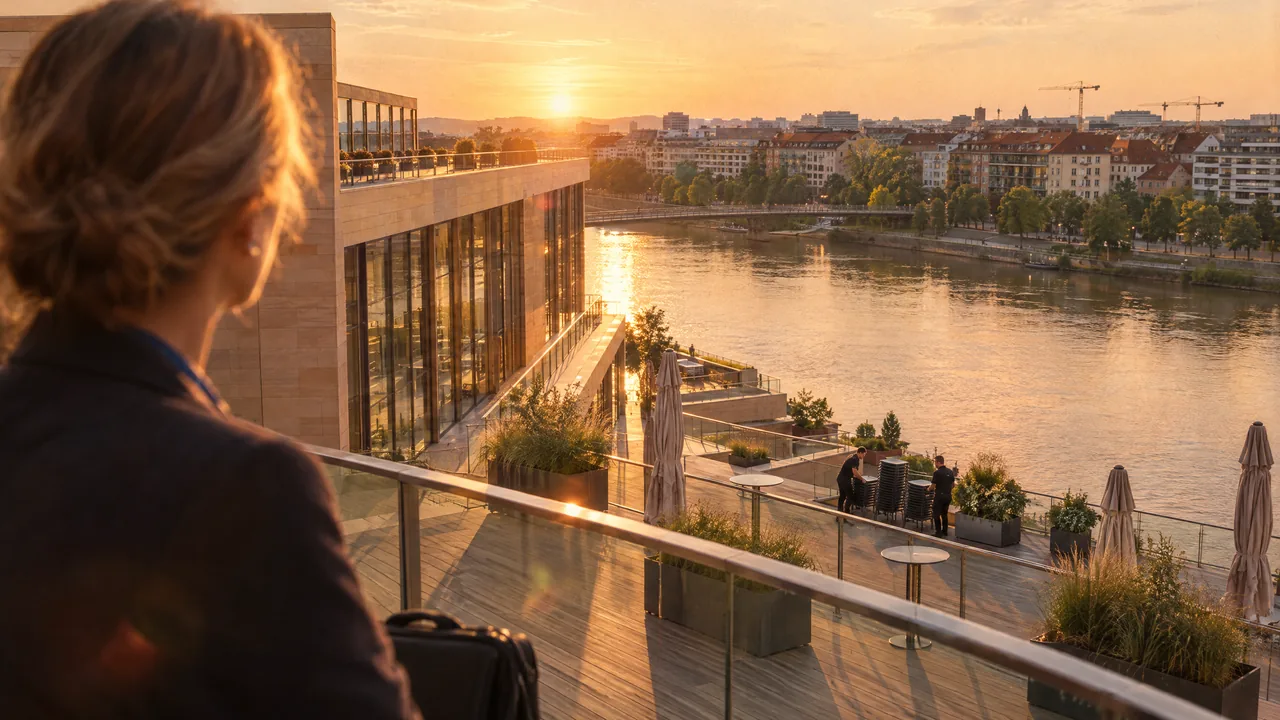
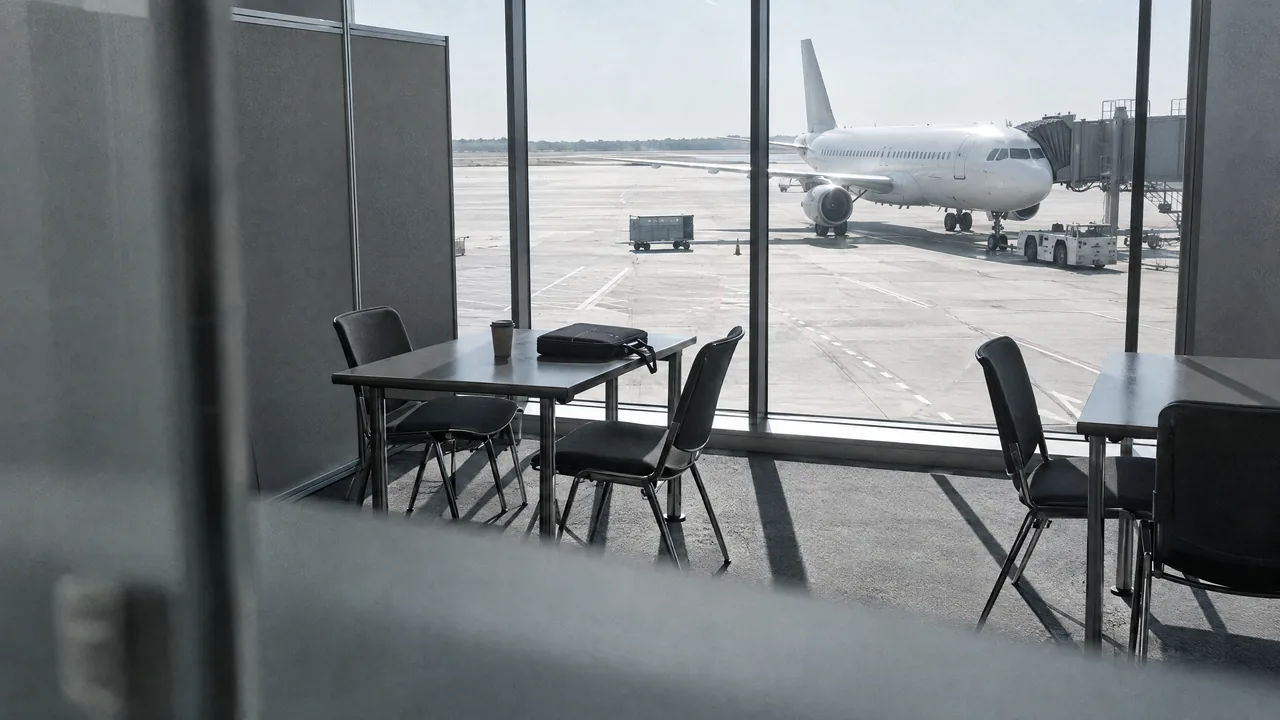
A sales director flies from Frankfurt to Lisbon for a three day medical congress. Her employer books the trip as business travel and wants it cheap. Lisbon’s tourism statistics count her as a business tourist and want her to spend. The congress organiser counts her as a MICE delegate (MICE stands for meetings, incentives, conferences and exhibitions) and wants her in the session room. The trip appears in three different reporting systems, each with a different purpose.
Business tourism, business travel and MICE overlap, but they describe different aspects of professional travel. Understanding the distinctions helps destinations choose the right audiences, decide which activity they can influence and report results accurately.
This guide defines business tourism, sorts it from business travel and MICE, lists typical examples and explains why destinations invest in attracting business visitors.
What is business tourism?
Business tourism is tourism by people who travel for a professional purpose. UN Tourism, the United Nations tourism agency formerly known as UNWTO, defines it as “a type of tourism activity in which visitors travel for a specific professional and/or business purpose” outside their usual environment. Its glossary also names the key components: meetings, incentives, conventions and exhibitions.
The definition rests on the word visitor. In official statistics, a visitor is anyone who leaves their usual environment for less than a year for any main purpose other than taking a job with a local employer. A consultant who flies in for a client workshop is a business visitor. A commuter who works in the city every day is not. A seasonal worker hired by a local hotel is not either.
Two details are easy to miss. First, business tourism includes individual trips, not only events: a sales visit, a site inspection or a negotiation counts as much as a congress. Second, UN Tourism separates tourists, who stay overnight, from same day visitors. A business trip with a return flight the same evening is still a business visit, but it barely touches the hotel sector. For a destination, overnight stays are particularly relevant to accommodation demand and visitor spending.
Business tourism and business travel: different perspectives
The difference between business tourism and business travel is not the trip. It is who is looking at it.
Business travel is the traveller’s and the employer’s view. It belongs to corporate travel management: travel policies, booking tools, duty of care, cost per trip. The Global Business Travel Association (GBTA) measures it from that side. In its 2026 Business Travel Index, published in August 2026, GBTA expects global business travel spending to reach 1.71 trillion US dollars in 2026, up 7.2 per cent, while the number of trips grows by only 1.3 per cent to about 1.84 billion.
Read that pair of numbers from the destination side. Spending grows more than five times faster than trip volume, so the growth comes from more expensive trips, not from more travellers. For destinations, spending growth alone is therefore not a reason to expect a comparable increase in visitor numbers.
Business tourism is the destination’s view of the same movement. It belongs to tourism statistics, convention bureaus and the local economy: arrivals, nights, spend per visitor, jobs in hotels and restaurants. The employer monitors the cost and purpose of a trip, while the destination measures the visitor activity it brings to local businesses.
Private extensions can add to that visitor activity. This helps explain destinations’ interest in bleisure, adding leisure days to a work trip, and why we wrote a separate guide on how destination marketing organisations (DMOs) and congress organisers can plan those extra nights together.
Business tourism vs MICE: the organised part
If business travel is the employer’s view of business tourism, MICE is a slice of it. It covers the business trips that happen because someone organised an event: a corporate meeting, a reward trip, an association congress, a trade show.
Individual business trips are not MICE. The consultant’s client workshop, the engineer’s maintenance visit and the buyer’s factory tour are business tourism without an event behind them. That makes MICE the organised, plannable part of business tourism, and the part a destination can actively bid for.
The industry itself is not fully settled on the label. UN Tourism’s glossary points from MICE to “meetings industry”, the term preferred by ICCA (the International Congress and Convention Association) and other professional bodies. Many convention bureaus now use “business events” instead, as in Business Events Adelaide or Business Events Sydney. The Events Industry Council (EIC) gives that term a measurable edge: its global study counts gatherings of at least ten participants, lasting at least four hours, in a contracted venue.
| Term | Whose view | What is counted | Who typically measures it |
|---|---|---|---|
| Business travel | Traveller and employer | Trips, cost per trip, policy compliance | Travel managers, GBTA |
| Business tourism | Destination | Business visitors, nights, local spend | Tourism statistics offices, DMOs |
| MICE (business events) | Event organiser and convention bureau | Events, delegates, room nights won through bids | Convention bureaus, ICCA, EIC |
The finer vocabulary of the MICE level, such as MICE city, convention city and MICE hotel, belongs one level down. We sorted those terms in our guide on what makes a city a MICE destination.
Examples of business tourism
Examples make the boundaries visible. Here are eight common forms of business tourism, with the MICE ones marked.
- Sales and client visits: an account manager spends two nights in Milan to meet three customers. Business tourism, not MICE.
- Site inspections and audits: a quality engineer visits a supplier’s plant. Business tourism, not MICE.
- Project and installation work: a technician team stays a week to commission a production line. Business tourism, not MICE.
- Corporate meetings: a regional sales team gathers for a two day planning meeting in a hotel. MICE (meetings).
- Incentive trips: a company rewards its top fifty sellers with a programme in Seville. MICE (incentives), and the subject of our guide on incentive programmes that pay off.
- Association congresses: four thousand cardiologists meet in Vienna. MICE (conferences).
- Trade shows and hosted buyer programmes: exhibitors and invited buyers meet at a tourism fair. MICE (exhibitions).
- Training courses and academies: employees attend a certified course away from home. Business tourism, and MICE if it meets the event threshold.
For these examples, the distinction is whether the trip centres on an organised business event.
Why destinations compete for business tourists
Business visitors account for a relatively small share of trips. According to Eurostat, only 9.6 per cent of the tourism trips EU residents made in 2023 were for professional purposes. Destinations also consider spending, seasonality and the wider value of business events.
They matter by value and by timing. The VisitBritain Delegate Spend Report, based on a 2024 survey at 80 business events, puts average spend per delegate per trip at 629 pounds, excluding registration fees. Delegates from outside Europe spent 1,824 pounds, about four times the domestic average. In Australia, Business Events Adelaide calculated in 2024 that interstate and overseas delegates spend around 1,165 Australian dollars per day.
Business visitors in numbers
Few trips, high value
Timing adds the second argument. Business visitors arrive midweek and in months when holidaymakers stay home, which fills hotel rooms that would otherwise stand empty. Their trips are paid by employers, so they react less to the household budget than leisure travel does. And business visitors bring something leisure guests rarely do: contacts, research partnerships and occasionally investment.
This is where the distinction pays for itself. Individual business travel follows the local economy; a destination cannot bid for it. MICE can be bid for, won and counted. That is why convention bureaus focus their sales effort on events, and why the competition between cities is really a competition for the organised part of business tourism. The detailed economics, from ICCA delegate numbers to the six criteria that decide bids, are in our guide on MICE destinations.
When reporting to a funding body, distinguish the activity the bureau helped attract from business visits that happened independently of its work.
What the distinction changes for your work
For a DMO, the three terms translate into three different jobs. Business travel is a market you serve: easy access, reliable hotels, good transport from the airport. Business tourism is the result you report: visitors, nights and spend. MICE is the business you actively win, which is why it usually sits with a dedicated convention bureau inside the destination marketing organisation.
Mixing the levels causes typical mistakes. A bureau reports total business tourism numbers as its own success, although most of those trips would have happened anyway. Or a city markets its congress centre to corporate travel managers, who buy flights and hotel rates but rarely choose where an association meets. Use measures that match the bureau’s role and direct promotion towards the people who influence event location decisions.
For event organisers, the lesson runs the other way. When you talk to a convention bureau, you are the MICE buyer, and you are bringing the business tourists the city wants. That gives you leverage. Ask what the bureau offers, and offer something back: delegate origins, room nights, extended stays and, at trade events, the number of business meetings held. Destinations that host their own buyer seller events go one step further and run hosted buyer programmes, which turn visits into scheduled meetings with measurable outcomes.
For destinations and tourism organisations that run trade events, Converve provides the meeting scheduling layer for tourism: registration with buyer and supplier profiles, a configurable meeting matrix for pre scheduled one to one meetings, and reports on the meetings held. It covers the part of business tourism a destination can plan.
Sports events follow the same selling logic, even though most of their visitors travel for leisure. A sports commission cannot bid for individual fans, but it can bid for the championship that brings them, and that bid often starts with a pre-scheduled meeting with the rights holder, as our guide on how destinations and sports commissions win sports events explains.
Air access shapes all of these numbers, because business visitors and congress delegates favour destinations they can reach easily. That is why tourism boards join their airports in pre-scheduled meetings with airline network planners, bringing marketing budgets to the table, as our guide to route development forums explains.
Frequently Asked Questions
What is business tourism in simple terms?
Business tourism is travel to another place for a work purpose, seen from the destination’s side. It covers individual business trips, such as client visits or site inspections, and organised business events, such as congresses, incentive trips and trade shows. UN Tourism defines it as tourism in which visitors travel for a specific professional or business purpose.
What are examples of business tourism?
Typical examples are sales and client visits, supplier audits, project and installation work, corporate meetings, incentive trips, association congresses, trade shows and hosted buyer programmes, and training courses away from home. The last five are usually counted as MICE because an organiser stands behind the trip.
Is business travel the same as business tourism?
They describe the same trips from different sides. Business travel is the view of the traveller and the employer, focused on cost, policy and safety. Business tourism is the view of the destination, focused on visitors, nights and local spending. GBTA expects global business travel spending of 1.71 trillion US dollars in 2026 (GBTA Business Travel Index, August 2026).
Is MICE the same as business tourism?
No. MICE (meetings, incentives, conferences and exhibitions) is the organised part of business tourism. Individual business trips without an event, such as a sales visit, are business tourism but not MICE. UN Tourism names MICE as the key components of business tourism and prefers the term “meetings industry”.
Why is business tourism important for destinations?
Business visitors spend more per trip and arrive midweek and off season, when leisure demand is low. In the UK, business event delegates spent an average of 629 pounds per trip, and delegates from outside Europe 1,824 pounds (VisitBritain Delegate Spend Report, 2024 survey). The MICE part can also be won actively through bids, which makes it plannable.
Use the distinction to guide planning and reporting
Business tourism, business travel and MICE are not competing definitions. They provide different perspectives on professional travel: trip management, visitor activity and organised business events. Business tourism is the umbrella. MICE is the organised part a destination can win. Business travel is the same trip on the company’s books.
Use these distinctions to set priorities: support business visitors, measure their contribution to the destination and report the specific events your bureau helped attract.
If your destination or tourism organisation runs buyer seller meetings and wants to show what they produce, get in touch with Converve.