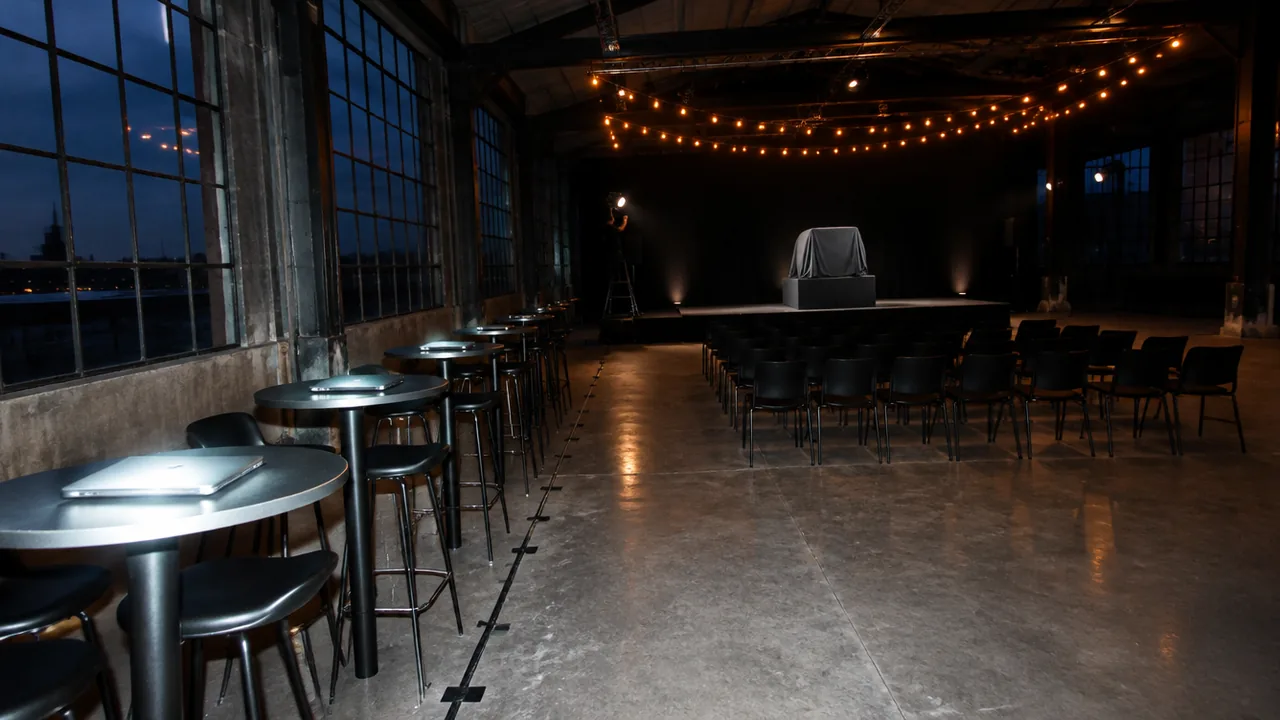
In July 2019, the Cottrell Scholar Conference in Tucson, Arizona, tried something new at its 25th annual meeting, with about 170 science educators. On its second evening, six young scientists from Germany, Russia and the US each had ten minutes to explain their research in English, and the audience decided who won. The organisers announced it as the first science slam ever included in the conference (University of Arizona German Studies, 2019). A format born on German club stages had reached an American academic meeting.
A science slam can bring a lively change of pace to a conference, but it needs careful planning. It works when the audience is genuinely the jury and when your programme gives the conversations it sparks somewhere to go. A fair vote and time to meet the speakers afterwards help the evening become a useful part of the conference. This guide explains what a science slam is, how it differs from lightning talks and the Three Minute Thesis, when it suits your conference, and how to plan the call, the coaching, the vote and the follow-up.
What is a science slam?
A science slam is a talk contest in which researchers present their own work in about ten minutes, in a way that people outside their field can follow. The audience judges, usually by applause or with score cards. Scientific content, clarity and entertainment all count. The two large German slam networks, science-slam.com and scienceslam.de, both set ten minutes as the rule. science-slam.com adds two more: the research must be the speaker’s own, and almost any aid is allowed, from slides to props to live experiments, as long as it respects the venue’s fire regulations.
The format is young. The first science slam took place in Darmstadt, Germany, in late 2006. Its founder, Alex Dreppec, was a poetry slammer and comprehensibility researcher who borrowed the idea from the poetry slam. From 2008, the Haus der Wissenschaft in Braunschweig ran slams as a regular series. From there the format spread to universities, theatres and festivals across Germany, Austria and Switzerland, and later onto international conference programmes.
That history has a practical consequence for your audience. Delegates from German-speaking countries may know the format well, while many others have never seen one. Open the evening with two minutes on the rules. Then everyone judges by the same standard.
Science slam, lightning talk, Three Minute Thesis: which format are you running?
Those two minutes matter more than they seem, because “slam” is a loose label on conference programmes. Three features set the science slam apart from other short talk formats: it is a contest, the audience is the jury, and the aim is clarity for non-specialists.
| Format | Length | Who judges | Aids | Typical slot |
|---|---|---|---|---|
| Science slam | About 10 minutes | The audience, by applause or score cards | Slides, props, live experiments | Evening or social programme |
| Lightning talk | Usually 5 minutes | Nobody, it is not a contest | Optional slides | A block in the day programme |
| Three Minute Thesis (3MT) | 3 minutes | A judging panel | One static slide, no props | Graduate school or society competition |
| FameLab | 3 minutes | Judges, in front of an audience | No slides; only props the speaker can carry on stage | National heats and finals |
The Three Minute Thesis began at the University of Queensland in 2008 and now runs at more than 900 universities in over 85 countries, according to the organisers, so some of your doctoral delegates may already have competed in one. Its rules are strict: one static slide, no props, disqualification after three minutes. FameLab, run in the UK by Cheltenham Festivals, also gives speakers three minutes but allows props they can carry on stage themselves.
Some societies mix the labels. The MedPhys Slam of the American Association of Physicists in Medicine (AAPM) is, in its own words, similar to the Three Minute Thesis. Its 2026 rules allow three minutes and three slides, ban props and notes, and score each talk against 15 criteria for content, communication and engagement. That is a sound competition, but it is not a slam in the classic sense. Decide which rules you mean before the call goes out.
If you want many voices without a contest, a lightning talk session is the better tool. It brings ten ideas into the room in an hour. A slam goes deeper into five or six pieces of research, and the vote gives the evening its tension. The vote also asks for care, because every speaker but one goes home without the prize.
When a science slam suits your conference
Before the programme chair signs off, she usually asks one question: does an entertainment format fit our scientific standards? Research gives a fairly clear answer. Philipp Niemann and colleagues studied three science slams with a survey of 469 audience members, eye tracking and interviews with 18 slammers (Media and Communication, 2020). Audiences came mainly to be entertained, yet rated the scientific value of the talks highly and spent more visual attention on scientific content than on the jokes. The authors found no evidence that entertainment undermines the scientific value.
For the programme chair, that means a slam can sit next to the scientific programme without diluting it. A science slam is a good fit when:
- You want to give early career researchers a stage: doctoral candidates often get a poster in the main programme. A slam gives them the biggest room of the evening.
- Your conference brings several disciplines together: when clinicians, engineers and data scientists share a room, explaining your work to non-specialists is not a concession. It is the point.
- You need a shared evening: a slam keeps delegates on site after the last session and gives the conference a common moment.
- A sponsor wants to support young researchers: a prize for the best talks is a sponsorship with a clear purpose and a story to tell.
Skip the slam if you cannot find five researchers who want to be on stage. Volunteers make the evening, and conscripted speakers show it. The same applies if your evening programme is already full and the slam would end up in a lunch break.
How to run a science slam at a conference
Once the decision is made, plan for about three months of lead time. The published examples are remarkably similar in their key figures.
Ten minutes, five or six slammers, a full room
Five or six slammers give you enough variety for a real contest without overloading the evening. Plan your slam in six steps.
Plan a conference science slam in six steps
- 12 weeks before Set the rules Talk length, number of slammers, how the vote works and the language, before the call goes out.
- 10 weeks before Open the call A short abstract, a clear target group and a deadline about six weeks before the event.
- 6 weeks before Select the slammers Five or six talks from different parts of your field, plus one reserve.
- 4 weeks before Coach them A science communication workshop and a rehearsal on the real stage with clock and microphone.
- On the day Run the evening A host, a visible clock, a vote after each talk and a short award moment.
- Next day Plan the follow-up Make the slammers easy to find and give interested delegates a way to book a meeting.
The call and the selection
The EBRAINS Summit 2025 in Brussels shows a lean call. EBRAINS, the European research infrastructure for brain research, asked for a title and a description of no more than 250 words, with a deadline of 28 October for a slam on 9 December. Researchers at all career stages could apply, alone or in pairs, as long as their work related to the infrastructure’s fields, such as neuroscience, data science or ethics. A short abstract keeps the barrier low. If you want to coach the slammers, leave about six weeks between deadline and slam.
Decide early whom the stage is for. An open call brings in confident senior researchers who may crowd out the doctoral candidates you wanted to promote. If your goal is early career visibility, say so in the call. When you select, aim for range: five slammers from five corners of your field show the audience the breadth of the conference. Five talks from the same lab show one corridor.
Coaching before the stage
Ten minutes without notes in front of several hundred colleagues is new for most doctoral candidates. EBRAINS invited all participants to an online science communication workshop two months before the event. Add a rehearsal on the real stage, with the clock and the microphone you will use on the night. A slammer who sets up a live experiment in the room the afternoon before finds the missing power socket in time.
Audience vote or jury?
How you judge sets the mood in the room, so treat it as your most important rule. At the Cottrell Scholar Conference, the audience was the jury. Three options are common:
- Applause: simple and loud, but hard to measure fairly.
- Score cards: a few audience members score each talk right after it ends. This is easier to trace and costs only a few extra minutes.
- Jury: at HPLC 2023, the international liquid chromatography conference in Düsseldorf, an eight-member jury awarded prizes of 1,500, 1,000 and 500 euros, funded by the laboratory instrument maker KNAUER. A jury suits a sponsored prize that needs a reasoned decision.
Tell slammers the criteria in advance, so they know whether to lean towards explaining or entertaining. At a conference, clarity and entertainment should count together.
Running order and timing
Five slams of ten minutes add up to 50 minutes of talking. Add the welcome, changeovers, voting and the award. The following breakdown is our own rule of thumb, not a requirement of the slam networks.
| Element | Time needed |
|---|---|
| Welcome, rules, introducing the vote or the jury | 5 to 10 minutes |
| Five slams of 10 minutes each | 50 minutes |
| Changeover and voting after each slam | 10 to 15 minutes |
| Counting and award | 10 minutes |
| Total | 75 to 85 minutes |
Plan for an hour and a half. Six slammers, as in Tucson, push the evening towards 100 minutes. EBRAINS added an open microphone after each slam, where the audience could ask questions and discuss. That is a fine idea, but give it a hard limit of three minutes per talk, or the evening runs past two hours. A host who keeps the clock visible and the tone warm holds it all together; our conference MC script has wording for introductions and handovers.
Where the slam sits in the programme
Most of the published examples place the slam in the evening. There it does not compete with scientific sessions, and it gives the conference a shared high point. If it replaces part of your social programme, weigh it against the other options in our guide to gala dinners and dine-arounds. EBRAINS took another route and put the slam on the summit’s public open day. If you schedule it during the day instead, make sure no major session runs at the same time. Where the slam fits among plenaries, parallel tracks and posters is a question of conference session types and of the job each slot has to do.
One more point before the programme goes to print. “Science slam” is widely used as a name for the format at conferences and universities. Behind the term, though, stand organisers with their own series, logos and championships. Use the generic term freely, but do not borrow another organiser’s logo or series name without asking. If you want a branded name for your slam, have it checked first; this paragraph is not legal advice.
After the applause: from slam to meetings
The award is not the end of the evening’s value. Your audience has just listened to five researchers and wants to talk to one or two of them. A professor is looking for a postdoc for her new project. An engineer from a sponsor wants to know more about the method in talk number three. If nothing is planned for that moment, the slammers disappear to the bar with their friends, and the chance is gone.
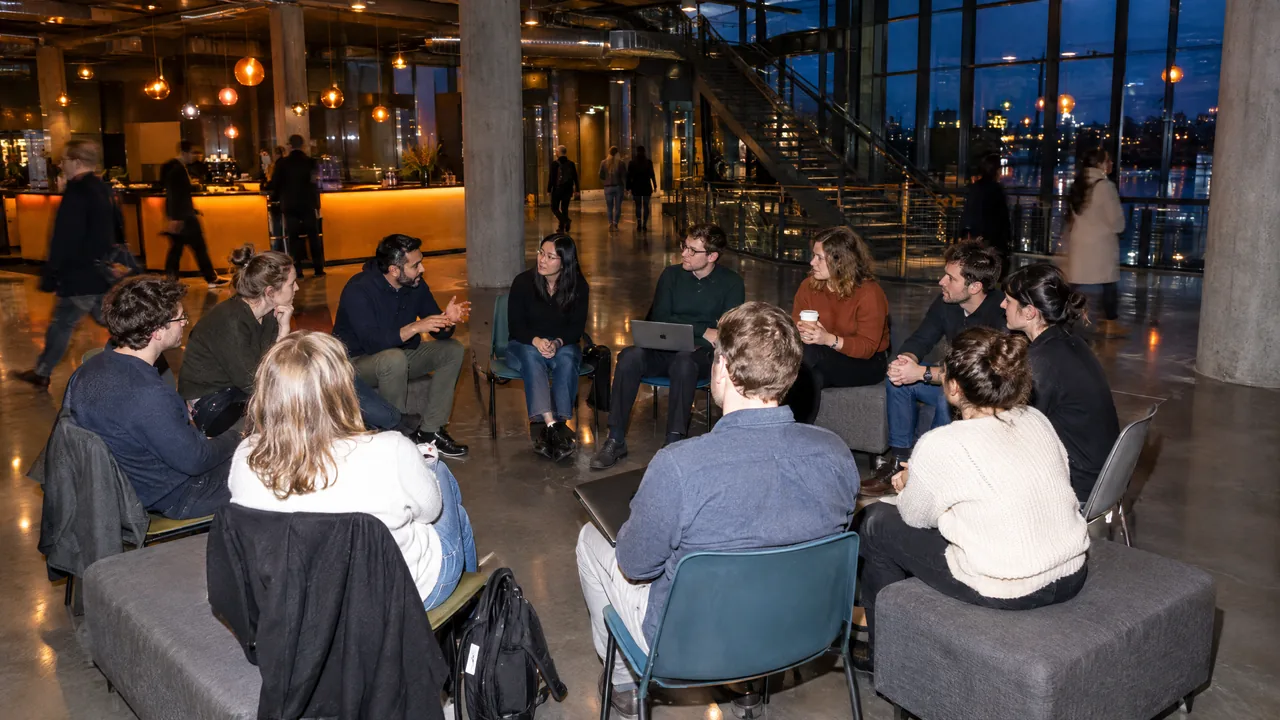
Announce from the stage where the slammers will be after the award, for example at marked standing tables in the foyer. Some conversations need more calm than a foyer at 10 pm can offer. Give those a fixed slot on the next conference day. If a whole group wants to keep discussing a topic raised on stage, a birds of a feather session the next morning gives it a room. When the programme chair reviews the slam afterwards, applause is one measure. The meetings it led to are the better one.
With Converve, slammers take part as regular participants with their own profile. Anyone who wants to continue the conversation sends a meeting request for the next day. You decide who may request meetings with whom, and accepted meetings land in free slots in both agendas. This runs on our B2B matchmaking with a rule-based meeting matrix, and the slam itself sits in the same programme management as the rest of your agenda.
Where these meeting windows fit best in the day is covered in our guide to planning a conference agenda that makes time for networking. The slam supplies the reasons to talk. The programme has to supply the time.
Frequently Asked Questions
What is a science slam?
A science slam is a talk contest in which researchers explain their own work in about ten minutes, clearly enough for non-specialists and with room for humour. The audience decides who wins, by applause or with score cards. The first science slam took place in Darmstadt, Germany, in 2006, modelled on the poetry slam.
How long is a science slam?
Each talk usually lasts ten minutes, the rule at the large German slam networks science-slam.com and scienceslam.de and at conference slams such as the Cottrell Scholar Conference 2019 and the EBRAINS Summit 2025. An evening with five slammers needs 75 to 85 minutes including welcome, changeovers, voting and the award, by our rule of thumb.
How is a science slam judged?
Usually the audience judges, by applause or with score cards after each talk, weighing scientific content, clarity and entertainment. Conference slams with prize money sometimes use a jury instead; at HPLC 2023 in Düsseldorf, an eight-member jury awarded the prizes.
What is the difference between a science slam and the Three Minute Thesis?
A science slam gives each speaker about ten minutes, lets them use slides, props or live experiments, and lets the audience decide. The Three Minute Thesis (3MT), started at the University of Queensland in 2008, allows three minutes and one static slide, bans props and is decided by a judging panel.
Who can take part in a science slam?
Researchers who present their own work, from a master’s thesis to an ongoing research project. Conference slams often target early career researchers, but some calls are open to all career stages; the EBRAINS Summit 2025 accepted individuals and pairs at any stage.
Can I call my conference event a science slam?
“Science slam” is widely used as a generic name for the format at conferences and universities. Individual organisers run their own series with their own logos and names, so do not adopt those without permission, and check a branded name before you use it. This is not legal advice.
Conclusion: plan the conversation, not just the show
In about ninety minutes, a science slam can introduce five or six researchers who might otherwise get little time on the main stage. Give them clear rules and coaching, let the audience decide the winner, and set aside a place and time for delegates to meet them afterwards.
Want to turn the conversations after your slam into booked meetings? Talk to Converve.