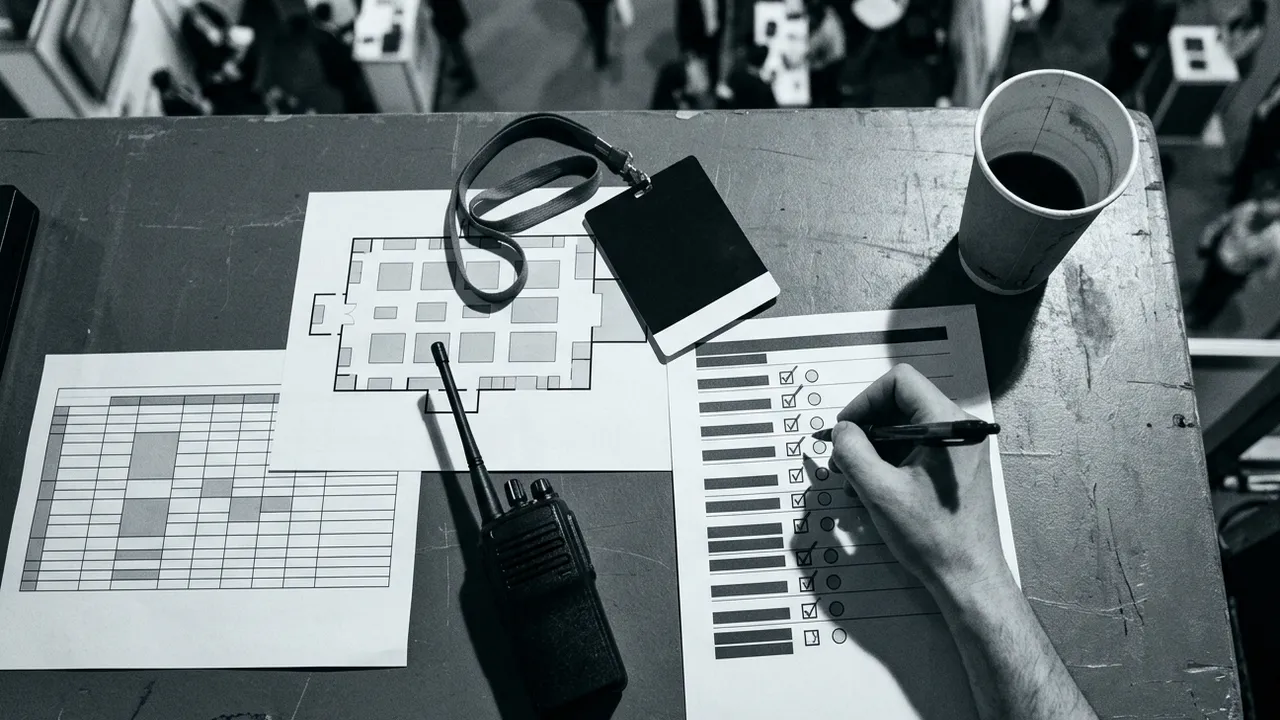
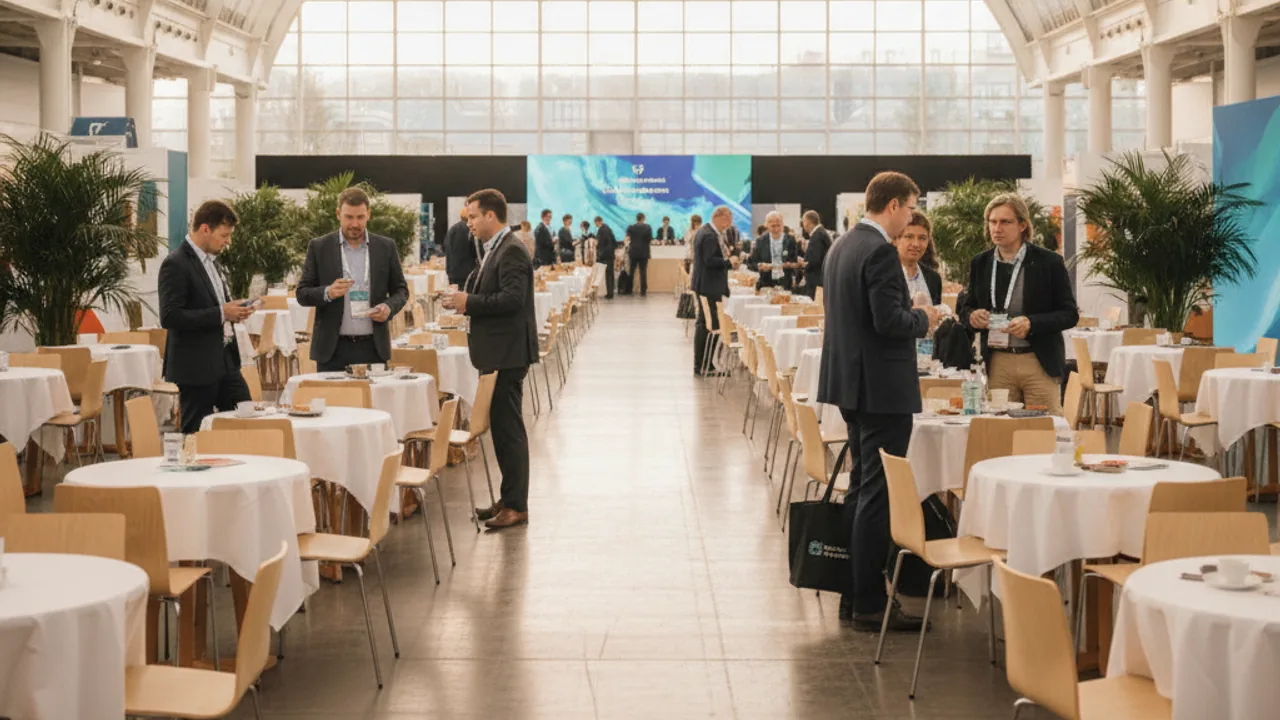
Somewhere in your current programme draft sits a ninety minute gap, and someone senior has already asked what it is for. A slot with nothing on stage looks like a planning error to the board that signs off the speaker budget. So the gap gets filled, the grid gets denser, and the one thing most of your attendees actually came for gets squeezed into the coffee queue.
The numbers say this instinct is exactly backwards. 61% of attendees name networking and collaboration as their primary reason for attending professional events (Booking.com Business, 2026), yet only 15% of organisers rate their own networking opportunities as very effective (Bizzabo, 2026). That distance between demand and delivery is rarely a networking problem. It is a programme problem.
A conference programme is the structured schedule of an event: sessions, speakers, rooms, breaks and, increasingly, the planned 1:1 meetings between attendees. Modern programme design treats meeting windows as a building block in their own right, next to keynotes and tracks, rather than as whatever time happens to be left over.
This guide shows you how to plan an agenda on that principle: a time budget that protects unscheduled space, meeting windows placed before the session grid, and three example day plans you can adapt to your own event.
Why a Full Agenda Works Against Your Attendees
The instinct to fill every slot is understandable, because empty space is hard to defend in a budget meeting. But the case for defending it has never been stronger. In Freeman’s 2025 Trends Report, 58% of attendees named networking as their primary motivator for attending, up from 39% in 2021, and 51% said good networking alone is reason enough to come back. Your retention rate is priced in meetings, not in session minutes.
The cost of ignoring this shift is already visible. GoGather’s 2026 trends report records an 8% drop in attendee satisfaction in a single year at events that kept running packed, one-size-fits-all agendas while their audiences asked for shorter sessions, small group formats and self-selected breakouts. Attendees vote with their next registration.
The demand-delivery gap
What attendees want and what programmes deliver
Here is the uncomfortable core of it: your programme and your networking compete for the same hours. Every session slot you add takes time away from the conversations that 61% of your audience travelled for. We made the strategic case for treating the two as one system in our earlier piece on why the event programme and matchmaking belong together; this guide is the operational sequel. The question is not whether to give networking room. It is how much, and where.
The Five Building Blocks of a B2B Conference Programme
Most agenda templates know only two ingredients, sessions and breaks. A programme that takes its own attendees seriously has five:
- Keynotes: the anchor moments of the day, scheduled with nothing running against them. They set the narrative and give everyone a shared reference point.
- Track sessions: parallel content blocks aimed at defined audience segments, so a delegate never has to sit through material meant for someone else.
- Meeting windows: protected blocks in which pre-scheduled 1:1 meetings take place, booked through your platform before the event. No session competes with them.
- White space: deliberately unscheduled time. Meals, corridors, the walk between rooms. This is where the unplanned conversations happen that surveys keep ranking so highly.
- Social formats: receptions, dinners and structured icebreakers such as speed networking, which trade precision for volume and energy.
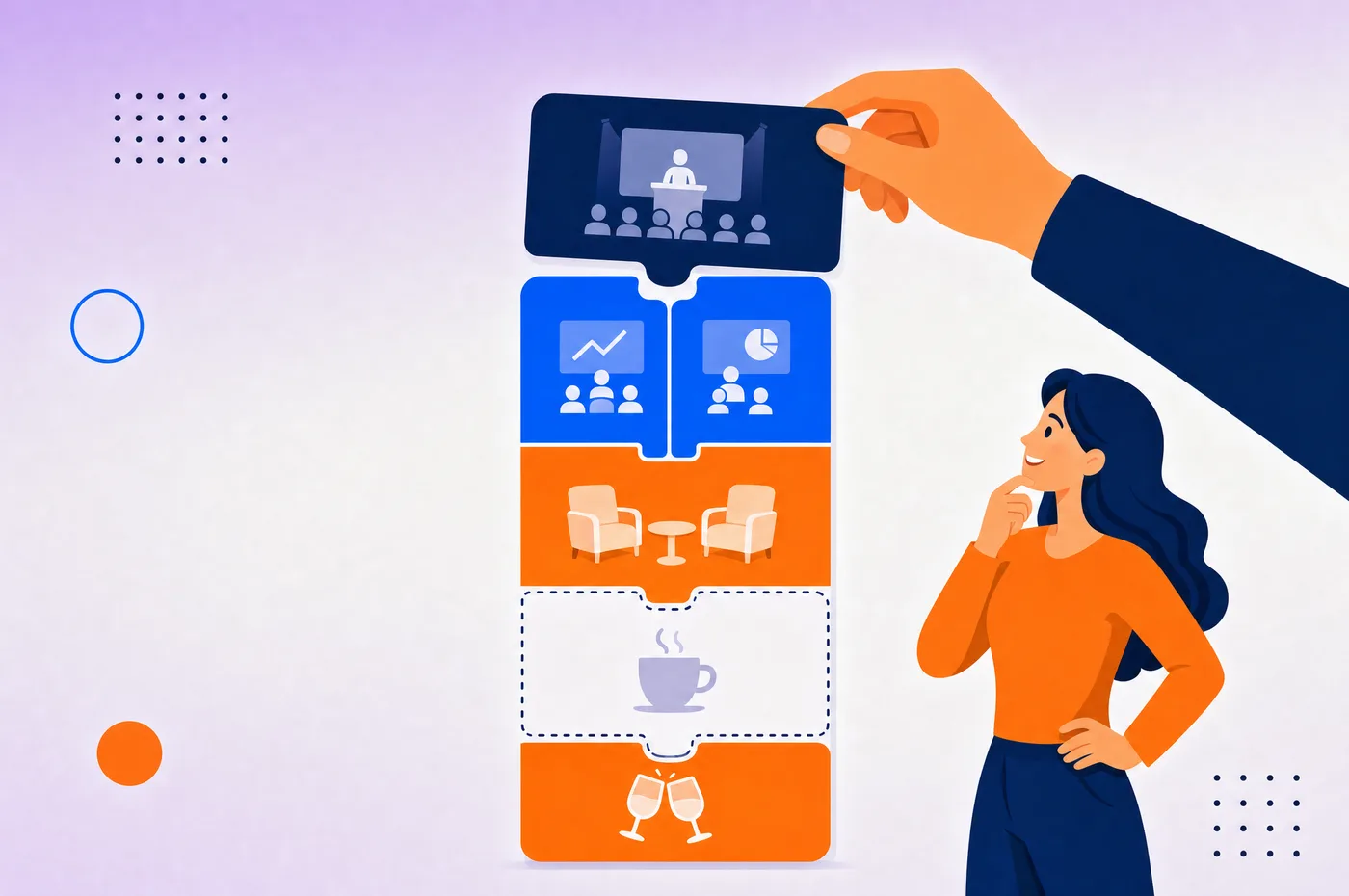
The building blocks are not equal in status on most agendas. Keynotes and tracks get planned first, and the last three inherit the leftovers. Reversing part of that order is what the next section is about.
How to Build the Programme in Five Steps
From time budget to published agenda
Five steps to a programme with room for meetings
- Step 1 Set the time budget Cap scheduled content at roughly 60 to 65 per cent of the day. The rest is reserved for meetings, meals and unplanned conversations before a single session is placed.
- Step 2 Place meeting windows first Block one to two windows of 90 to 120 minutes per day for pre-scheduled 1:1 meetings, ideally late morning and mid afternoon. Sessions are planned around them.
- Step 3 Build tracks around segments Define two or three parallel tracks along your audience segments and their questions, not along your internal departments or sponsor wishes.
- Step 4 Protect the white space Keep breaks at 20 to 30 minutes and meals at 45 plus. Every late speaker request competes against this budget, not against the meeting windows.
- Step 5 Publish one agenda per attendee Merge chosen sessions and booked meetings into a single personal schedule per participant, so the two halves of the event stop colliding.
Two of these steps deserve a closer look, because they are where most programmes quietly fail.
Step 1 borrows a rule of thumb from offsite and retreat design: plan no more than 60 to 65 per cent of the available time formally, and treat the remaining third as protected. It is a heuristic, not a law of nature, but it gives you something the typical agenda draft lacks entirely: a number you can hold a programme review against. When the board asks why nothing is on stage between 11:00 and 12:30, the answer is no longer a shrug. The gap is not empty. It is booked.
Step 2 is the hosted buyer lesson applied to conferences at large. Trade shows that run structured buyer programmes have scheduled meetings first for years, and the effect on outcomes is measurable: our analysis of how matchmaking lifts hosted buyer returns shows meeting completion rates around 80 per cent when diaries include buffers and meal breaks, and falling sharply when meetings are wedged into whatever slots remain. A meeting window that exists before the session grid cannot be eaten by it.
Parallel Tracks and One Agenda per Attendee
A programme with tracks and meeting windows produces a new problem: no two attendees experience the same event any more. That is a feature, but only if navigation keeps up. According to Amex GBT’s 2026 forecast, attendees want more interactivity (42%), more opportunities to socialise (40%) and more personalisation (37%). And 62% say AI-driven recommendations for sessions and networking matches make an event significantly more valuable to them (vFairs, 2026). Expectation has moved from a printed grid to a schedule that knows who you are.
The practical consequence: session choice and meeting booking cannot live in two separate tools. A delegate who has to check a PDF for the track plan and a separate app for her meeting requests will double-book herself by Tuesday morning, and every double booking is a no-show for someone else. One attendee, one agenda.
Solution: this is precisely the job Converve’s B2B matchmaking platform was built for. Attendees pick their sessions, request 1:1 meetings inside the meeting windows you defined, and the platform merges both into a single personal schedule with no collisions, for the organiser as well as for every participant.
Three Day Plans That Make Time for Networking
How the five building blocks combine depends on what kind of event you run. Three sketches from practice:
A trade show day with a hosted buyer programme
| Time | Block |
|---|---|
| 08:30 | Opening keynote, no parallel programme |
| 09:30 | Meeting window 1: pre-scheduled buyer-seller meetings |
| 11:30 | White space: expo floor, coffee, open corridors |
| 13:00 | Track sessions: two parallel content tracks |
| 15:00 | Meeting window 2, with re-booking slots for the morning’s no-shows |
| 17:00 | Reception on the show floor |
The meetings carry the commercial weight of the day, so they get the two freshest time blocks. Content fills the early afternoon, when international guests fight jet lag and a darkened session room is the honest option. One caveat: the 11:30 expo block doubles as the meal window, and this plan deliberately shows the compressed reality of a trade fair day rather than the 35 to 40 per cent white space target; the two protected meeting windows are what keep it workable.
A startup conference day
Investor meetings behave differently: they cluster around a small group of people whose calendars fill first. Place a single long meeting window across midday, run pitch sessions and panels in the morning, and keep office hours and open lounges in the afternoon. We walk through the mechanics, including how to stop the five most-wanted investors from absorbing every slot, in our guide to maximising investor meetings at a two day conference.
An association congress day
Annual congresses carry obligations a commercial conference does not have: a general assembly, committee meetings, often continuing education credits. The five block logic still holds. Schedule the assembly as an anchor like a keynote, run education tracks in parallel where credits allow, and give member groups their own small meeting windows instead of hoping they find each other at dinner. Long breaks are not a luxury here; for many members the congress is the one week a year they see their professional community.
Frequently Asked Questions
What is a conference schedule called?
The structured schedule of a conference is called the conference programme (British English) or conference agenda. It lists sessions, speakers, rooms, timings and breaks. In modern B2B events it also includes designated meeting windows for pre-scheduled 1:1 meetings.
How much of a conference agenda should stay unscheduled?
A useful rule of thumb from offsite and agenda design practice: formally schedule no more than 60 to 65 per cent of the available time, and protect the remaining 35 to 40 per cent for meetings, meals and informal conversations. Attendee research supports the direction: 61% attend primarily for networking (Booking.com Business, 2026).
How do you create a conference schedule?
In five steps: set a time budget that caps scheduled content, place 1:1 meeting windows before planning sessions, build parallel tracks around audience segments, protect breaks and meals from late additions, and publish one merged personal agenda per attendee covering both sessions and booked meetings.
What is the typical format of a conference day?
A common B2B format: an opening keynote for everyone, parallel track sessions for defined segments, one or two meeting windows of 90 to 120 minutes for pre-scheduled 1:1 meetings, generous breaks, and a social format such as a reception in the evening.
Conclusion: A Programme That Keeps Its Promise
The programme is the promise your event makes to its attendees, and for most of them that promise is people, not slides. Sessions and networking draw on the same limited hours, which is why a programme that fills every slot quietly breaks its own promise to the 61% who came to meet someone. Plan the time budget first, give meetings their own windows, guard the white space, and hand every attendee one schedule that holds both halves of their day.
The next time someone senior points at the gap in your draft, you can show them what it is for. If you want the meeting windows, the matchmaking and the personal agendas to run on one platform, get in touch with Converve. We are happy to show you how organisers put this into practice.