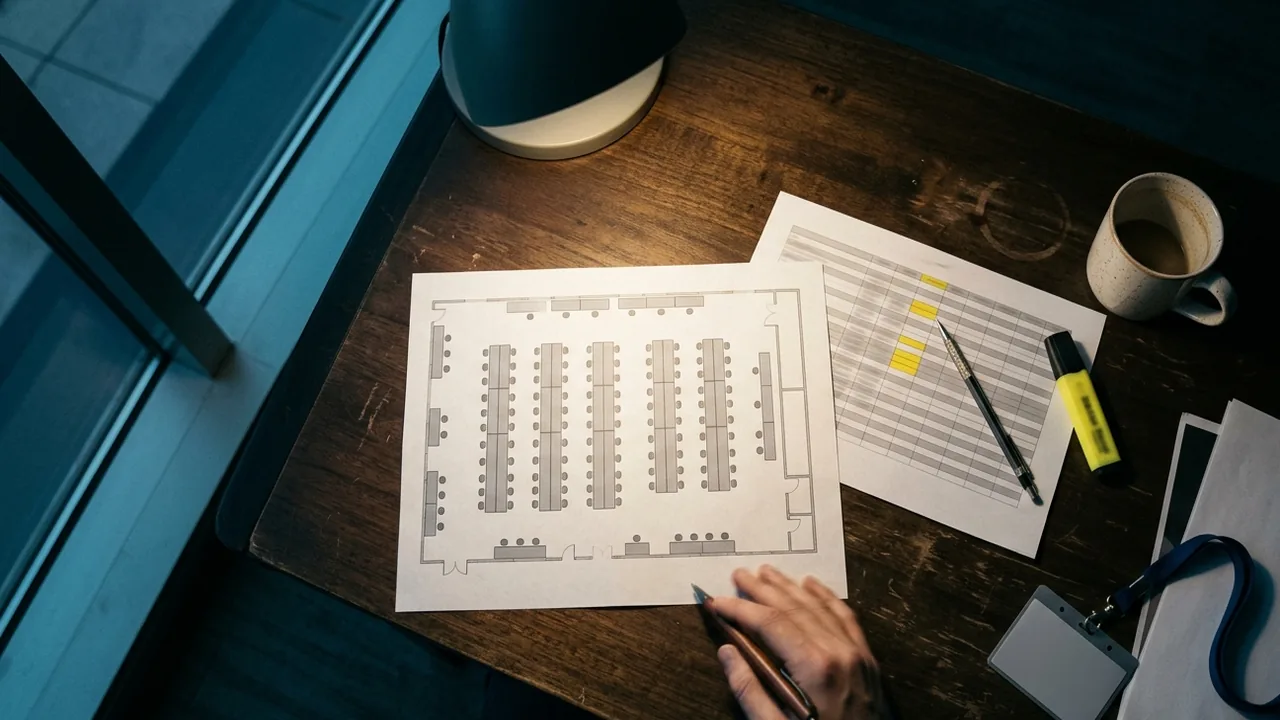
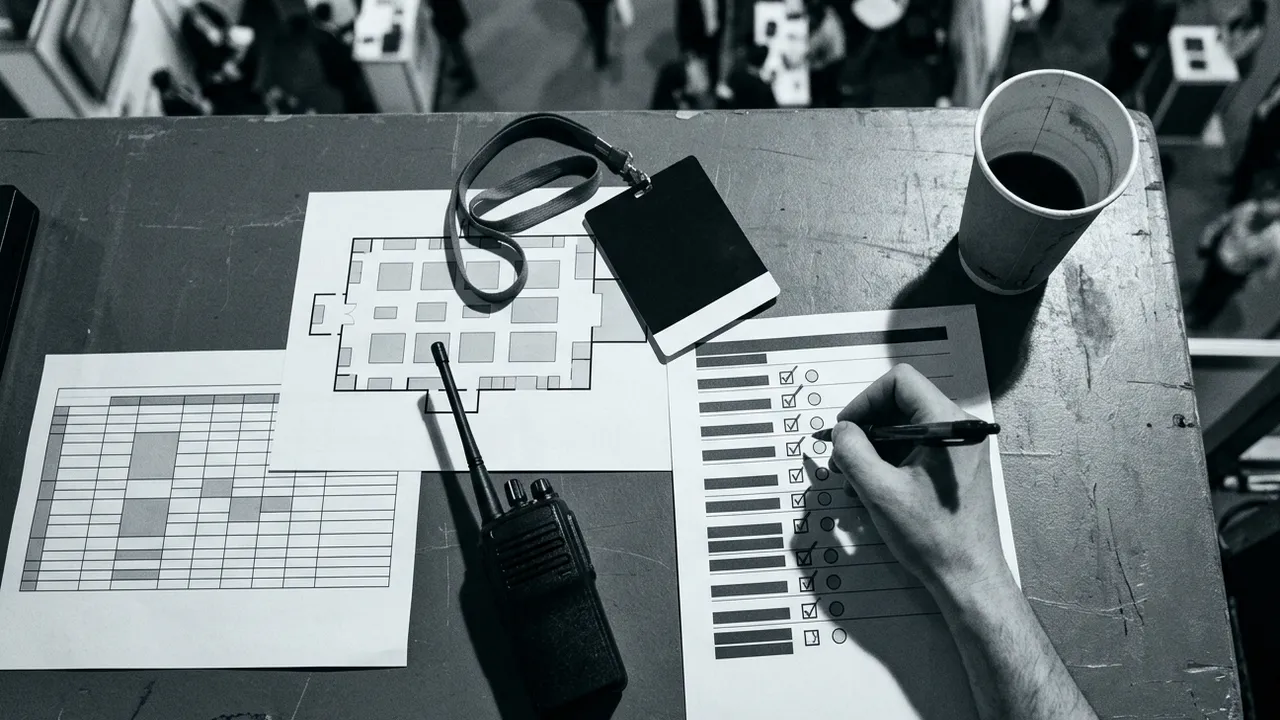
Open your project plan and count backwards from your show dates. If your event sits in the November window alongside World Travel Market (WTM) London, which runs from 3 to 5 November 2026, the 90-day mark falls in the first week of August. By that point the venue contract is signed, the hall plan is drawn and the stand builders have their schedule. The one thing still undecided is the thing your show actually sells: who meets whom.
That is why the last 90 days decide meeting quality, not logistics. Vendelux’s 2026 survey of B2B event teams found that pre-event planning determines 76 per cent of attendee agendas. For the board of the tourism organisation that approved your hosted buyer budget, the number has a hard meaning: whatever is not scheduled before doors open will mostly never happen.
This guide is the countdown we recommend to destination marketing organisations (DMOs), convention bureaus and trade show producers. Four phases, each with deadlines, benchmarks from 2026 and a key performance indicator (KPI) checkpoint that tells you whether to proceed or intervene.
The short version: treat the buyer and matchmaking critical path with the same discipline as the venue build. Close hosted buyer applications about six weeks out, open matchmaking once qualified profiles reach critical mass, lock agendas two weeks before the show, and run confirmations and a rebooking desk to defend an 80 per cent kept-meeting rate. Every phase has a checkpoint; every checkpoint has a countermeasure.
Why the last 90 days decide meeting quality, not logistics
Search for a trade show checklist and you will find dozens of good ones, almost all written for exhibitors: book the booth, ship the freight, brief the stand crew. The organiser side of the same countdown is strangely undocumented, and it carries more risk. An exhibitor who starts late loses one stand’s worth of results. An organiser who starts late loses the meeting programme of the whole show.
The pressure is rising, not falling. In the American Express Global Business Travel forecast for 2026, 71 per cent of event professionals expect significant cost increases, and 38 per cent name rising costs as their biggest challenge. Every week of delay in your countdown converts directly into rush fees, expensive flights for hosted buyers and hotel rates you no longer control. Late is the most expensive way to plan.
There is also a quieter risk. Picture a buyer you flew in from Toronto, standing in the hotel lobby on the evening before opening, scrolling an agenda with four meetings across three days. She will keep those four appointments, wander the aisles for the rest, and tell her network the show was thin. Nothing in your logistics failed. The critical path did.
Why the countdown matters
The 2026 numbers behind the 90-day rule
The countdown below splits the 90 days into four phases. The labels use T-notation: T-90 means 90 days before opening day.
The countdown at a glance
Four phases from T-90 to show day
- T-90 to T-60 Close recruitment, qualify in waves Final buyer push, application close, second qualification wave, seller onboarding starts.
- T-60 to T-30 Open matchmaking, design agendas Platform opens on critical mass, profiles completed, agendas built with buffers.
- T-30 to T-7 Lock agendas, prevent no-shows Agenda lock, confirmation cadence, waitlists, logistics and meeting plan merge.
- T-7 to show day Onsite readiness and rebooking Team briefings, live kept-rate monitoring, staffed rebooking point on the floor.
T-90 to T-60: close buyer recruitment and qualify in waves
The buyer you meet in that lobby scene is recruited, or lost, in this first phase. If you followed the standard cycle, your hosted buyer applications opened around twelve weeks before the show; the working benchmark is a hard application close about six weeks out, because later than that your best buyers are booked elsewhere and travel prices run away from your budget. That puts the close date, roughly T-42, right in the middle of this phase.
Three workstreams run in parallel:
- Final recruitment push: target the buyer segments your sellers actually asked for, not the ones that are easiest to reach. How to fill the funnel is its own discipline; we cover it in our buyer recruitment playbook for tourism trade shows.
- Qualification in two waves: review applications as they arrive, not after the deadline. A first wave decided by T-60 lets you re-open targeted recruitment where segments are thin. The scoring logic sits in our hosted buyer programme guide.
- Commitment terms in writing: every accepted buyer confirms a meeting quota before flights are booked. The big shows are strict about this for a reason. ITB Asia 2026, for example, ties full hosting to 24 business appointments across three days, with a recommended minimum of eight per day (ITB Asia buyer terms, 2026).
The checkpoint at T-60: your qualified buyer count should stand at 80 per cent of target, with the remaining 20 per cent visible in the pipeline. If it does not, this is the moment to extend targeted recruitment or scale the buyer list down honestly, while sellers can still adjust expectations. Your board will judge the show in December on the question decided here: how many qualified counterparts did each seller get? Empty slots do not recruit themselves.
T-60 to T-30: open matchmaking and design agendas with buffers
A closed buyer list changes the nature of the work: from finding people to connecting them. Open your matchmaking platform when qualified profiles reach critical mass, typically between T-60 and T-45. Opening earlier feels productive but teaches participants that the marketplace is empty; opening later compresses scheduling into the panic zone.
Two numbers explain why this phase deserves design attention rather than administration. First, 62 per cent of attendees say recommendations for sessions, exhibitors and networking matches make an event noticeably more valuable to them (vFairs, 2026). Relevance is not a nice extra; it is what participants measure you by. Second, in Hilton’s 2026 trends report, 74 per cent of attendees worry before the event about rushing between meetings. Agendas need buffers, walking distances and breaks designed in, or your kept-meeting rate pays for it later.
Concretely, by T-30 you want profile completion above 90 per cent for buyers and sellers, first pre-scheduled agendas published, and meeting slots that leave ten minutes of air between appointments. For international shows, language pairing belongs in this phase too; our guide on multilingual buyer and seller meetings shows how organisers handle it without doubling staff.
The checkpoint at T-30: at least 60 per cent of the target meeting volume should already sit in confirmed agendas. Below that, the countermeasure is not to wait. Trigger match suggestions for inactive profiles, call your top 20 sellers, and make acceptance the easiest click in their inbox.
T-30 to T-7: lock agendas and prevent no-shows early
Full agendas at T-30 are a paper victory; the last month decides how many of those meetings physically happen. A well-run hosted buyer programme keeps 79 per cent of its pre-scheduled meetings (Converve benchmark, 2026); the same analysis shows open formats losing most of their captured leads to silence. Which format suits your show is a strategic choice we compare in hosted buyer versus open registration. Whatever the format, the defence of the kept rate starts now:
- Agenda lock at T-14: after this point, participants change meetings through your team, not by silent deletion. A locked agenda is a promise, and a kept meeting starts with a kept promise.
- Confirmation cadence: a reconfirmation request at T-21, a personal agenda summary at T-7, a push reminder the evening before each show day.
- Waitlists per segment: cancellations lose half their pain if a matching replacement is one click away.
- Consequences in the terms: hosted buyers who miss their quota without cause lose reimbursement. Publishing the rule works better than enforcing it.
This is also the phase where the meeting plan merges with logistics: table numbers, lounge capacity, signage from hall entrance to meeting area. Think of the seller who flew in from Crete and now sits at table 41. Every detail that gets him and his counterpart to the same table at the same minute belongs in this phase’s run sheet.
The checkpoint at T-7: 90 per cent of agendas locked and confirmed, waitlists staffed, and no meeting scheduled that your floor plan cannot physically deliver. The venue build can slip a day. The agenda cannot.
T-7 to show day: onsite readiness and the rebooking desk
The final week is not for new plans; it is for defending the one you have. Brief your team on one metric above all: the kept-meeting rate, live, per day. Freeman’s 2026 research found a wide gap between perception and reality at events: 78 per cent of organisers believe they delivered a personally meaningful moment, while only 40 per cent of attendees say they experienced one. For a trade show audience, that meaningful moment is a meeting that was worth the trip. It deserves your best operational attention.
Three fixtures for show week:
- A staffed rebooking point in the meeting area, where a cancelled slot becomes a new appointment within minutes, fed by the waitlists you built at T-30.
- A daily 15-minute review with your matchmaking team: kept rate, no-show reasons, tomorrow’s risk list.
- A closing routine that exports every completed meeting on the last day, because your post-event reporting starts while the halls are being cleared.
Attendees with one genuinely valuable moment are up to 85 per cent more likely to attend the next edition (Freeman, 2026). Rebooking is not damage control. It is next year’s marketing.
The KPI checkpoints at a glance
Each phase above ends in a checkpoint; this table puts them in one view for your project plan.
| Checkpoint | You should have | If not |
|---|---|---|
| T-60 | 80 per cent of qualified buyer target reached | Extend targeted recruitment; adjust seller expectations honestly |
| T-42 | Buyer applications closed, wave 2 qualified | Hard close anyway; late entries go to the waitlist |
| T-30 | 60 per cent of target meeting volume in confirmed agendas | Trigger match suggestions; call top sellers personally |
| T-14 | Agenda lock; changes only via organiser team | Escalate unconfirmed agendas to phone outreach |
| T-7 | 90 per cent of agendas locked and confirmed; waitlists staffed | Prioritise highest-value pairs; prepare rebooking desk |
| Show days | Kept-meeting rate at 80 per cent or above, monitored live | Rebooking desk converts cancellations same day |
How these operational checkpoints roll up into the return-on-investment story for your funding bodies is covered in our tourism trade show ROI and KPI framework.
Solution: the countdown assumes tooling that can carry it. Converve’s hosted buyer solution runs application, qualification, meeting-matrix scheduling, reminder cadences and onsite rebooking in one system, so the checkpoints in this article are dashboards rather than spreadsheets.
Most of the 90-day tasks run inside one system, so it pays to choose it early; our comparison of trade show management software for tourism events lists the criteria that matter for tourism boards.
Conclusion: the countdown is a meeting plan, not a logistics plan
Ninety days out, your venue is under control and your meetings are not. That asymmetry is the entire argument of this checklist. Close buyer recruitment while you can still steer it, open matchmaking on critical mass, lock agendas while there is time to repair them, and defend the kept rate on the floor. Organisers who run this countdown walk into their post-show board meeting with the number that funds next year: qualified meetings held per seller.
If you want to see how other tourism trade shows run this countdown on Converve, talk to us. We are happy to share what works.
FAQ: the 90-day countdown in five answers
When should hosted buyer applications close before a trade show?
About six weeks before opening day, after an application window that opens around twelve weeks out (Converve hosted buyer benchmark, 2026). Earlier closes leave recruitment potential unused; later closes push flight and hotel costs up and leave no time for a second qualification wave.
When should the matchmaking platform open?
Between T-60 and T-45, as soon as qualified profiles reach critical mass. An early but empty marketplace trains participants to ignore it; a late opening compresses thousands of scheduling decisions into the final weeks. Recommendations matter: 62 per cent of attendees say suggested matches make an event noticeably more valuable (vFairs, 2026).
How many pre-scheduled meetings should a hosted buyer have?
Eight meetings per day is the working benchmark in the tourism trade; ITB Asia 2026 ties full hosting to 24 appointments across three days (ITB Asia buyer terms, 2026). Plan buffers between slots, because 74 per cent of attendees worry about rushing between meetings (Hilton 2026 Trends Report).
How do organisers reduce no-shows at pre-scheduled meetings?
Four levers: an agenda lock two weeks out, a confirmation cadence at T-21 and T-7 plus evening reminders, segment-based waitlists for instant replacements, and published consequences for missed quotas. Well-run hosted buyer programmes keep 79 per cent of pre-scheduled meetings (Converve benchmark, 2026).
What should be in place seven days before the show?
Locked and confirmed agendas for at least 90 per cent of participants, staffed waitlists, a rebooking point on the floor plan, briefed teams with daily kept-rate reviews, and an export routine for post-show reporting. The final week defends the plan; it does not create one.