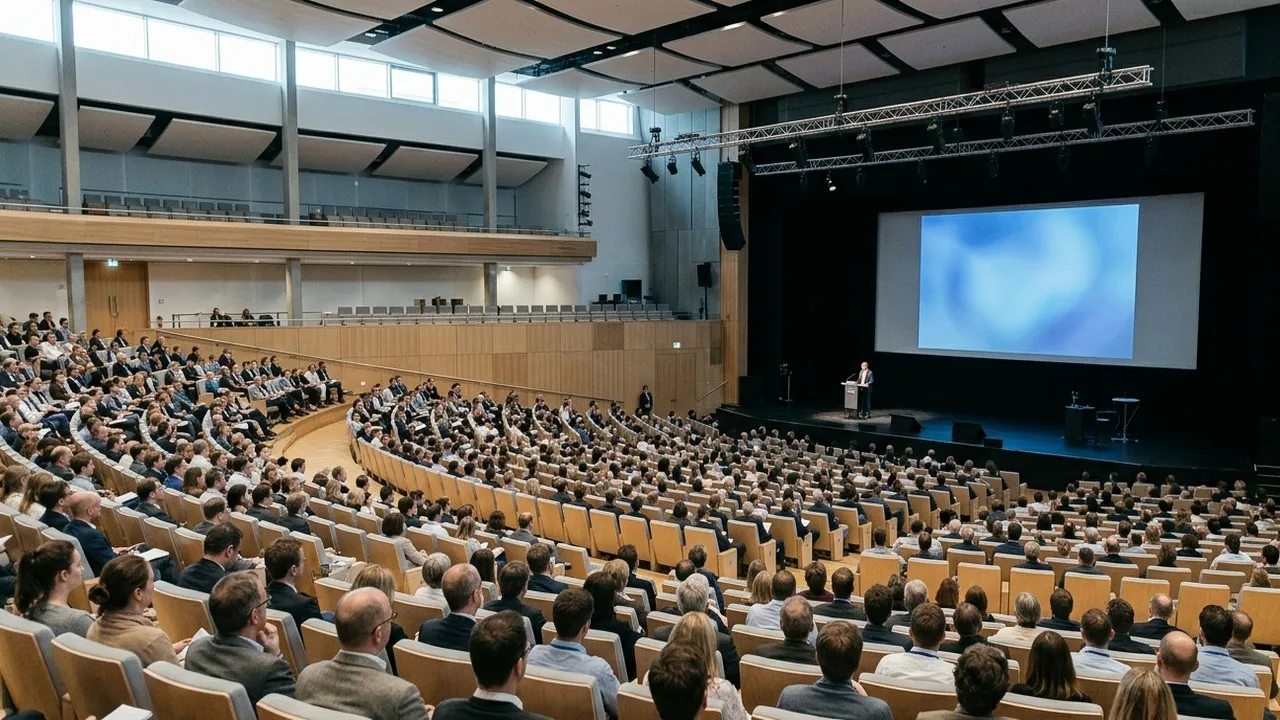
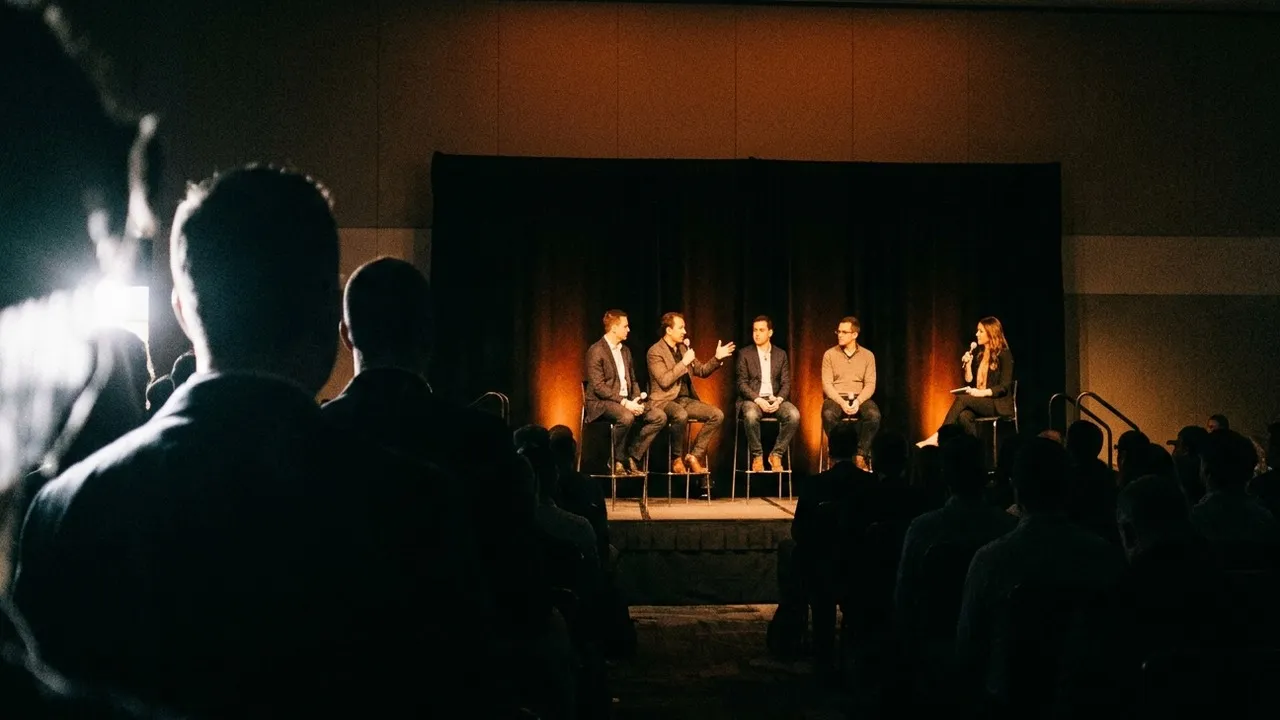
Mentor office hours at a startup conference usually go wrong within the first twenty minutes of booking. The programme opens at nine, and by twenty past the five best-known mentors are full for both days. The fifty other mentors, many of them exactly the operators the startups need, wait in a quiet calendar. On the day, the famous five give eight hurried conversations each, and the rest of the room drinks coffee.
That is not a shortage of mentors. It is a distribution problem, and it sits with the organiser. Mentor office hours fail not because there are too few mentors, but because demand is never evenly spread: if you hand out slots like a calendar instead of planning them like a matrix, you produce a hundred contacts and not a single relationship. This guide shows how to choose the format, how to cap and spread demand, how to absorb cancellations on the mentor side, and how to organise the second conversation that actually matters.
What are mentor office hours?
Mentor office hours are short, pre-booked advice sessions in which founders meet experienced operators, investors or domain experts during a startup conference, an accelerator programme or a demo day week. The term is used loosely, and three formats hide behind it. Each has a different capacity profile, which is why the distinction matters for planning:
| Format | How it works | Capacity per mentor | Best for |
|---|---|---|---|
| Office hours (one-to-one) | Founders book individual slots of 15 to 30 minutes with one mentor | 8 to 12 conversations a day | Specialist questions, confidential topics such as fundraising or cap tables |
| Speed mentoring | Fixed rotation: everyone switches at the same signal after 9 to 15 minutes | 5 pairings an hour, at most 5 rounds per mentor | First contact, broad cohorts, finding out who to see again |
| Mentor roundtable (group) | One mentor, several startups, one slot | 7 startups in 45 minutes (Web Summit Mentor Hours) | Your most requested names, recurring questions, shared learning |
Most large startup events now run these formats as their own programme strand, separate from investor meetings and the pitch competition. Slush 2026, for example, lists speaker mentoring as 30 to 45 minute Q&A sessions with founders and runs investor office hours as separate 75 minute sessions in a closed-door setting. The decision is no longer whether to offer mentoring. It is which format each mentor gets.
Why your best mentors get overbooked
The format question follows directly from how founders choose. Give every startup a free booking link, and they all ask for the same names: the founder who sold a company last year, the partner from the well-known fund, the speaker from the main stage. Name recognition beats fit, because in a booking list a name is the only signal a founder has.
Take an illustrative programme with 140 startups and 60 mentors. Each mentor offers four slots of 20 minutes, which gives 240 slots, more than one and a half per startup. On paper, there is plenty of room. Now let every startup name three preferred mentors, and let two thirds of all first choices land on eight people. That is more than 90 first choice requests for 32 slots, before a single second choice is counted. Most of the other 52 mentors, meanwhile, are underbooked.
Picture the programme lead of a 1,200 person startup conference looking at that booking screen on day one. She has enough mentor hours. She has the wrong ones booked. More mentors will not fix that, and neither will more slots for the famous names.
The fix is in how the slots are allocated.
Step 1: choose the format per mentor, not per programme
Most organisers pick one format for the whole programme. That is the first mistake, because demand differs by mentor, not by programme. A useful rule is to sort mentors into two groups before you open any booking.
Most requested mentors go into a group format. Anyone who will clearly get more requests than slots runs a roundtable: one mentor, five to seven startups, 45 minutes. Web Summit’s Mentor Hours work exactly this way. The trade-off is confidentiality. A founder will not discuss a down round in front of six competitors, so the roundtable needs a topic that works in public, such as hiring the first sales lead or entering the US market.
Specialists stay one-to-one. The patent lawyer, the former CFO, the expert for regulated health products: these mentors have fewer requests, but the requests are urgent and specific. They get classic office hours with 20 to 30 minute slots.
Speed mentoring sits in between. It works well at the start of a cohort, when founders do not yet know who can help them. Its job is orientation, not advice. If you want to borrow the rotation mechanics, our guide to speed networking at B2B events covers the timing in detail, and the roundtable format shows how to moderate a group table so one startup does not take over.
Step 2: cap the slots and spread the demand
Once the formats are set, the next question is how much each mentor can carry. Academic speed mentoring programmes have the most precise planning values, and they transfer well to events. Edge for Scholars at Vanderbilt University Medical Center recommends five pairings per person per hour and never using one mentor more than five times in a session:
Planning values
Capacity rules from structured speed mentoring
Those numbers have a consequence for your booking process. If a mentor carries five rounds at most, a first come, first served link guarantees that the first fifty clicks decide the whole day. Replace it with a ranked request and an allocation step:
- Collect wishes, not bookings: Each startup ranks three to five mentors and states its question in one sentence. The question is the most useful matching data you will get.
- Set a hard cap per mentor: Five to eight one-to-one slots a day, or two roundtables. Once a mentor is full, further requests move to the next ranked choice.
- Allocate by fit, then by ranking: A seed stage fintech asking about its first enterprise customer goes to the mentor who has sold to banks, even if she was the startup’s third choice.
- Give every startup a minimum: Two confirmed conversations per startup before anyone gets a fourth. Without a floor, strong founders collect meetings and quiet founders collect nothing.
This is the same mechanism that stops investor overload. We describe the investor version, with tiered invitations and request caps, in our playbook on how to prevent investor overload at demo days.
A cap feels restrictive to the founder who wanted the famous name. It is the only way the other fifty mentors get booked.
Step 3: plan for cancellations on the mentor side
Even a well capped plan loses slots on the day. Mentors are volunteers with day jobs. A partner gets pulled into a board meeting, a speaker’s flight is late, and four slots disappear an hour before they start. Organisers plan carefully for founders who do not show up, and rarely for mentors who do not.
Three measures absorb most of the damage. Keep two to three reserve mentors per half day, briefed and ready to take over a slot with a similar profile. Confirm every mentor’s slots the evening before, by message rather than by email. And tell founders in advance what happens if their mentor cancels: an automatic rebooking with the next best match is better than an empty chair and an apology at the desk. The patterns are similar to those on the founder side, which we analyse in our article on no-show rates for B2B event meetings.
The cancelled mentor is not the problem. The empty chair is.
Step 4: organise the second meeting
Everything so far optimises the first conversation. The value of mentoring lies in the second one, and almost no event plans for it.
Accelerators show the pattern clearly. Techstars describes how teams meet around 100 mentors in the first month of the programme and then work with three to five lead mentors, who act as a kind of advisory board. A hundred contacts lead to three to five relationships. Research supports that funnel. In a study of 779 graduates of Israeli accelerators, published in Small Business Economics, Rechter and Avnimelech found that founders who worked with personal mentors, rather than only with ad hoc experts, made significantly more progress on all six dimensions examined, from fundraising skills to operational progress. Structure matters more than the label, too: an NBER working paper by Baek and Hegde (April 2026), covering around 750,000 US startups and 329 accelerators, found that most accelerators have negative value added compared with no acceleration, while a small group produces large gains.
For a conference, that means: the first round of office hours is a filter, not the product. Three simple steps turn it into a starting point:
Follow-up
From first contact to second conversation
- Day 1 Mentor marks two teams After the session, each mentor names up to two startups they would see again
- Day 2 Reserved follow-up slots A block of slots stays free for these pairs, on site or online in the weeks after
- Week 2 to 4 Startup confirms with a question The second meeting starts from a concrete problem, not from the pitch
Solution: Converve plans one-to-one and group meetings at startup conferences with a capacity limit for each person, so your most requested mentors are not overbooked while others wait. Startups submit ranked wishes, the allocation follows fit and capacity, and follow-up meetings can be scheduled for the same pairs later on. You can see how this works for startup and investor events.
The programme lead from the booking screen has a different question at the end of this process. Not “how many conversations did we have?”, but “how many startups left with a mentor they will see again?” That is the number to report to sponsors and partners.
Frequently Asked Questions
What are office hours at a startup conference?
Office hours at a startup conference are short, pre-booked one-to-one sessions in which a founder asks an experienced mentor, operator or investor a specific question. They usually last 15 to 30 minutes and are booked in advance through the event’s meeting tool, separately from investor meetings and pitch sessions.
How long should a mentor office hours slot be?
For one-to-one office hours, 20 to 30 minutes works for most questions. Speed mentoring rounds are shorter, around 9 to 15 minutes of conversation. Group roundtables need more time: Web Summit’s Mentor Hours run 45 minutes for seven startups, and Slush 2026 schedules 30 to 45 minute Q&A mentoring sessions.
How many startups can one mentor see in a day?
Plan for eight to twelve one-to-one conversations a day at most, with breaks. In speed mentoring, structured programmes such as Edge for Scholars at Vanderbilt recommend using one mentor no more than five times in a session. Group formats raise capacity: one roundtable can serve five to seven startups at once.
What is the difference between speed mentoring and office hours?
Speed mentoring is a rotation in which all pairs switch at the same time after a fixed interval, which makes it good for first contact. Office hours are individually booked slots with a chosen mentor and a specific question. Speed mentoring helps founders find the right mentor; office hours give them time with that mentor.
How do you match mentors with startups at an event?
Collect ranked wishes and a one-sentence question from each startup, set a cap per mentor, allocate by fit before ranking, and guarantee every startup a minimum number of conversations. This prevents the most famous mentors from being overbooked while specialists stay empty.
Conclusion: plan the matrix, not the calendar
Mentor office hours succeed when the organiser treats them as a distribution task. Choose the format per mentor, cap the slots of your most requested names, keep reserves for cancellations and reserve time for the second conversation. A booking link alone produces a hundred contacts and no relationships. A planned matrix produces fewer contacts and more mentors who stay.
If you are planning mentor office hours, investor meetings or both at your next startup conference, get in touch with Converve. We will show you how to set capacity limits and follow-up meetings in one programme.