A software company has 60,000 euros left in this year’s event budget. The sales team wants a stand at the big industry trade show. Marketing wants its own user conference. The CEO suggests three executive dinners in three cities. All three are B2B events, and all three can be the right answer. Each serves a different goal.
That is the problem with most lists of event types. They name twenty formats in alphabetical order and leave you to work out which one serves your goal. This guide sorts B2B event types by what they are meant to achieve: knowledge, new business, community, customer loyalty or internal alignment. For each format you get the typical size, the usual organiser and one question that often decides the outcome: how much of the event happens in planned conversations between the right people?
Start with the goal you want to achieve, then assess how much time each format allows for relevant conversations.
What counts as a B2B event?
B2B events cover a wide range of professional gatherings.
A B2B event is a gathering where companies, not private consumers, are the audience: buyers, suppliers, partners, members or employees meet to learn, trade or build relationships. B2B events range from a 12 person roundtable to a trade show with 100,000 visitors, and they can run in person, online or hybrid. What separates the types is the goal. Some formats exist to share knowledge, others to create sales meetings, others to strengthen relationships with customers or members.
The scale is larger than most people assume. According to the Meeting and EventBarometer published by the German Convention Bureau and EVVC in May 2026, Germany alone hosted 2.02 million business events in 2025, with 395.1 million in person participants. With that much choice, a default format is rarely the best one.
Five goals, five families of formats
Most B2B event types fall into five families, depending on what the organiser wants to achieve. The overview below is the short version. The sections after it explain each format in a few sentences and link to our detailed guides where we have them.
| Goal | Typical formats | Typical size | Role of planned 1:1 meetings |
|---|---|---|---|
| Share knowledge | Conference, congress, seminar, workshop, roundtable, webinar | 10 to 5,000 | Low to medium, a bonus beside the programme |
| Win new business | Trade show, hosted buyer programme, reverse trade show, matchmaking event, trade mission, demo day | 50 to 100,000 | High, often the main product |
| Build community | Association meeting, networking event, barcamp or unconference | 30 to 2,000 | Medium, conversations matter more than sessions |
| Build customer loyalty | User conference, in-house show, roadshow, executive dinner | 15 to 3,000 | Medium to high, account teams meet customers |
| Align internally | Sales kick-off, company meeting, incentive trip | 20 to 2,000 | Low, the agenda is set top down |
Read the last column first. It tells you how much matchmaking and scheduling work the format will ask of you.
Goal 1: share knowledge
Knowledge formats bring people together to learn from experts and one another. They differ mainly in size and in how much the audience takes part.
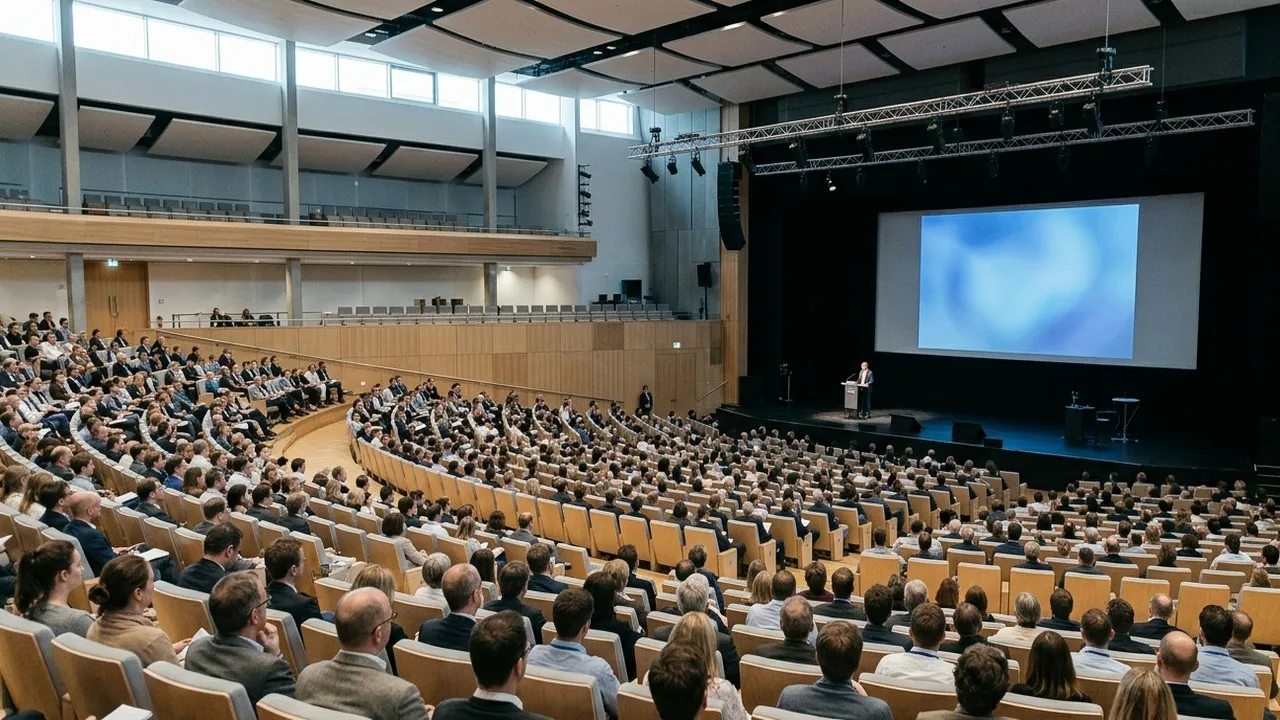
- Conference: a programme of talks and panels on one industry topic, usually 200 to 5,000 people, organised by companies, media houses or event agencies.
- Congress: the larger, often scientific or association led version with a call for papers and many parallel tracks. We explain the differences between conference, congress and symposium in a separate article.
- Seminar and workshop: 10 to 30 participants who work on a defined task with a trainer or facilitator. The result is a skill or a draft, not a contact list.
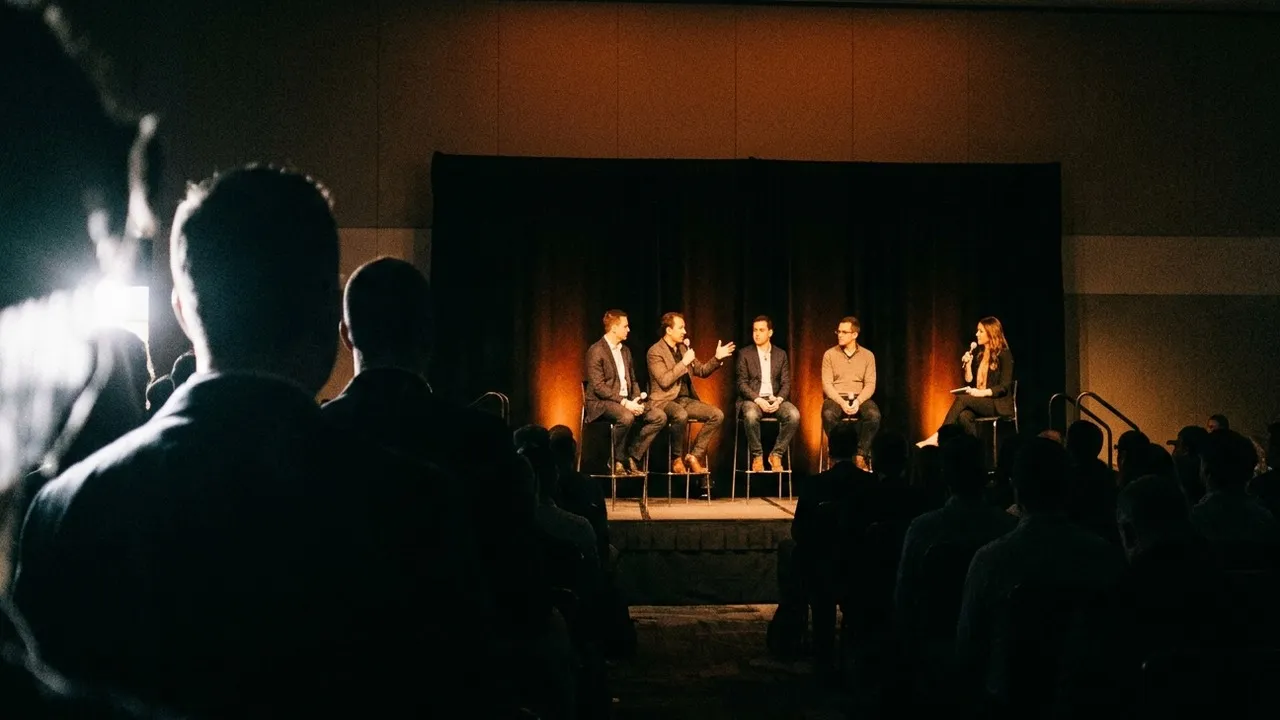
- Roundtable: six to eight peers discuss one question with a moderator and no audience. Our guide on how to run a roundtable discussion covers table size and seating.
- Webinar: a talk delivered online, often 50 to 1,000 registrations, mostly used to generate leads for later sales contact.
The trend is towards the smaller end. Forrester’s Q1 2026 State of B2B Events survey of more than 400 decision makers found that two thirds of organisations plan more workshops, roundtables and structured networking, and fewer presentation heavy formats.
B2B events in 2026
Smaller, more interactive, still in person
A smaller format can be a deliberate choice for greater participation, rather than simply a way to reduce costs.
Goal 2: win new business
When the goal is pipeline, the event exists to put buyers and sellers in one room. In these formats, planned one-to-one meetings are central to the participant experience.
- Trade show: exhibitors present to visitors on stands, from 50 exhibitors at a regional show to over 2,000 at a leading international fair. Organised by trade fair companies or associations. In Germany alone, AUMA counted around 192,000 exhibitors and more than 12.7 million visitors in 2025. That is a lot of stands competing for the same visitors’ time.
- Hosted buyer programme: the organiser invites qualified buyers, often covers their travel and in return asks them to attend a set number of meetings. Common at tourism and MICE trade shows. See what a hosted buyer programme is for the mechanics.
- Reverse trade show: buyers have the stands and suppliers visit them. Typical for public procurement and large purchasing departments.
- Matchmaking or brokerage event: a one or two day programme of pre-booked 20 or 30 minute meetings, often run by chambers of commerce or business development agencies.
- Trade mission: a delegation of companies travels to a target market and meets local partners on a planned schedule. Our article on planning B2B meetings for trade missions shows how that schedule is built.
- Demo day and pitch event: startups present to investors, followed by investor meetings. Accelerators and startup conferences run them.
Think of a buyer who has flown in for two days. If her calendar is empty on arrival, she walks the halls and hopes. With ten relevant meetings already booked, she arrives with a clearer plan for making the trip worthwhile. The same format can offer a very different experience depending on how meetings are organised.
Forrester’s survey adds a reason why this family matters more in 2026: more than half of organisations name net new leads as their main event objective. If that is your goal too, the person signing off your budget will ask one thing afterwards: how many qualified meetings did we get?
Goal 3: build community
Community formats work over time. One event matters less than the fact that the same people meet again and recognise each other.
- Association meeting and annual conference: members meet once a year for programme, elections and networking, from 100 to several thousand people.
- Networking event: a reception, breakfast or meetup whose main purpose is to meet people. Our list of networking event ideas sorts 25 formats by how reliably they lead to meetings.
- Barcamp or unconference: participants set the agenda on the day and run the sessions themselves. Usually 50 to 500 people. Read more in our guide on what an unconference is.
Here, one-to-one meetings complement the shared programme. Members want to meet specific peers, but the shared experience counts just as much. A good community event does both: open formats for the room, and a simple way to book a quiet half hour with the one person you came for.
Goal 4: build customer loyalty
Customer events focus on existing relationships. They support renewals, additional business and recommendations, with a guest list drawn from the customer base.
- User conference or customer conference: a vendor invites its customers for product news, training and peer exchange, from 150 to several thousand people. What such an event needs technically is covered in our article on customer conference software.
- In-house show: a manufacturer or distributor opens its own premises to customers for a day, often with product demonstrations and a fixed meeting plan for the sales team.
- Roadshow: the same compact programme travels to several cities, so customers do not have to. Tourism boards use it to meet travel agents in their source markets.
- Executive dinner: 10 to 20 senior customers, one host, one theme. Small, expensive per head and very effective when the guest list is right.
Even when the atmosphere is informal, these events have clear commercial goals. Account managers want time with specific customers. That makes a meeting schedule as useful here as at a trade show, only with fewer and longer slots.
Goal 5: align internally
Internal formats are the only family where your own staff are the audience. Sales kick-offs, company meetings, partner summits for resellers and incentive trips belong here. They range from 20 people in an offsite to 2,000 at a global kick-off.
Planned one to one meetings play a smaller role, because the agenda comes from the top. There is one exception: partner and reseller summits often add meetings between partner managers and their partners, and then behave like a small business event.
Online and hybrid: a delivery mode, not a type
Almost every format above can also run online or hybrid. A webinar is an online seminar; a virtual trade show is a trade show on screens. That is why we treat online and hybrid as a way of delivering the event, not as a separate goal.
The numbers support this. In Bizzabo’s 2026 benchmark data, 63 per cent of events were in person, 33 per cent virtual and only 4 per cent hybrid, while 61 per cent of organisers reported growing webinar attendance. Online works well for knowledge and lead capture. For business and community goals, most organisers still bring people together in one place, and our guide to hybrid event planning shows when combining both pays off.
How to choose the right B2B event type
The choice comes back to the opening example. Three options, one budget, and a decision maker who wants to know which one pays back. These five questions narrow it down quickly.
Decision guide
Five questions that pick the format
- Question 1 What is the one goal? Knowledge, new business, community, customer loyalty or internal alignment. Pick one main goal, not three.
- Question 2 Who must be in the room? Buyers, customers, members, investors or staff. The audience narrows the family of formats.
- Question 3 How many people? Below 30 suits roundtables and workshops; several hundred suits conferences and user conferences.
- Question 4 How many meetings do you need? If the goal is counted in meetings, choose a format that schedules them, not one that hopes for them.
- Question 5 In person, online or hybrid? Online for reach and knowledge, in person for trust and deals.
Run the software company through it. Its goal is new business with mid-sized manufacturers. The trade show brings reach, but the stand team will spend most of the time with passers-by. The user conference serves existing customers, which is a different goal. The dinners reach 45 decision makers in total. If the budget owner counts meetings, the honest comparison is cost per qualified conversation, not cost per visitor.
Choose the format around the goal, then plan the conversations that can help achieve it.
Plan meetings to suit the format
Many of the formats above share one task: bringing the right two people together at the right time. Converve’s B2B matchmaking platform does that with a meeting matrix that you configure. You set the rules, such as who may meet whom, by industry, role, region or buyer type, and participants request and confirm meetings in free slots of their agendas. That works for a trade show with a hosted buyer programme as well as for a user conference with 40 account meetings.
Frequently Asked Questions
What are the main types of B2B events?
The main types are conferences and congresses, trade shows, seminars and workshops, roundtables, hosted buyer programmes, matchmaking events, trade missions, user conferences, in-house shows, roadshows, networking events, barcamps, webinars and internal events such as sales kick-offs. They are easiest to compare when grouped by goal.
Can you give an example of a corporate event?
A user conference is a typical example: a software vendor invites 400 customers for a day of product news, training and account meetings. Other common examples are a sales kick-off for employees and an executive dinner for 15 senior clients.
Which B2B event type generates the most leads?
Formats built around pre-booked meetings, such as hosted buyer programmes, matchmaking events and trade shows with a meeting programme, can help generate qualified leads by bringing relevant participants together. Forrester’s 2026 survey shows that more than half of organisations now treat net new leads as their main event goal.
What is the difference between a conference and a trade show?
A conference is organised around a programme of talks, so knowledge is the main product. A trade show is organised around exhibitor stands, so business contacts are the main product. Many events combine both.
How do I measure whether an event type worked?
Measure against the goal you chose: learning outcomes and attendance for knowledge formats, qualified meetings and pipeline for business formats, repeat attendance for community formats. Our guide on how to measure B2B event ROI gives the details.
Conclusion: start with the goal
A clear goal makes a long list of event types much easier to narrow down. Choose the family first, then the size, then the delivery mode. And check every candidate by how much time it leaves for planned conversations between the right people, because that is what the budget owner will ask about afterwards.
If your next event needs a reliable meeting plan, whatever the format, get in touch with Converve.