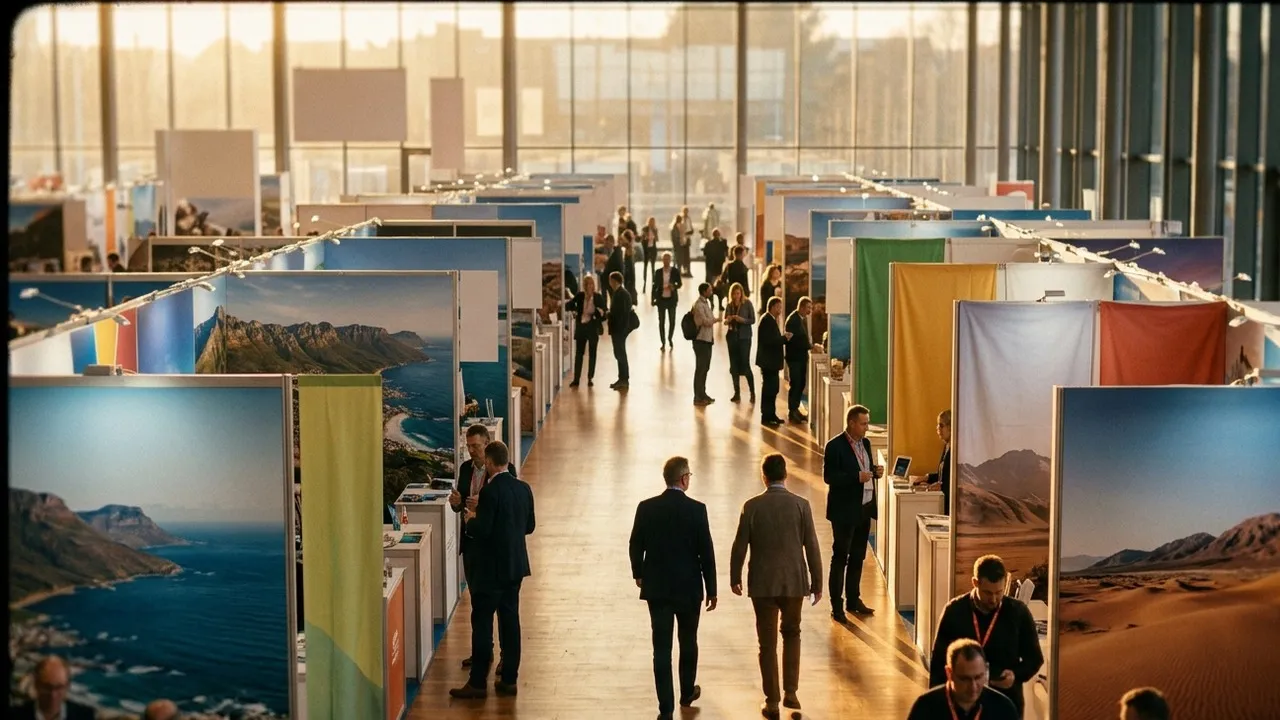
There is a sentence on most tourism trade show websites that has been sitting there untouched for years: “a sustainable event for the travel industry”. On 27 September 2026 that sentence stops being marketing and starts being a legal risk, in all 27 European Union member states at once.
The rule behind it is Directive (EU) 2024/825, the Empowering Consumers for the Green Transition Directive, usually shortened to EmpCo. It applies from that date with no transition period and no grace window for material that is already printed. It does not regulate how sustainable your event is. It regulates what you are allowed to say about it.
That distinction is the entire story for a Destination Marketing Organisation (DMO), a convention bureau or a trade fair organiser. The colleague who signs off your autumn campaign is about to inherit a problem that has nothing to do with your recycling rate and everything to do with your adjectives. In this article you will find what changes, whether business-to-business (B2B) events are even in scope, where your claims are actually hiding, which labels survive the deadline and six real claims rewritten into compliant language.
The EmpCo Directive (EU 2024/825), formally the Directive on Empowering Consumers for the Green Transition, applies across the European Union from 27 September 2026. It amends consumer protection law and prohibits three things: generic environmental claims without recognised excellent environmental performance, neutrality claims based purely on carbon offsetting, and self-created sustainability labels without an independent certification scheme. For organisers it covers every consumer-facing touchpoint: website copy, campaigns, signage, badges, labels and even the event name itself.
What Actually Changes on 27 September 2026
The directive is not new, which is precisely why it has slipped off so many marketing calendars. It entered into force in March 2024, member states had to transpose it by March 2026, and only the application date is still ahead of us.
Timeline
From directive to enforcement: the dates that matter
- 26 March 2024 Directive enters into force Directive (EU) 2024/825 is published and amends the Unfair Commercial Practices Directive and the Consumer Rights Directive.
- 19 December 2025 Germany adopts its transposition The Bundestag passes the Third Act Amending the Act Against Unfair Competition (UWG).
- 27 March 2026 Transposition deadline All member states must have the rules in national law.
- 7 July 2026 Austria adopts its transposition The Nationalrat passes its own UWG amendment, with a three-year grace period only for goods already placed on the market.
- 27 September 2026 Rules apply No transition period, no sell-off window. Existing websites, brochures and signage are covered from day one.
Three prohibitions carry almost all of the practical weight. Generic environmental claims are out unless you hold recognised excellent environmental performance for exactly that claim. Product-level neutrality claims built on offsetting are out entirely, regardless of how good the credits are. Self-created labels and badges are out unless they rest on an independent certification scheme or come from a public authority.
Enforcement runs through the channels that already exist for misleading advertising, which is what makes it move quickly. In Germany that means competitors and qualified associations can send a formal warning under the Act Against Unfair Competition, and a signed cease-and-desist undertaking binds you permanently. The financial exposure sits on top of that.
Exposure
What non-compliance can cost
For a privately held exhibition company a fine is an unpleasant line in the accounts. For a DMO that draws on national tourism funding, a procurement exclusion is existential. Your risk profile depends on who pays your bills.
Does This Even Apply to a B2B Trade Show?
That is the first question every trade fair organiser asks, and almost nobody answers it honestly, so here is the long version. EmpCo amends consumer protection law: the Unfair Commercial Practices Directive and the Consumer Rights Directive. On a strict reading, a trade-only event that admits verified industry professionals is not a business-to-consumer (B2C) transaction. The German legislator even wrote the limit into the text, adding the words “towards consumers” to the new provision on future environmental performance to make clear it applies in B2C only.
Three bridges close most of that gap again.
The first is national unfair competition law. In Germany, Section 5 of the Act Against Unfair Competition protects “other market participants” as well as consumers, so a misleading green claim aimed at exhibitors is still actionable. The standard applied to a professional audience is higher, because specialists are assumed to read more carefully. Higher is not the same as absent.
The second is the case law that already exists. In June 2024 the Federal Court of Justice ruled against the confectionery manufacturer Katjes over the word “climate neutral” (I ZR 98/23), holding that an ambiguous environmental term must be explained inside the advertisement itself, and that a link to further information is not enough. The advertisement in question ran in a food industry trade publication. It was a B2B ad, and it lost.
The third is simply how destination marketing works. A convention bureau that promotes a city runs campaigns aimed at the public. A trade show that sells any ticket to an individual, publishes a public sustainability page or puts destination advertising in a consumer channel is communicating with consumers, whatever the badge type says. Most organisers sit on both sides of the line without noticing.
The practical conclusion is unglamorous but clear: treat your public-facing claims as in scope and stop looking for the exemption. It is cheaper than being the test case.
The Three Bans, Translated Into Event Language
Every guide on this subject explains the rules with a shampoo bottle. Your problem is not a shampoo bottle, so here is the same law in the vocabulary of an exhibition floor.
Generic claims: “green”, “sustainable”, “eco-friendly”
Terms such as green, sustainable, eco-friendly, climate-friendly or environmentally conscious become unusable unless you can point to recognised excellent environmental performance that supports that specific claim. The recognised anchors named in the German implementation are the EU Ecolabel, a Type I environmental label certified to ISO 14024, or a status defined as excellence elsewhere in Union law.
There is a second trap in the same provision. A blanket statement is also prohibited when the underlying benefit only covers one part of what you are describing. A trade show that runs on renewable electricity in the halls, but flies in 200 hosted buyers, cannot call itself a sustainable event on the strength of the electricity contract. The part does not license the whole.
Carbon neutrality bought with offsets
Claims that an offering is carbon neutral, climate neutral, CO2 compensated or climate positive on the basis of purchased offsets are prohibited outright. The quality of the credits does not rescue the claim. The reasoning is that offsetting and reduction are different activities, and a reader cannot be expected to tell them apart from a logo.
What remains permitted is contribution language about your organisation rather than neutrality language about your event. You may say that you fund verified climate projects. You may not say that this year’s edition was climate neutral because you did.
Your own sustainability badge
Many events have quietly invented a little leaf icon labelled something like “Green Event 2026” and put it in the footer, the exhibitor manual and the signage package. From the deadline onwards a sustainability label is only lawful if it comes from a public authority or rests on a certification scheme with independent verification and publicly accessible criteria. In-house badges go, even where a licensing contract still has years to run.
Where Your Claims Actually Live
Once you accept that the rule applies, the work is not legal, it is archaeological. Claims accumulate in places nobody has audited in years, and the directive covers text, images, symbols, labels and names alike. A realistic inventory for a trade show or destination event looks like this:
- Website and landing pages: the sustainability page, the about section, the boilerplate at the bottom of every press release.
- The event name and logo: brand names containing “green” or “eco” are explicitly within scope, so a show called Green Travel Summit is making a claim before anyone reads a word.
- Exhibitor manual and stand-building rules: the passages that promise a sustainable exhibition environment, and the wording exhibitors are invited to reuse.
- Sponsorship and sales decks: the sustainability slide that has been copied forward through four editions without a single source.
- On-site signage and catering: plastic-free lanyard messaging, regional sourcing statements at the food stations, waste station graphics.
- Registration and confirmation emails: travel advice framed as a climate benefit, the badge insert, the delegate pack description.
- Post-event reports and award entries: the figures you publish afterwards become the evidence base for what you claimed beforehand.
Print that list, put a name against each item and give the owner a deadline. Six weeks is less than it sounds.
Which Labels Still Carry a Claim
The inventory usually ends with a question about certificates, and this is where the most expensive misunderstanding in our industry sits. Not every respected standard is a label that can carry an advertising claim.
| Scheme | What it actually is | Can it support a public claim after 27 September 2026 |
|---|---|---|
| EU Ecolabel | Official EU environmental label, awarded by public authorities | Yes, within its defined scope |
| Type I label certified to ISO 14024 | Third-party certified environmental label with published criteria | Yes, within its defined scope |
| ISO 20121 | Management system standard for event sustainability, certifies a process | No blanket claim. You may state that your management system is certified, not that the event is sustainable |
| GDS-Index | Benchmarking and ranking programme for destinations | It is a performance ranking, not a certification label. Report your score and its source, do not use it as a seal |
| In-house “green event” badge | Self-created marketing asset | No. Remove it |
ISO 20121 deserves the emphasis because it is so widely held: more than 60 per cent of European venues in UFI, the global association of the exhibition industry, carry it or an equivalent. That is a genuine operational achievement, and it says that you manage sustainability systematically. It does not say that the outcome was excellent, which is what a generic claim asserts. Say what the certificate certifies, and nothing more.
Six Claims, Rewritten
Rules are easier to apply when you can see the edit. Every example below is the kind of sentence that appears in real event marketing, next to a version that survives the deadline.
| Instead of | Write |
|---|---|
| ”Europe’s sustainable travel trade show" | "Certified to ISO 20121 for event sustainability management since 2024" |
| "Our carbon neutral congress" | "Scope 1 and Scope 2 emissions of the 2025 edition: 412 tonnes CO2 equivalent, 18 per cent below 2023, calculated to ISO 14064 and externally verified" |
| "Green exhibition stands" | "Stand construction system reused for an average of six editions, take-back rate 94 per cent in 2025" |
| "Plastic-free event" | "Lanyards made from 100 per cent recycled polyester, no single-use plastic at catering stations" |
| "Climate neutral by 2030" | "Target: 50 per cent reduction in Scope 1 and 2 emissions by 2030 against a 2024 baseline, implementation plan published and reviewed annually by an independent auditor" |
| "Eco-friendly delegate travel" | "68 per cent of delegates arrived by rail in 2025, up from 51 per cent in 2023, measured through the registration survey” |
Two patterns run through the right-hand column. Every claim names a scope, and every claim names a number with a year attached. That is the whole skill.
Forward-looking statements have their own rule, which is why the fifth example is the longest. A commitment such as climate neutral by 2030 is only permissible with a detailed, publicly accessible implementation plan containing measurable, time-bound targets and independent verification. A target without a published plan is now a prohibited practice rather than an ambition.
The Evidence Has to Exist Before the Claim Does
Look again at the right-hand column and you will notice that the hard part is not the wording. The hard part is that somebody has to know the rail share, the reuse rate and the emissions figure before the campaign goes live. Substantiation has to exist at the moment the claim is made, not when a competitor asks for it.
For most organisers that data already exists in fragments, spread across a registration system, a supplier folder and a spreadsheet on somebody’s desktop. Travel mode, delegate origin, catering volumes, meeting counts and no-show rates are all collected somewhere during a normal event cycle. The gap is rarely measurement. It is that nothing joins the fragments into a record you could hand to a lawyer.
Solution: your registration and matchmaking platform is the least glamorous and most useful part of that record. Converve stores delegate origin and travel data from registration, meeting volumes from the rule-based meeting matrix and a full audit trail of how meetings were scheduled, all inside the European Union and under the General Data Protection Regulation (GDPR). It will not write your sustainability claim, but it is where the numbers behind it come from. If you are rebuilding your measurement anyway, our KPI framework for tourism trade show ROI uses the same data spine.
That parallel is worth holding on to, because event teams have been here before. GDPR arrived, everybody assumed it was a legal project, and the organisations that came out ahead were the ones that treated it as a data-quality project instead. Our earlier piece on GDPR for event managers reads almost as a rehearsal for this one.
When the Claim Is Not Yours
Your own copy is the easy part. An event is a chain of voices, and several of them speak in your name.
An exhibitor who describes a climate neutral stand in the catalogue you publish is making a claim inside your product. A venue that promotes a self-created eco badge which you then reproduce in your marketing has handed you its problem. A sponsor whose sustainability messaging appears on your stage backdrop is broadcasting through your channel. In each case the safe assumption is that you carry responsibility for what you publish and display, and that the argument about who wrote it first will be expensive whichever way it goes.
The practical fix is contractual and it is boring. Put a claims clause in the exhibitor terms and the sponsorship agreement stating that environmental claims must be specific, substantiated on request and free of offset-based neutrality language. Give exhibitors two or three compliant example sentences, because most of them will simply reuse whatever you provide. Prevention is cheaper than moderation.
Frequently Asked Questions
Does the EmpCo Directive apply to trade-only B2B events?
Not automatically. EmpCo amends consumer protection law, and the German implementation explicitly limits the rule on future environmental performance to communication towards consumers. In practice most organisers are still exposed, because Section 5 of the German Act Against Unfair Competition also protects other market participants, and because public-facing destination marketing, ticket sales to individuals and public sustainability pages are consumer communication regardless of who attends.
Can we still say our event is climate neutral?
Not if the neutrality rests on purchased offsets. That claim is prohibited outright from 27 September 2026. You can report your measured emissions, your reduction against a stated baseline and the climate projects you fund, as three separate statements.
What happens to our own green event badge?
It has to go, unless it is based on a certification scheme with independent verification and publicly accessible criteria, or was awarded by a public authority. An existing licensing contract does not preserve it.
Is ISO 20121 enough to call our event sustainable?
No. ISO 20121 certifies a management system, not an environmental outcome. You can state accurately that your event management system is certified to ISO 20121. That is a different sentence from calling the event sustainable, and only one of them is safe.
Do the rules apply to organisers based outside the EU?
Yes, if you market to consumers in the European Union. The obligations follow the audience rather than the head office.
What about brochures and signage already printed?
There is no sell-off period. The European Commission’s own guidance points to corrective measures such as stickers or added notices for material already in circulation, which is a strong argument for auditing your print stock now rather than in September.
Who can act against a non-compliant claim?
In Germany, competitors and qualified associations can issue a formal warning, and consumer protection authorities can impose fines. You do not need an offended member of the public for the process to start.
Where should we begin with six weeks left?
Inventory first, then triage. List every claim across the touchpoints above, delete every generic adjective you cannot evidence, remove offset-based neutrality language entirely, and only then rewrite. Deleting is faster than substantiating, and both are faster than defending.
Six Weeks Is Enough, Twelve Would Have Been Better
The deadline does not ask you to become a more sustainable organisation by the end of September. It asks you to say only what you can prove, which is a smaller and much more achievable task. Delete the adjectives, keep the numbers, name the scope and publish the plan behind any promise about the future.
There is a competitive edge hiding in that discipline. When every generic claim in the market disappears at once, the organisers left holding measured figures are the only ones with anything to say. Your buyers, sponsors and public funders will notice which category you fall into, and the colleague signing off that autumn campaign will finally have something defensible to put their name to.
One caveat, stated plainly: this article is orientation, not legal advice. Use it to build your claim inventory and to brief your legal counsel, then let them rule on the wording that carries real risk.
If you want to see where the underlying numbers live, talk to our team about how registration, travel and meeting data come together in one auditable record. Our tourism solutions overview shows what that looks like for a destination event, and our guide to sustainable events covers the operational side that produces the evidence in the first place.