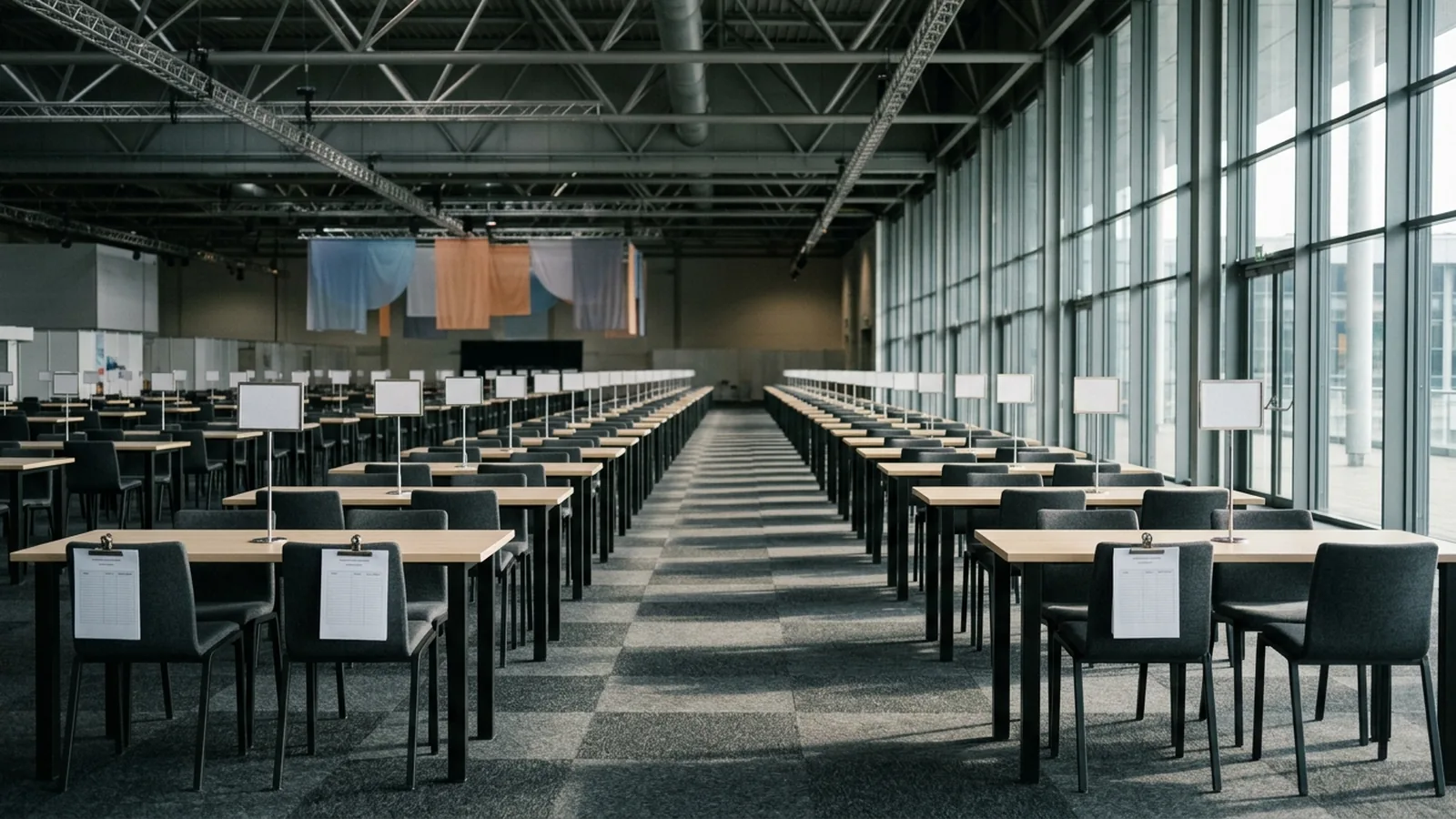
Ask a seller why she dropped a tourism trade show and you will rarely hear about the venue, the catering or the keynote. You will hear about the diary: too few meetings, the wrong counterparts, or appointments that dissolved into empty chairs. Her managing director signs next year’s stand booking based on one question, what did we bring home, and a weak diary answers it for him.
That is uncomfortable for organisers, because the meeting feels like the one thing you cannot control. You can book the hall and print the signage, but you cannot sit at the table and close the deal. The good news: you do not have to. A good buyer-seller meeting is manufactured twice, in the design before the show and in the system after it. The fifteen minutes at the table are the smallest part, and the parts around them belong entirely to you.
This playbook works through the four levers organisers control: diary design, preparation, on-site delivery and follow-up infrastructure. Each comes with benchmarks from the 2025/26 show season, from IPW and IMEX to TRENZ and Tianguis Turistico, so you can measure your own programme against the shows that treat the meeting as their core product.
What a buyer-seller meeting has to deliver
At a tourism trade show, a buyer-seller meeting is a pre-scheduled 1:1 appointment, usually 15 to 30 minutes long, between a vetted buyer (tour operator, travel agency or planner for meetings, incentives, conferences and exhibitions, MICE) and a seller (destination, hotel, destination management company (DMC) or experience provider). Leading shows schedule 16 to 32 meetings per buyer, and the organiser designs the slots, the matching rules and the follow-up around them.
The economics explain why the format dominates. The Center for Exhibition Industry Research (CEIR) puts the average cost of a face-to-face meeting with a lead at an exhibition at $96, against $1,039 for the same meeting outside one (CEIR, 2026). Your show exists because it makes qualified conversations cheap. Every empty chair hands that advantage back.
And the format converts when it is run well. At Tianguis Turistico 2025, roughly half of 71,882 pre-arranged appointments led to direct sales (Recommend, 2025). In controlled research far from the trade show floor, regular structured business meetings raised firm revenue by 8.1 per cent (Cai and Szeidl, Quarterly Journal of Economics, 2018). Why meeting programmes carry the business case of a tourism show, and how to argue it to your board, is a case we make separately in why matchmaking matters for tourism trade shows. This playbook stays on the operational floor: how you make the meetings good.
Why the meeting is the product
The arithmetic behind buyer-seller programmes
Four levers, one lifecycle
Notice what those three numbers have in common: none of them is decided at the table. The cost advantage comes from design, the conversion from preparation and matching, and the follow-up failure from what happens after the hall empties. That is the thesis of this playbook in practice: the meeting lifecycle has four phases, and the organiser owns the machinery in every one of them. Research on trade show effectiveness backs the framing: pre-show, at-show and post-show activities work together on lead generation and conversion, not as separate events (Sridhar et al., 2015).
The organiser's playbook
Four levers along the meeting lifecycle
- Lever 1 Design Slot length, meetings per buyer, breaks and matching rules, fixed before scheduling opens.
- Lever 2 Preparation Profile quality, scheduling window and briefings for both sides of the table.
- Lever 3 Delivery Meeting zones, timekeeping, live no-show handling and note discipline on site.
- Lever 4 Follow-up infrastructure The 48-hour window, exports, FAM bridges and conversion tracking, built before the show.
Lever 1: Design the diary before scheduling opens
Every decision in this phase is invisible to participants and visible in the results. Three design choices carry most of the weight:
- Slot length follows meeting purpose: IPW runs 30-minute appointments booked months in advance (automate.travel, 2026), because its buyers negotiate contracts. A first-contact speed format can run at 15. Mixing purposes in one slot length produces meetings that are either rushed or padded.
- Meetings per buyer set the value ceiling: International flagship shows deliver 16 to 32 pre-scheduled meetings per buyer, IMEX reports 16 or more, AIME promises 10, 20 or 32 depending on tier, IBTM World ties its travel package to a minimum of 30 appointments (show terms, 2026). For a regional workshop, 8 to 12 well-matched meetings are a defensible diary. Promise a number you can fill with quality, then over-deliver.
- Breaks are load-bearing: A buyer in her ninth consecutive slot stops listening. Build recovery gaps and meal windows into the grid before you calculate capacity, not after. The free Converve meeting calculator shows in under a minute how slot length, breaks and table count translate into realistic meeting capacity for your show.
The fourth design choice is the matching logic itself: which buyer attributes count, which seller categories exist, who may meet whom, and how VIP quotas are protected.
Solution: In Converve, these decisions become explicit rules in a configurable meeting matrix. The platform turns declared offers and needs, target markets, segments and languages into full pre-scheduled diaries, and keeps an audit trail for every match, so when a seller asks why she met these exact buyers, your answer is a rule, not a shrug. How this plays out in a hosted buyer setting is its own discipline.
Lever 2: Prepare both sides like it is part of the product
Design fills the grid; preparation decides what the grid is worth. The industry currently argues about how long the scheduling window should be: ExpoPlatform recommends opening networking 6 to 8 weeks before the event (ExpoPlatform, 2025), while Swapcard argues a focused 3 to 4 week activation window generates more intent per day of attention (Swapcard, 2026). The contradiction resolves once you segment: hosted buyers with contractual meeting quotas need the long runway for visa, travel and preference rounds, while self-funded visitor buyers engage late and briefly. Open early for the committed, activate hard for the rest.
Two preparation practices separate strong programmes from decorative ones:
- A profile quality gate before matching: A diary built on empty profiles is a lottery. Require declared sourcing needs, target markets and languages before a profile enters matching. Whether you fill the buyer pool through hosting, incentives or targeted recruitment is a pipeline question, covered in how to attract international buyers.
- Briefings for both sides of the table: Tourism Australia advises its sellers to listen 80 per cent of the time and talk 20 (Tourism Australia). Extend the courtesy to buyers: what sellers expect, how to decline a match, what to bring. Research on B2B trade fairs describes meetings as socialization episodes in which information and social exchange build relationship quality (Sarmento et al., Industrial Marketing Management, 2014). Meetings pay into two accounts, the relationship and the deal, and briefed participants pay into both.
Preparation is also where no-shows are decided, long before anyone oversleeps. Free-to-attend events see 40 to 60 per cent no-show rates, while paid formats reach 90 to 97 per cent attendance (Nunify benchmarks via PCG Software, 2026). Commitment mechanics, a meeting quota in exchange for hosting, a deposit, or simply a named counterpart expecting you, move your show from the first group towards the second.
Lever 3: Run the show floor so the diary survives contact
A perfect schedule meets reality at 09:00 on day one. Delivery is unglamorous and decisive: dedicated meeting zones away from stand traffic, visible timekeeping so slot seven starts on time, and a rule for the moment a chair stays empty. The strongest operational teams release no-show slots back into a live pool within minutes, so a seller’s dead slot becomes a walk-up meeting instead of a coffee break with her phone.
Language is delivery infrastructure too. If your show connects, say, Latin American DMCs with German-speaking tour operators, interpreter routing and language-aware matching decide whether minute three is an introduction or an apology. We cover that layer in multilingual buyer-seller meetings.
The quietest delivery practice is note discipline. A meeting that ends without a captured next step does not exist by Monday. Give both sides a 30-second way to log outcome and intent while they are still at the table. Those notes are the raw material for everything in lever 4.
Lever 4: Build the follow-up before the show opens
Here is the uncomfortable benchmark: 79 per cent of trade show leads are never followed up (CEIR). Not followed up badly. Never. Whatever your show spent on flights, halls and hosting, most of its output evaporates in the week after closing, and the window is short: follow-up within 48 hours earns roughly three times the response rate of follow-up after five business days (Dreamcast benchmarks, 2026). Speed compounds further down the funnel, too: leads contacted within minutes convert at 32 per cent against 12 per cent after a day (Optifai, 2026). Persistence matters as much, since closing typically takes about five touches and 44 per cent of salespeople stop after one (Saleshandy, 2026).
Follow-up infrastructure means the machinery exists before the first meeting happens:
- Same-week exports: Meeting lists, notes and outcomes flow into each seller’s customer relationship management system (CRM) while the conversations are warm, not in a spreadsheet three weeks later.
- A FAM bridge for the matches that deserve it: PHITEX pairs its 3,000+ tabletop appointments with post-event familiarisation (FAM) tours that turn a promising meeting into a first-hand product experience (Mize, 2026). A FAM invitation is the strongest follow-up a destination can send.
- Conversion tracking as a show KPI: Meetings held, follow-ups sent and deals reported per seller belong in your post-show report. Which key performance indicators (KPIs) to track, and how to defend them in a budget meeting, is mapped in our tourism trade show return on investment (ROI) framework. And if you run a hosted programme, the ROI levers of matchmaking quality sit directly on top of these numbers.
The managing director from the opening paragraph reappears here. When your seller can show him twelve meetings, eight follow-ups and two contracts in negotiation a fortnight after the show, the rebooking conversation is short.
What leading shows deliver: 2025/26 benchmarks
You do not need to guess what good looks like. The strongest shows publish their meeting numbers, and increasingly lead their results communication with them:
| Show | Meeting volume (2025/26) | Design detail |
|---|---|---|
| IPW, USA | ~100,000 pre-scheduled | 30-minute slots, booked months ahead |
| IMEX Frankfurt | ~67,000 | Hosted buyers book 16+ meetings |
| IMEX America 2026 | 80,000+ planned | 6,000+ hosted buyers (Mize, 2026) |
| IBTM World, Barcelona | Min. 30 appointments per hosted buyer | Travel package tied to the quota |
| AIME, Melbourne | 10, 20 or 32 per buyer by tier | Diary promised at application |
| TRENZ, New Zealand | 16,000+ | 270 buyers x 300 sellers over three days |
| WTM London | 40,000+, up 30% year on year | Meeting count leads the results story |
| Tianguis Turistico, Mexico | 71,882 | ~50% led to direct sales |
| PHITEX, Philippines | 3,000+ tabletop | Post-event FAM tours built in |
Read the table as a menu, not a target list. TRENZ concentrates 270 buyers on one national product; a regional workshop with 40 buyers plays a different game with the same levers. What every row shares is that the diary, not the floor plan, is the headline.
Conclusion: the table is the smallest part
The meeting itself lasts fifteen to thirty minutes. Everything that makes it valuable happens outside it: the slot design and matching rules months before, the profiles and briefings weeks before, the timekeeping and note discipline on the day, and the exports, FAM invitations and tracking in the week after. Organisers who accept that the table is the smallest part stop hoping for good meetings and start manufacturing them.
Want to see what a fully designed meeting programme looks like for your show, from matching rules to post-event reporting? Get in touch with Converve and we will walk you through it.
Frequently asked questions
How long should a buyer-seller meeting at a tourism trade show be?
Between 15 and 30 minutes, depending on purpose. IPW runs 30-minute appointments because its buyers negotiate contracts (automate.travel, 2026); first-contact formats work at 15 to 20. Choose one length per programme and design breaks around it.
How many meetings should a buyer have at a trade show?
International flagship shows deliver 16 to 32 pre-scheduled meetings per buyer: IMEX reports 16 or more, AIME promises up to 32 by tier, IBTM World requires a minimum of 30 (show terms, 2026). For regional workshops, 8 to 12 well-matched meetings are a realistic and defensible diary.
When should the meeting scheduling window open?
Open 6 to 8 weeks before the show for hosted buyers with meeting quotas (ExpoPlatform, 2025), and concentrate a 3 to 4 week activation push for self-funded visitor buyers (Swapcard, 2026). Committed participants need runway; casual ones need urgency.
How do organisers reduce no-shows at pre-scheduled meetings?
Through commitment mechanics and live handling: meeting quotas in exchange for hosting, reminders with named counterparts, and instant release of empty slots back into a booking pool. Free events see 40 to 60 per cent no-shows, while paid and committed formats reach 90 to 97 per cent attendance (Nunify via PCG Software, 2026).
What should sellers prepare for buyer meetings?
A 30-second positioning statement, questions that surface the buyer’s sourcing needs, and a follow-up plan. Tourism Australia’s advice holds: listen 80 per cent of the time. The seller who leaves with the buyer’s next step wins the follow-up race.
What should happen after the show?
Follow-up within 48 hours, which earns about three times the response of contact after five business days (Dreamcast, 2026), same-week CRM exports for every seller, FAM invitations for the strongest matches, and a post-show report that counts follow-ups and conversions, not just meetings.
Do pre-scheduled meetings outperform open networking?
Measurably. Roughly half of the 71,882 pre-arranged appointments at Tianguis Turistico 2025 led to direct sales (Recommend, 2025), and controlled research links regular structured business meetings to an 8.1 per cent revenue increase (Cai and Szeidl, 2018). Open networking produces encounters; pre-scheduled programmes produce outcomes.