NEXUS Automotive International, a buying community in the automotive aftermarket, reports more than 637 members in 146 countries, allied with more than 90 global suppliers and organised in 17 regional structures (NEXUS press release, 7 July 2026). Its global Business Forum in Lausanne in spring 2026 brought 300 companies to Switzerland (AftermarketNews, 7 April 2026). That is a large congress, and still far from the whole network. The members who stayed at home do their business with suppliers somewhere else in the year.
An international buying group needs different events for different relationships. Regional summits support local business, while a global congress brings member owners together with suppliers’ international teams. Plan those formats as one annual programme, with profiles and results carried from event to event.
This guide is for event and network teams at the head offices of international buying groups, cooperatives and dealer alliances. It explains how to give each event a clear purpose and help strategic suppliers decide where to attend, which team to send and how to assess the results. Picture the global key account director of a strategic supplier. Her question is always the same: which of your events do we attend, with which team, and what does each return?
What an international buying group congress is
An international buying group congress is the global meeting of a buying group whose members sit in many countries. Members are usually independent distributors or retailers who own or join the group. Suppliers have agreements with the group, often a global contract plus regional terms. The congress brings both sides together once a year, and the regional summits do the same within one region.
Our guide to buying group conferences covers the booking rules for a single annual conference, such as fair access to the most wanted vendors. This article is about the year above that: how several events in several regions fit together.
One network, several kinds of event
Because the network spans continents, no single format serves every relationship. Most international groups end up with five kinds of event, even if they name them differently:
| Event | Who attends | What only this event can do | Typical meeting format |
|---|---|---|---|
| Global congress or business forum | Member owners and buyers from all regions, strategic suppliers, partners | Cross-regional exchange, global supplier agreements, group strategy, awards | Scheduled one-to-one meetings at scale, plenary sessions |
| Regional summit | Members of one region, the regional teams of suppliers | Regional range, terms and campaigns, in the region’s language and time zone | One-to-one meetings, regional workshops |
| Leadership meeting | Senior executives of the largest members and strategic suppliers | Joint plans for a market or a category | Small targeted meetings, roundtables |
| Shareholders’ or general meeting | Member owners only | Governance: votes, budget, board elections | No supplier meetings |
| Online sessions | Members and suppliers anywhere | Updates and short follow-ups between events | Webinars, short video calls |
Two public examples show the pattern in different trades. NEXUS combines its annual Business Forum with a smaller Leadership Conference, held for the first time in Évian-les-Bains in September 2025 and for the second time in Napa Valley in June 2026, the group’s first global event in the United States. The travel agency network Virtuoso runs a week of scheduled appointments for about 4,000 attendees in August, a Symposium for about 400 partner executives and agency managers in April, and smaller regional forums (Virtuoso Global Events, 2026 programme).
NEXUS Automotive International: network and Business Forum 2026
The figures explain why the regional level matters. A congress with 300 companies is a strong turnout. For most members, however, the regional structures are where they meet suppliers during the rest of the year.
Give each event one job
A portfolio only works if the events do not compete for the same meetings. The simplest test is to ask, for every meeting type, where it can happen at the lowest cost for both sides.
Take the regional sales manager of a brake supplier and a parts distributor from Peru. They speak the same language, work in the same market and can meet at a Latin American summit, say in Bogotá. Flying both to Europe for the same twenty minutes wastes a slot at the congress and two long journeys. The regional summit is where that meeting belongs.
The global congress should then concentrate on what the regions cannot offer:
- meetings between members and a supplier’s global product or category teams, who do not travel to every region,
- meetings across regions, for example a distributor in Kenya and a supplier that has not yet entered East Africa,
- exchange between members from different continents about the same problem,
- the announcement of global agreements and the group’s strategy.
If it can happen regionally, let it.
The leadership meeting has an even narrower job. It is small on purpose, with the chief executives of the largest members and the strategic suppliers’ leadership around one market or category. NEXUS CEO Gaël Escribe described the Napa gathering as “more than a regional initiative” that connected “international decision-makers around one of the Group’s most strategic markets”. That is a different conversation from a table at the forum, and it needs a different room.
National associations face a smaller version of the same question, with regional days and one congress. We cover that in association event management. The international version adds continents, time zones and supplier contracts that differ by region.
Decide which suppliers attend where
Once each event has a job, the key account director’s question has a clear answer. She does not need to send the same team to every event. She needs a package that tells her who goes where and what they can expect.
Most international groups can work with three supplier tiers:
- Global strategic suppliers: attend the congress with global and regional teams, the leadership meeting with senior executives, and every regional summit with the regional team. They get a minimum number of meetings at each event.
- Regional suppliers: have an agreement in one or two regions and attend only those summits. At the congress they are welcome as guests, but they do not take meeting slots from cross-regional pairs.
- New or candidate suppliers: use the congress or one regional summit to meet members for the first time, with a smaller package and clear limits on meeting requests.
Publish the tiers and the year’s dates together, once a year. Then each supplier can plan budget and staff for twelve months instead of deciding event by event. A clear annual package makes those decisions easier.
The package also protects the members. A distributor who travels to the congress expects to meet the people he cannot meet at home. If the congress floor is full of regional sales managers repeating the regional summit, the trip loses its point.
Build the year as one sequence
The order of the events matters as much as their content. Regional summits that take place before the congress can feed it: open questions from the regions become congress sessions, and members who did not find a supplier regionally can request one at the congress.
An event year for an international buying group
- Previous Q4 Publish the year Announce all dates, host cities and supplier packages for the coming year in one document.
- Q1 Run the first regional summits Regional members meet regional supplier teams and note the topics they want to take further.
- 10 weeks out Open congress registration Members confirm their regional profile and request cross-regional meetings and global teams.
- Congress Hold the global congress Cross-regional meetings, global teams and strategy, alongside the shareholders' meeting if it is held there.
- 4 weeks after Report to suppliers Each supplier receives meetings held at the congress and at the regional summits so far.
- Q3 and Q4 Lead and follow up The leadership meeting and the second regional round turn congress contacts into regional business.
For a global congress, the earliest step is often decided by visas. If the congress takes place in a Schengen country, members who need a visa can apply up to six months before the trip and, as a rule, no later than 15 calendar days before it (Regulation (EC) No 810/2009, Article 9, as amended by Regulation (EU) 2019/1155). Consulates in some countries have long waiting times for appointments. Invitation letters therefore belong in the first registration email, not the last reminder.
The same logic applies to host cities. Rotating the congress between continents spreads the travel burden more fairly. NEXUS, for example, held its Business Forum in Abu Dhabi in April 2025 and in Lausanne in 2026 (AftermarketNews, 2025 and 2026). Each move, however, resets the visa and travel questions for a different group of members. Announce the next host city at the current congress, so that members can plan early.
Meetings across languages and time zones
The congress should start where the regions stopped. That only works if the information from the regional summits is still available when congress registration opens.
Three practical rules help:
- Ask for the profile once. Region, business type, product lines and meeting languages are entered at the first event of the year and confirmed later, not typed again for every summit.
- Set different meeting rules per event. At a regional summit, members request regional supplier teams. At the congress, give priority to cross-regional requests and to meetings with global teams.
- Match on language. A field for meeting languages lets a distributor from Brazil find the supplier staff who speak Portuguese. Where an interpreter joins, plan longer slots, for example 30 instead of 20 minutes.
How long slots should be and how many meetings fit into a day is covered in our guide to B2B meetings at events. Between events, short video calls can prepare congress meetings or follow them up. Plan them in the overlap of working hours between two regions, as described in our article on virtual matchmaking events.
Governance next to business
Not every meeting on the congress site is about business. Many groups hold the shareholders’ or general meeting on the same site as the congress or a regional summit, because the member owners are already there. That saves a trip, but it mixes two very different events.
Keep them apart in time and space. Hold the member-only meeting in its own block, before or after the supplier days, and close the room to suppliers. Votes, budgets and board elections are member business.
Competition law needs attention too. Members of a buying group often compete in neighbouring markets, and suppliers compete with each other. In the European Union, the Commission’s horizontal guidelines, revised in 2023, contain separate chapters on joint purchasing and on information exchange. Keep resale prices, margins and individual business plans out of joint sessions and ask your competition lawyer to review the agenda. This is a practical note, not legal advice.
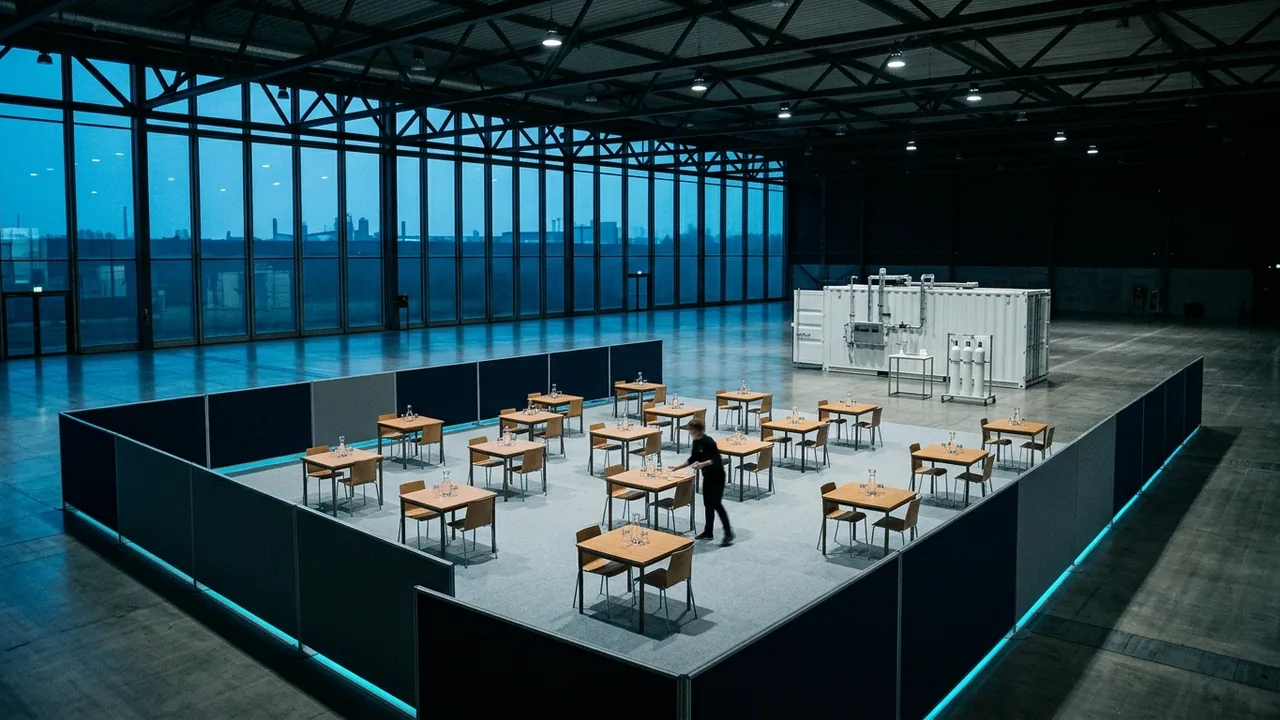
The vote and the vendor fair need different rooms.
What to report across the year
The key account director will measure the package against its results. Give her a year view, not five separate event reports. The board needs a different view of the same data:
- For each supplier: meetings held at each event, members met per region, first meetings with members who had not met the supplier before, and the share of the agreed minimum reached.
- For head office and the board: the share of members in each region who held at least one meeting with each strategic supplier, regions where members found too few partners, and no-shows per event.
The second list shapes next year’s portfolio. If members in one region rarely meet the strategic suppliers, that region may need its own summit or a stronger presence of global teams. Our KPI framework for B2B event matchmaking explains how to define these key performance indicators (KPIs) and compare them across editions.
With Converve, members and suppliers register with the details head office needs, such as region, business type and the suppliers they want to meet. For each event you set the rules in a rule-based meeting matrix: who may request whom and how many meetings each supplier and member can hold. Meetings are scheduled with a fixed time slot and table once both sides have confirmed. You can see how member organisations use B2B matchmaking on our page for associations.
Conclusion
Give each event a clear purpose within the year. Use regional summits for regional business, the global congress for cross-regional contacts, leadership meetings for joint plans and the general meeting for governance. Publish dates and supplier packages together, reuse profiles and report the results across the full programme.
That helps suppliers plan their participation and review the value of each event. If you are planning regional summits and a global congress for your network, get in touch with Converve.
Frequently Asked Questions
What is an international buying group?
An international buying group is a network of independent distributors or retailers in several countries that negotiates terms with suppliers jointly. Members often own the group or join it as partners. Suppliers sign agreements with the group, often a global contract plus regional terms, and meet the members at congresses and regional events.
What is the difference between a regional summit and a global congress?
A regional summit brings the members of one region together with the regional teams of suppliers, in the region’s language and time zone. The global congress brings all regions together and focuses on what only that room can offer: meetings across regions, meetings with suppliers’ global teams, the group’s strategy and global agreements.
How many events does an international buying group need each year?
There is no fixed number. A common portfolio is one global congress, one regional summit per major region, a small leadership meeting with the largest members and strategic suppliers, the shareholders’ or general meeting, and online sessions in between. NEXUS Automotive International, for example, runs an annual Business Forum and a separate Leadership Conference alongside 17 regional structures.
Which suppliers should attend the regional summits?
Suppliers with an agreement in that region, represented by their regional teams. Global strategic suppliers usually attend every summit. Regional suppliers attend only the regions where they have terms, which keeps congress slots free for meetings that cannot take place regionally.
How early should you plan a global congress with members from many countries?
Publish the date and host city at least six months ahead, earlier if you can. Members who need a Schengen visa can apply up to six months before the trip and, as a rule, no later than 15 calendar days before it (Regulation (EC) No 810/2009, Article 9, as amended in 2019). Send invitation letters with the first registration email.
Should the shareholders’ meeting take place during the congress?
It can, because the member owners are already on site. Hold it in a separate, member-only block before or after the supplier days, and have the agenda reviewed for competition law, since members and suppliers often compete with each other.