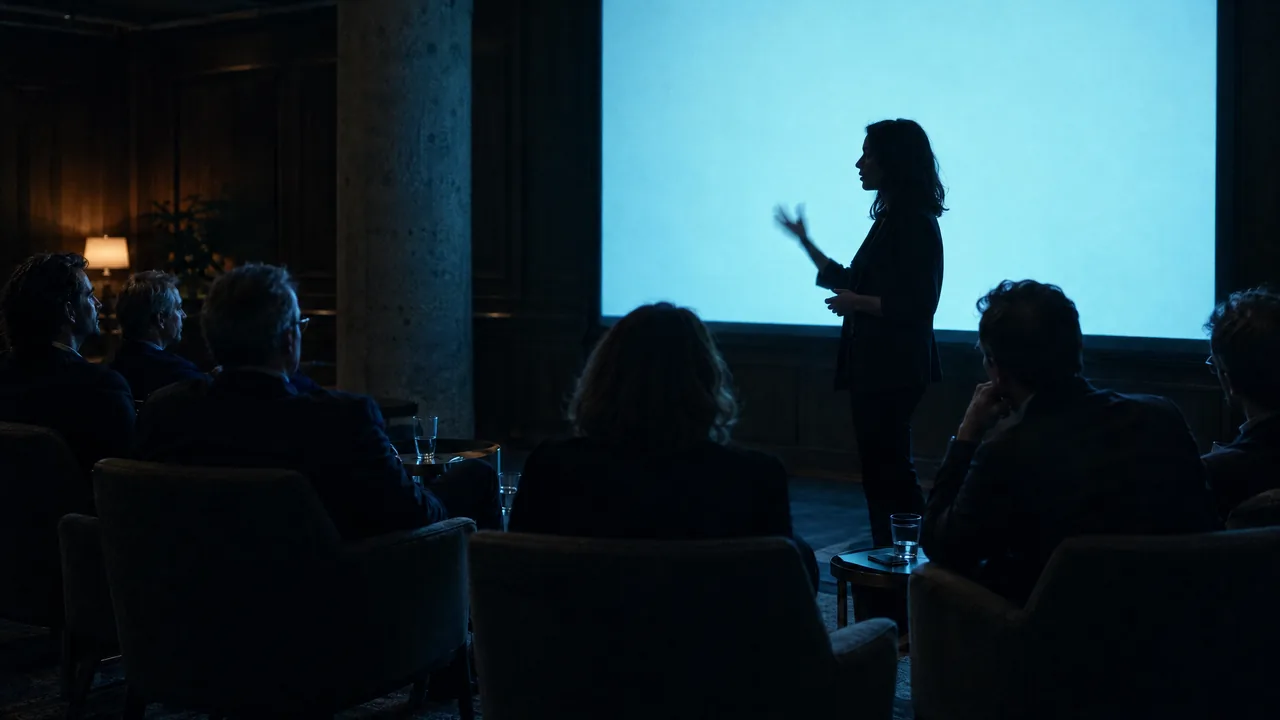
A venture capitalist (VC) spends about 15 hours a week sourcing deals, according to a survey of 885 VCs by Gompers, Gornall, Kaplan and Strebulaev for the National Bureau of Economic Research (NBER, 2016). Your invitation asks for three or four of those hours on a Thursday afternoon. The investor will compare that afternoon with what the same time would have produced at their desk.
A curated founder-investor session should make that time worthwhile through relevant, prepared conversations. It is a small, invitation-only event where the organiser selects founders and investors against each other’s criteria before anyone arrives, and then schedules the conversations between them. Accelerators, angel networks and regional organisers use the format to concentrate on a small set of relevant introductions rather than a broad conference programme.
This guide helps programme leads choose when a small session is appropriate, how many people to invite and how to select both groups. It also covers the afternoon’s schedule and follow-up measures. The key preparation is to establish which founders and investors have a reason to meet before sending the invitations.
What is a curated founder-investor session?
The definition above has three working parts, and each one separates the format from its neighbours.
- Small: typically five to ten founders and eight to twenty-five investors, so every founder can meet every relevant investor within one meeting block.
- Curated on both sides: founders are selected against what the attending investors actually fund, and investors are selected because they currently invest at that stage and in that sector.
- Conversation, not stage: the time goes into scheduled meetings and small tables rather than pitches to an audience.
Other formats can include these elements too; the emphasis here is on a small group and meetings prepared around each participant’s criteria.
| Format | Who selects | Main format | Best for |
|---|---|---|---|
| Demo day | The accelerator selects the cohort | Pitches on stage to many investors | Showcasing a whole batch at once |
| Pitch night | Often open application, light screening | Short pitches, open networking | Local visibility and practice |
| Matchmaking at a conference | Participants, within the event’s rules | 1:1 meetings inside a large event | Volume across many investors |
| Investor dinner or side event | The host’s invitation list | One table, one conversation | Relationships, not specific deals |
| Curated founder-investor session | The organiser, against both sides’ criteria | Scheduled 1:1s and small tables | Specific meetings for a specific round |
A demo day presents a cohort to the room. A curated session presents each founder to the few investors who matter for that founder. The mechanics of the 1:1 layer itself, from profile data to matching logic, are explained in our guide to what investor matchmaking is.
When a small session beats the big conference
A small session and a large conference can serve different purposes. The large conference wins on reach, press coverage and the absolute number of investors under one roof. A founder who needs visibility, hires or first contacts across many markets gets more from the crowd.
The small session wins when the goal is a specific meeting. A founder raising a seed round needs a dozen conversations with investors who fund seed rounds in that sector, not a hall of strangers. The same NBER survey found that over 55 per cent of VCs consider the team the most important factor in a decision (NBER Digest, December 2016). A team is judged in conversation, and the small format gives each conversation more time and fewer interruptions.
Selection also changes how the founder arrives. In the NBER survey, 20 per cent of deals were referred by other investors, while only 10 per cent came inbound from founders. A founder who sits down because you selected them for this investor is closer to a referral than to a cold email. Your selection works as the warm introduction.
Small formats are not a niche either. In the Amex GBT Global Meetings and Events Forecast 2026, 38 per cent of 601 meeting professionals expected to run more small and simple meetings in 2026, and another 50 per cent expected the same number. Even the largest festivals now sell density rather than headcount, which our guide to Europe’s startup conferences traces through their investor ratios. For your decision, the useful split looks like this:
- Choose the big conference when the founder needs visibility, press or many first contacts across markets.
- Choose a curated session when the founder needs a specific round and you can name the investors who fund that stage.
- Combine both by running your session around a large conference, when international investors are already in town. Our guide to side events at startup conferences shows how to time it so it feeds the main programme instead of competing with it.
How big should the session be?
Once you have decided on small, the next question is how small. The answer depends on who invests, and four numbers frame it.
Behind the blueprint
Four numbers that set the size of a curated session
For angel sessions, the ratio tilts towards investors. The European Business Angel Network (EBAN) reported an average angel ticket of €25,600 per round and an average of €204,900 invested per company in 2024, across the visible market in 39 countries (EBAN Statistics Compendium 2024, published December 2025). The ratio of those two averages is about eight, an editorial calculation rather than an EBAN finding about the number of angels per round. Use it as a sizing illustration, then check the actual round sizes, investor capacity and relevant matches for your session.
For seed sessions with funds, one lead investor can carry a round, so the ratio can be closer to one to one. Slush, with its 12,000 attendees, advertises “one VC for every two founders” (slush.org, 2026). For your own session, count relevant potential meetings for each founder rather than relying on the overall investor-to-founder ratio.
Table size follows a different rule. Dunbar, Duncan and Nettle found an upper limit of about four people who can take part in one spontaneous conversation (Human Nature, 1995). A table of three or four, one founder and two or three investors, stays a conversation. Larger tables need more deliberate facilitation if everyone is to contribute.
| Angel session | Seed session with funds | |
|---|---|---|
| Founders | 5 to 8 | 6 to 10 |
| Investors | 15 to 25 angels | 8 to 15 funds |
| Ratio | at least three angels per founder | at least one fund per founder |
| Why | an average angel round needs about eight tickets | one lead investor can carry the round |
| Meeting focus | small tables plus selected 1:1s | scheduled 1:1s |
Editorial rule of thumb derived from the figures above; adjust it to your own round sizes.
The final check is the slot count. With 20-minute meetings and five minutes to change, a block of two and a half hours gives six slots. If each founder has about six relevant investors in the room, the diary fits exactly. More relevant investors than slots means you need a selection step, which is where the next section starts.
How to curate both sides
Size only works if the people fit. Curation is where most of your preparation time goes, and it starts with the investors, because founders are selected against them.
Confirm for every investor that they are actively investing, at which stage, with what ticket and in which sectors. Our vetting framework for investors before a 1:1 marathon covers the criteria and the application form in detail. Then open founder applications against that investor profile, not against a general idea of a “good startup”.
Nordea’s Investor Speed Dating is a useful public example. Its Startup and Growth team reviews every application and selects companies that match the investment scope of the attending investors, and applications close three weeks before the event (nordea.com, 2026). Three weeks is a sensible planning anchor for your own session.
Four criteria do most of the matching work:
- Stage and round size: a fund that writes €2 million first cheques should not meet a founder raising €250,000.
- Sector and thesis: check the stated thesis and the last few investments, not only the website.
- Ticket and capacity: an angel who has just made three investments this year may have no capacity left.
- Decision rights: tell founders whether they will meet a partner who can champion a deal or an analyst who screens for one.
A meeting between a hardware founder and an investor who does not fund hardware is unlikely to serve either party. Mutual opt-in helps participants check relevance before accepting. Send each side a shortlist and confirm a meeting only when both accept. HLTH’s Investor Connect programme runs its 15-minute meetings this way, double opt-in, with investors filtering by stage, category and thesis (hlth.com, 2026). An investor who chose the founder arrives prepared.
If a few investors attract most of the requests, cap their incoming requests early. Our playbook on preventing investor overload explains how tiered invites and request caps keep the popular names from flooding.
A run of show for a half-day session
With the right people confirmed, the afternoon itself can be simple. The structure below fits a seed session with eight founders and twelve funds.
Run of show
A half-day curated founder-investor session
- 14:00 Arrival and briefing Coffee, badges, and two minutes on the rules: meeting times, changeovers, how to request a second meeting.
- 14:20 Founder introductions Ninety seconds per founder, no slides. Investors see the team before the first meeting.
- 14:35 Meeting block 1 Three scheduled 1:1 meetings of 20 minutes each, five minutes to change tables.
- 15:50 Break and block 2 Fifteen minutes off, then three more meetings until 17:20.
- 17:20 Open close Drinks and unscheduled conversations. Investors name their second meetings before they leave.
The founder introductions carry more weight than they seem to. If the team is the most important factor for most VCs, a short introduction without slides gives investors a chance to hear directly from each founder. Some organisers keep a short pitch instead. gener8tor’s Lightning Rounds, for example, pair a five-minute pitch with a 10 to 15 minute conversation per investor (gener8tor.com, 2026). Both work, as long as the conversation gets more time than the pitch.
The same blueprint also runs online. Nordea’s sessions are pre-booked online 1:1s of about two and a half hours in total, and the organiser stresses that they are not pitching events (nordea.com, 2026). Online solves the travel problem for international investors. It offers less informal conversation after the scheduled meetings, so keep the session under three hours and schedule second meetings in the platform itself.
After the session: what to measure
The session ends at six. Whether it worked shows weeks later, and the programme lead’s board or sponsors will ask.
Report attendance alongside subsequent activity:
- Second meetings requested per investor, collected before they leave the room.
- The share of founders with at least one follow-up meeting within four weeks.
- The share of investors who accept the invitation to the next edition.
- Rounds that later close with an attendee investor, tracked over six to twelve months.
Second meetings are a useful early indication of continued interest. Our guide to tracking investor follow-ups after a demo day shows how to collect those numbers without chasing every investor by email. The last figure on the list takes longest to arrive, so report the first three after each session and the fourth once a year.
A small session may be manageable in a spreadsheet. As requests and confirmations grow, a scheduling tool can help track availability and avoid clashes. Converve runs matchmaking on a rule-based meeting matrix. You define which groups may meet, for example seed founders with funds that invest at seed. Participants send 1:1 meeting requests, the other side accepts or declines, and every confirmed meeting gets a time slot. Because the rules are visible, you can explain any investor’s schedule in one sentence. Our startup and investor solution shows the set-up, and whether matchmaking pays off at your size at all is worked through in our four tests for small events.
Build the session around relevant conversations
A curated founder-investor session gives a small group time for introductions selected around their investment and fundraising criteria. Size it by who invests, curate both sides against each other, give conversations more time than pitches and measure second meetings rather than attendance.
Choose between formats according to the founders’ needs: broad visibility and new contacts, or a focused set of investment conversations. If you want to plan the meeting schedule for your next session, get in touch with Converve.
Frequently Asked Questions
Is it better to attend a massive startup event or a curated matchmaking session?
It depends on the goal. A large conference is better for reach, press and first contacts across many markets. A curated session is better when a founder needs specific meetings for a specific round, because the organiser has matched founders and investors in advance. Many founders combine both, for example a curated session held as a side event around a large conference.
How many founders and investors should a curated session have?
A workable rule of thumb is five to ten founders and eight to twenty-five investors. Angel sessions may need more investors per founder than fund-led seed sessions. The ratio of EBAN’s average company investment to average angel ticket in 2024 is about eight, but it does not establish the required number of investors for an individual round. Size your session around relevant matches and available meeting slots.
How long should a founder-investor meeting be?
Fifteen to twenty-five minutes is common. HLTH’s Investor Connect uses 15-minute meetings (hlth.com, 2026), and a 20-minute meeting with five minutes to change tables gives six slots in a two-and-a-half-hour block. Shorter meetings suit screening; longer ones suit investors who have already read the deck.
Can curated founder-investor sessions run online?
Yes. Nordea’s Investor Speed Dating, for example, runs as an online session of about two and a half hours with pre-booked 1:1 meetings and no pitching (nordea.com, 2026). Online formats remove travel for international investors but lose informal conversations, so keep them short and schedule follow-ups in the same platform.
What does double opt-in mean for investor meetings?
Double opt-in means a meeting is confirmed only when both the founder and the investor accept it. It gives both sides a chance to check relevance before committing and helps them prepare. Large programmes such as HLTH’s Investor Connect use it for their 1:1 meetings (hlth.com, 2026).